Dogs on a plane usually don't go to the bathroom at all: most hold it for the flight, and if they can't, they pee or poop on an absorbent puppy pad lining their carrier or crate. Airlines generally require pets to stay in their carrier for the whole flight, so the real trick is letting your dog relieve itself right before boarding and lining the carrier just in case.
There’s not much to worry about on a short flight. But for long-haul flights, you’ll need to prepare for your dog's bathroom needs.
Where do dogs pee/poop on a plane?
Many dog owners flying with their pets find it challenging to find a spot for their dogs to do their business on the plane.
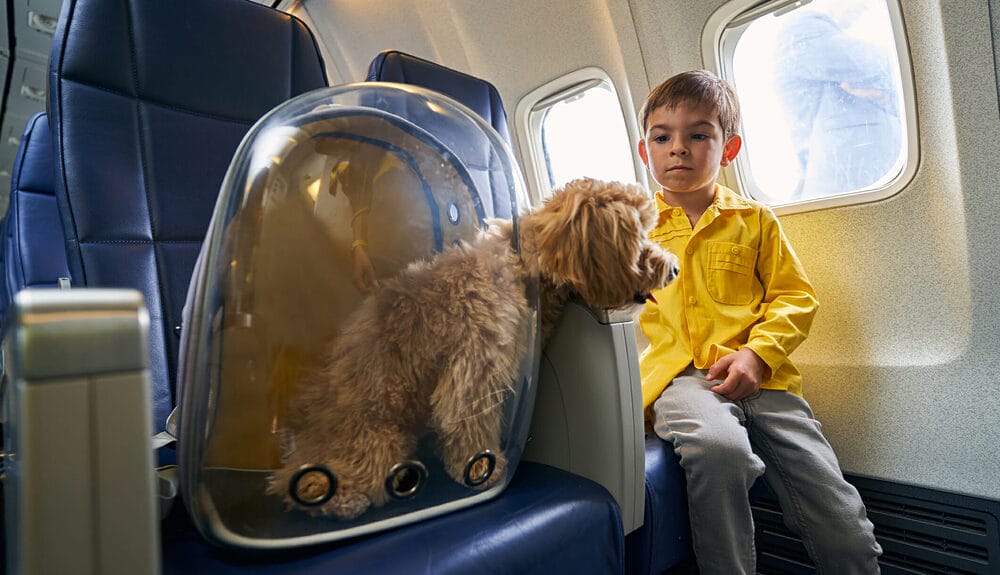
Small dogs are usually allowed inside the cabin, where they remain inside their carrier. So, to speak plainly, bathroom accidents are relatively more manageable for smaller dogs.
On a long flight, some flight crews may let you take your dog into the lavatory to use a pee pad on the floor, but always ask a flight attendant first; never take your dog out of its carrier in the cabin without permission. If you hope to do this, an aisle seat makes it easier to get to and from the bathroom. Trained service dogs, which usually ride at their handler's feet, are often taught to go on a pad in the lavatory.
Many people prefer having their furry friends in the cabin; however, this is not always possible. Larger dogs that don't fit in a carrier under the seat have to fly as checked baggage or cargo, on airlines that still offer it. Dogs in the hold stay in their crate for the whole trip, so the crate is the only place your dog can relieve himself. Line it with absorbent pads or bedding.
Can dogs hold their pee or poop for long enough?
Having bathroom accidents on the plane is uncomfortable for the dog and its owner.
You should determine how long your pooch can hold its pee, so you know when to expect the next one. It will also prepare you when you are on the plane with your dog.
Generally, an adult dog can hold its pee for six to eight hours. So, you’ll likely have no problem if you’re taking a short flight. However, remember to count the whole journey, including getting to the airport, security and waiting at the gate. For trips much longer than eight hours door to door, think carefully about whether your dog should come along.
If the flight for your dog cannot be avoided, you can start prepping him and train him to pee or poop on pads.
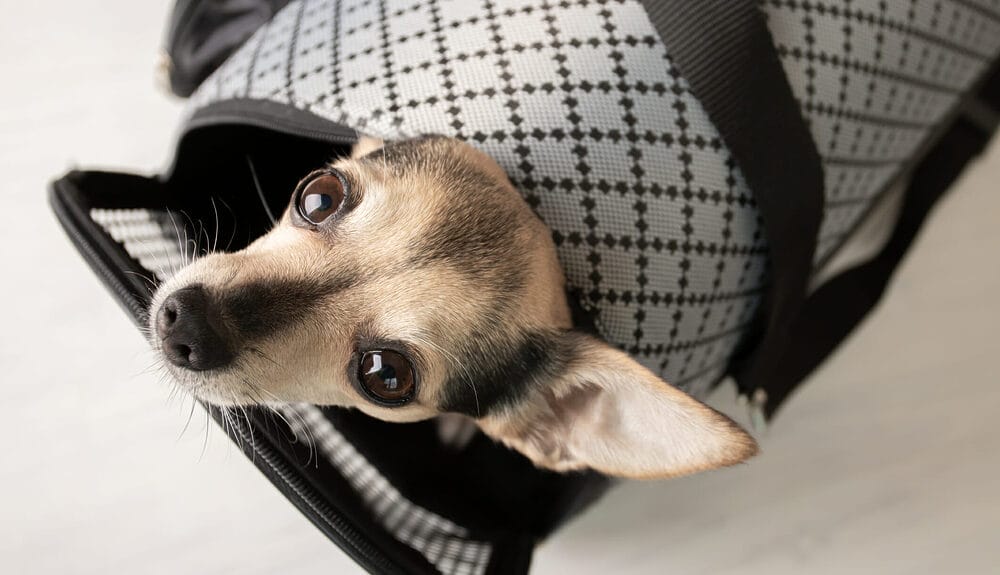
The case is quite different for puppies. If your puppy is one month old, you can expect him to hold his bladder for one hour only. If he is two months old, he can hold it for two hours, and so on.
Senior dogs, i.e., dogs over seven years old, can hold their pee for four to six hours.
If your dog is mature (more than 12 years), it might be able to hold its pee for a maximum of four hours.
That said, other aspects also affect a dog’s bladder-controlling capacity. Travel anxiety can make your dog need to pee more than usual, and dogs with urinary incontinence or other health issues will be harder to manage during a flight. Talk to your vet before flying with a senior dog or one with a medical condition.
What should you do if your dog poops?
If your dog flies in via cargo, there’s not much you can do if it has an accident. Your dog will most likely have to deal with it throughout the flight.
If you’re flying with your pet in the cabin, carrying a few poop bags, spare pads, wipes and a zip-top bag for soiled items will be helpful. You can use the bag to pick up your dog’s poop and then throw it away in the lavatory.
Not cleaning up your dog’s poo right away might lead to unpleasant smells in the cabin. It can also cause other passengers to feel disgusted, so it’s best to be considerate.
Can you prevent your dog from relieving itself in the cabin?
We know it sounds unpleasant! Let’s say you and your pooch have boarded the plane. You’re finally settling down in your seat, and the plane is preparing for takeoff.
Seeing your dog sniffing around and looking for a spot to conduct its business wouldn’t be a pleasant sight.
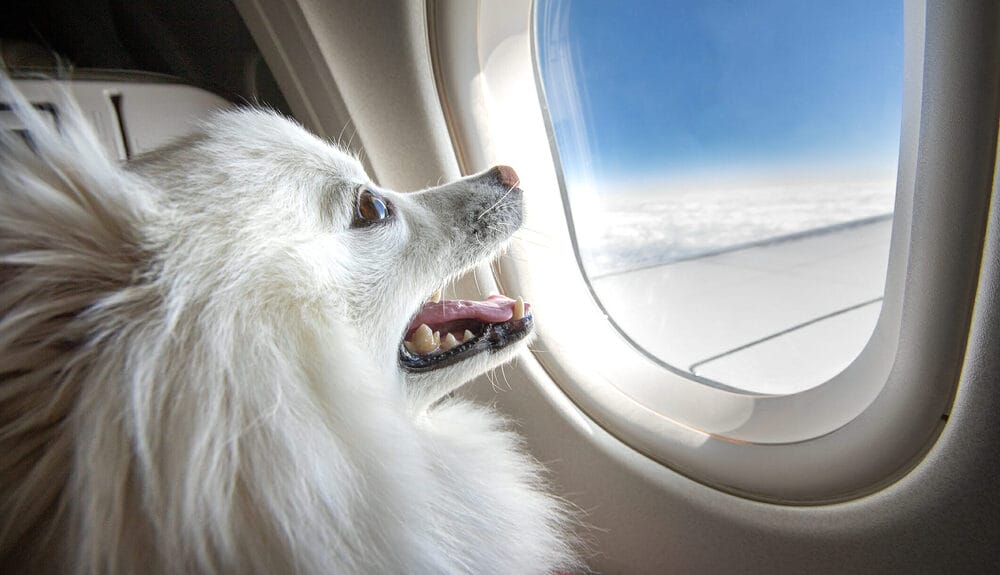
Unfortunately, they are known for causing bathroom accidents when scared, nervous, or even overly joyful. But you wouldn’t want that happening when you’re thousands of feet up in the air sitting next to hundreds of strangers.
So, what can you do to avoid it?
1Reduce Their Food Intake
The first thing you can start doing before getting aboard your flight with your dog is feeding him less than usual.
For instance, give a smaller meal about four hours before the flight rather than a full breakfast right before you leave. This also helps if your dog tends to get travel sickness.
Don't withhold water, though, since dehydration is a bigger risk than a wet pad. Offer small sips before boarding, and feed your dog a normal meal after you land.
2Exercise before flying
If you’re too busy to take your dog for a walk before the flight, ask someone to do it. Exercising helps the dog relax and prevents him from getting anxious and restless when they are put in the crate.
Exercise will promote sleep, too, which is the best way to let time pass quickly and prevent peeing and pooping during flight.
3Use The Airport Toilet
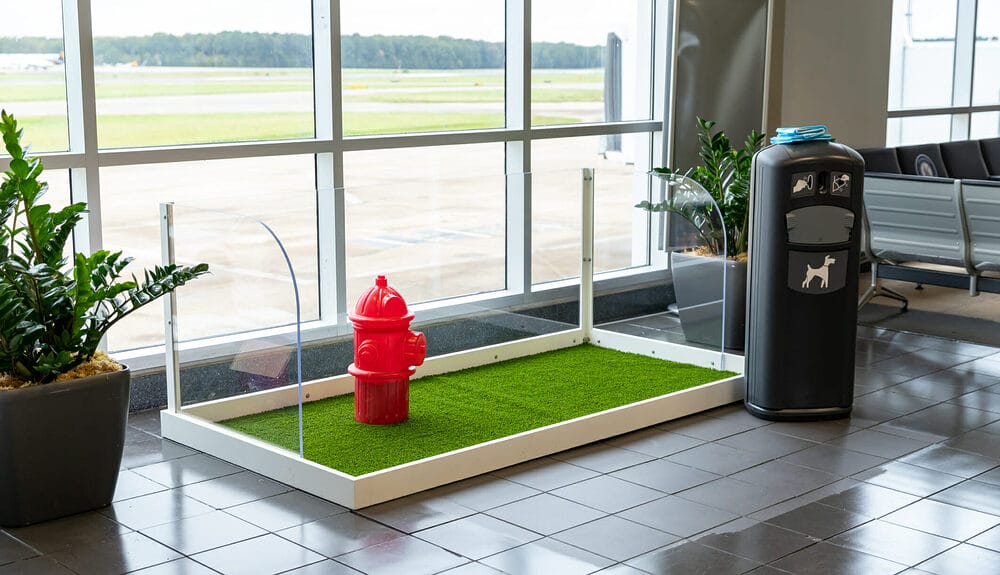
Many airports, including most larger U.S. airports, have pet relief areas, some of them inside security near the gates. Look up your airport's map before you travel.
Let your dog use the relief area as close to boarding as possible, just like you would visit the restroom.
4Avoid sedatives unless your vet advises them
It might seem like sedating your dog would solve the problem, but veterinary organizations generally advise against sedating pets for air travel, because sedatives can affect breathing, balance and body temperature at altitude. Many airlines won't accept sedated pets in the hold. If your dog is very anxious, talk to your vet well before the trip.
Conclusion
Traveling with your dog should be a wonderful experience for both of you. It’s heartbreaking when you have to leave them at home and go away for a while.
Bathroom breaks are one of the biggest worries when taking a dog on a flight, because you can never fully predict when they'll need to go. However, keeping in mind the few tips mentioned above can help you have a more effortless experience.
Now that you know how dogs do their bathroom business on a plane, your next trip will hopefully be more comfortable. Just remember to check your airline’s pet requirements and instructions on handling them, and you and your pooch are good to go! Flying with a bigger dog? See our list of airlines that allow large dogs in cabins. And for extra protection against accidents, you can even make a dog diaper out of a sock.