If you’re like most dog owners, you probably love taking your furry friend out for a walk or run. But what should you do if your dog has diarrhea? Is it okay to exercise him, or should you wait until he’s feeling better?
The short answer: keep it light. A dog with mild diarrhea who is otherwise bright and eating can go on short, gentle potty walks, but skip runs, fetch, hikes and anything in the heat until his stools are back to normal. If he’s lethargic, vomiting or has blood in his stool, skip exercise entirely and call your vet.
The severity of your dog’s diarrhea
The severity of your dog’s diarrhea can easily lead to dehydration, which can cause all sorts of health problems, including heatstroke. So, if your dog has severe diarrhea, it is best to avoid exercising him or her.
If you are unsure of the severity of your dog’s diarrhea, take him or her to the vet for a checkup. The vet will be able to tell you whether or not it is safe to exercise your dog and will provide you with guidance on how to best care for your dog during this time.
His overall health
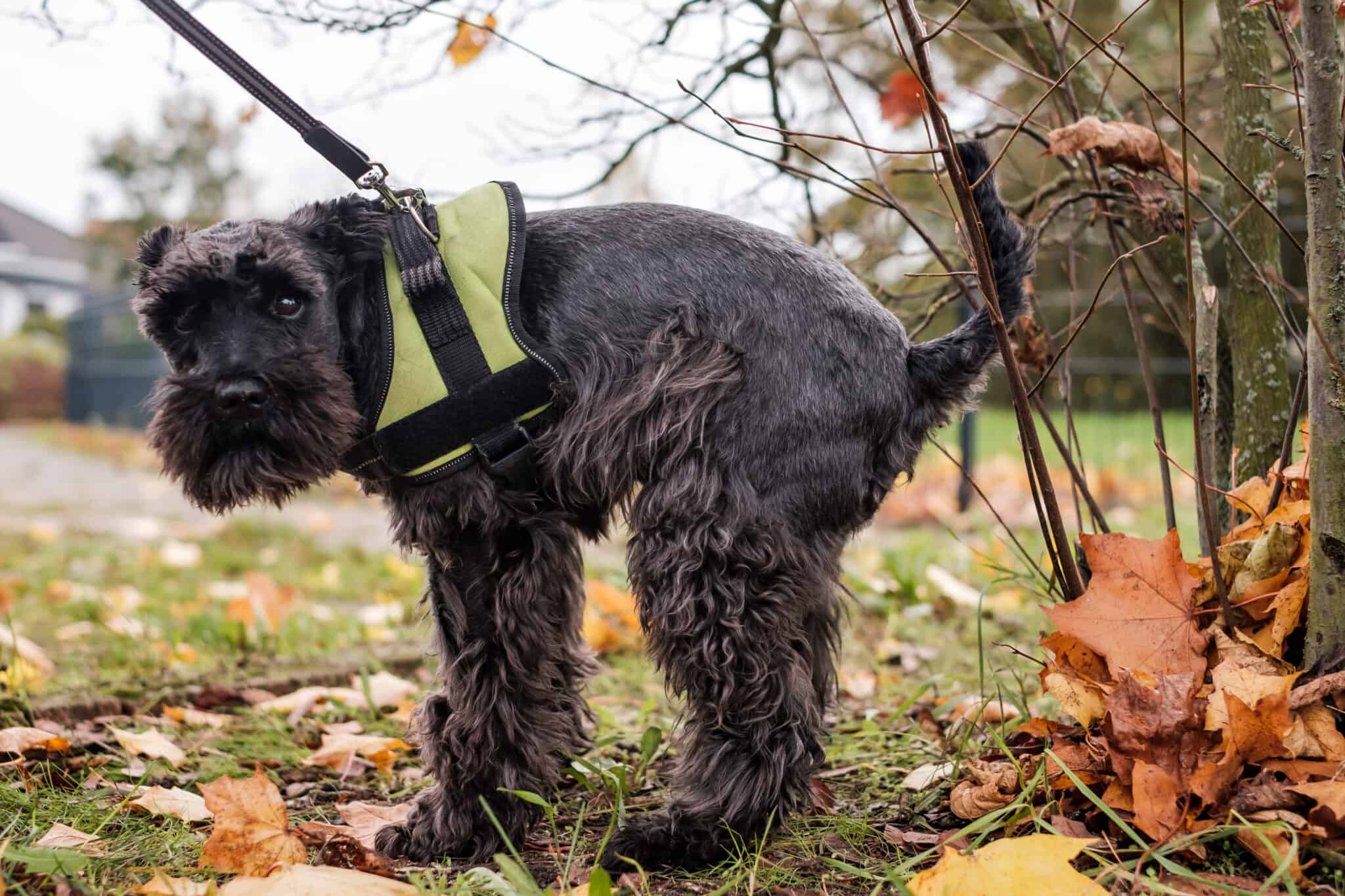
When it comes to managing your dog’s diarrhea, one of the things you’ll need to consider is his overall health. If he’s generally healthy and his diarrhea is mild, you may be able to exercise him a bit.
However, if he’s not feeling well otherwise or if his diarrhea is more severe, it’s probably best to skip the exercise for now. Keep an eye on your dog’s symptoms and talk to your vet if you’re unsure about how much activity is appropriate. In most cases, it’s better to err on the side of caution until your dog is feeling better.
How he is feeling otherwise
In addition to the severity of his diarrhea, you should also consider how your dog is feeling otherwise. If he seems tired or lethargic, it’s probably best to skip the exercise. Exercise requires energy, and if your dog doesn’t have much energy to spare, it’s best to save it for another day.
If your dog is experiencing more problems than just diarrhea, such as lethargy or vomiting, it’s best to consult your veterinarian. They will be able to help you determine whether the exercise is safe for your dog or not.
The type of exercise you’re planning on doing
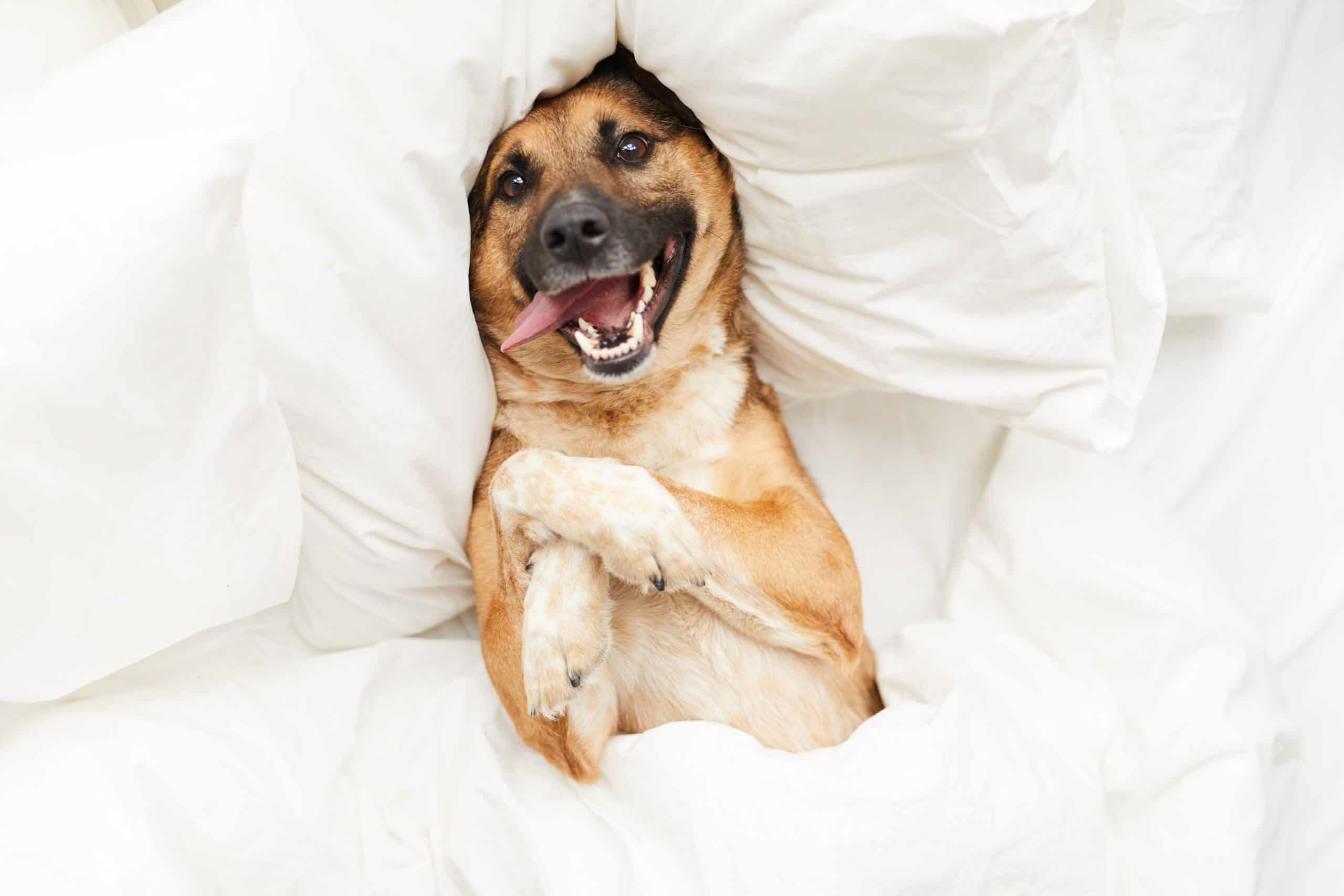
Some types of exercise are more strenuous than others. If you’re planning on doing something relatively low-key, like taking a walk around the block, it may be okay to do it even if your dog has diarrhea.
However, if you’re planning on running or playing fetch for an extended period, it’s probably best to wait until your dog is feeling better. Diarrhea can cause dehydration and may make your dog too weak to exercise for an extended period.
Additionally, running or playing fetch could make your dog’s diarrhea worse. If you’re unsure whether or not your dog is up for a certain type of exercise, it’s always best to be cautious and consult with your veterinarian.
What you should do instead
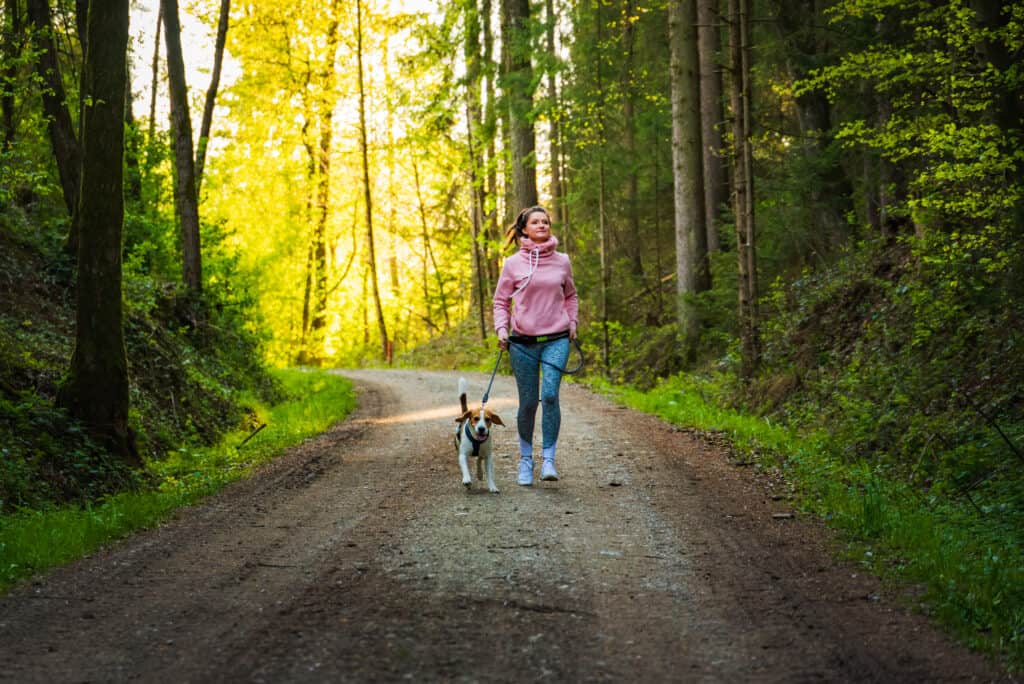
In general, it is probably best to avoid exercising your dog if he has diarrhea. If your dog is healthy and his diarrhea is mild, you may be able to exercise him a bit. However, if his diarrhea is more severe or he’s not feeling well otherwise, it’s best to wait until another day.
As we said, if your dog is experiencing any other problems than diarrhea, please consult your veterinarian.
How to walk a dog with diarrhea safely
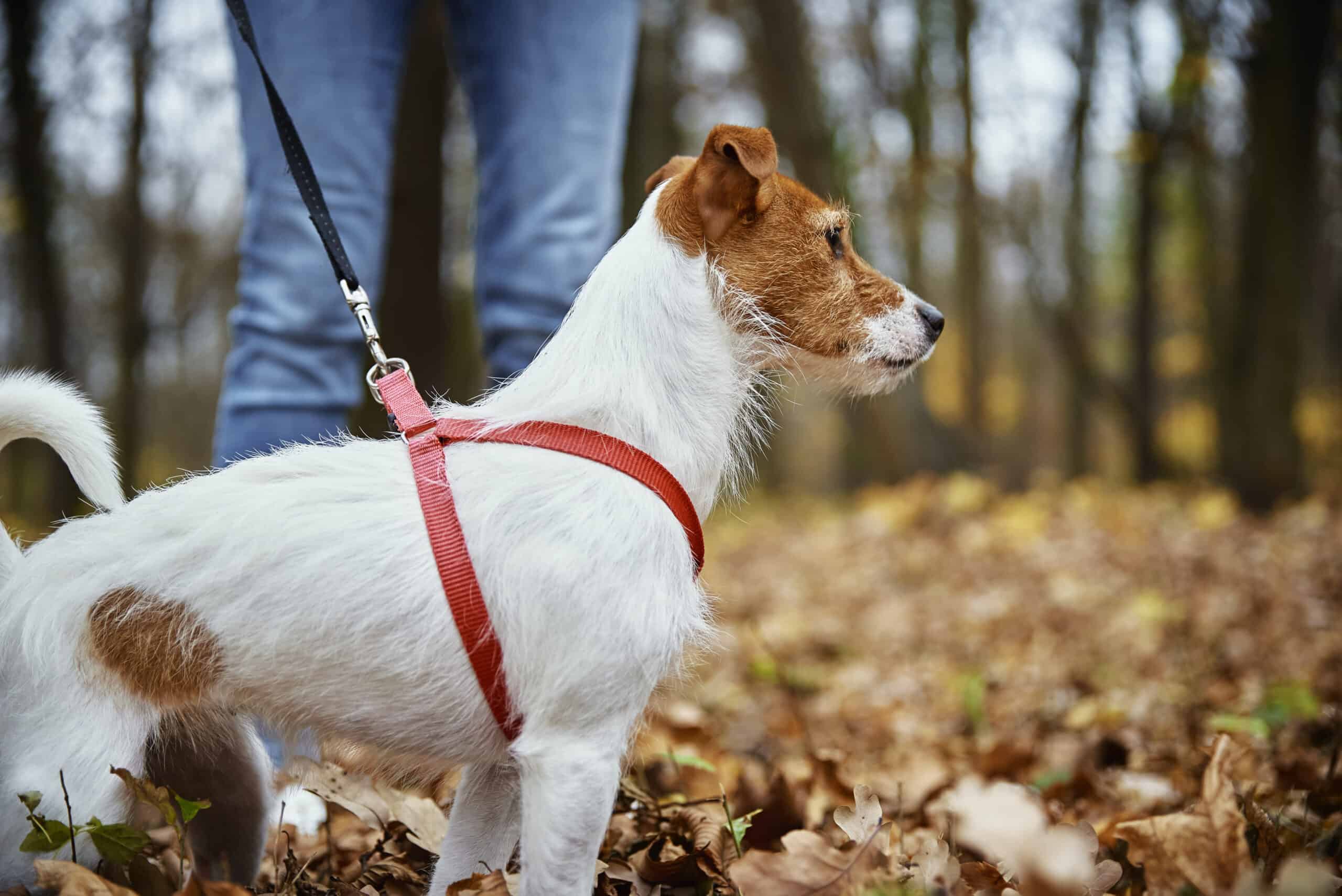
Your dog still needs to go outside, and probably more often than usual. Swap your normal walk for several short potty breaks and keep these tips in mind:
- Keep it short and slow. Ten minutes at a relaxed pace is plenty. Let him sniff and do his business rather than pushing for distance.
- Go out more often. Diarrhea comes with urgency, so offer a trip outside every couple of hours and right after meals. Accidents indoors are a sign he needed to go sooner, not bad behavior.
- Bring water. Offer small drinks during and after the walk to help replace lost fluids.
- Avoid the heat. Walk in the cooler morning or evening hours. A dog who is losing fluids overheats more easily.
- Stay close to home. Skip the dog park and long trails so you can head back quickly, and keep him away from other dogs in case the cause is contagious.
- Pack extra bags. Loose stools are messy, and picking up properly helps stop parasites or infections spreading to other dogs.
- Check his poop. Note the color, consistency and how often he goes. It’s useful information if you end up calling the vet.
Keep your dog hydrated
Dehydration is the main risk with diarrhea, and exercise makes it worse. Make sure fresh water is always available, and keep the bowl clean and topped up.
Signs your dog may be dehydrated include:
- Dry or sticky gums
- Sunken-looking eyes
- Lethargy or weakness
- Skin that stays tented when you gently pinch it at the scruff
- Panting more than usual while resting
If you notice any of these, or he won’t drink at all, call your vet. Puppies, senior dogs, small breeds and dogs with health conditions can become dehydrated quickly, so don’t wait as long with them.
When to call the vet right away
Mild diarrhea often clears up on its own within a day or two. Contact your vet straight away if your dog:
- Has diarrhea that lasts longer than 24–48 hours
- Has blood in his stool, or black, tarry stools
- Is also vomiting, especially if he can’t keep water down
- Is lethargic, weak or seems to be in pain
- Has a swollen or painful belly
- Might have eaten something toxic or swallowed a foreign object
- Is a puppy, an elderly dog, or has an existing health problem
- Hasn't been fully vaccinated and could have picked up parvovirus
When can your dog exercise normally again?
Wait until he has passed normal, firm stools for at least a day or two and is eating, drinking and behaving like himself. Then build back up gradually: start with his usual walk at an easy pace, and save long runs and energetic games for a few days later.
While his stomach settles, keep treats simple. Our picks of the best dog treats for sensitive stomachs are gentle options once your vet says it’s fine to give treats again. And if the trouble started after he drank from a puddle, pond or bucket, read about whether a dog drinking mop water is dangerous and how to keep your dog's outdoor water clean.