6 Reasons Why Dogs Don’t Like Getting Their Nails Cut
 Written by Tim de Jong

Most dogs don't like getting their nails cut because they dislike being held still and having their paws handled, and many have learned to expect discomfort: a cut quick, a squeeze from dull clippers, or simply a stressful struggle. The good news is that slow, treat-based practice can make nail trims much easier for most dogs.
If your dog hates having its nails cut, you’re not alone. Here are 6 possible reasons, with a solution for each:
So, why don’t dogs like getting their nails cut?
1Your dog hates being restrained

Perhaps the most obvious reason why your dog doesn’t like getting its nails trimmed is because it doesn’t like being restrained. Most dogs don’t enjoy being held down, and will struggle to get free.
This is especially true if they’re not used to it. If you only trim your dog’s nails every few months, it’s likely that it will fight you each time. Our step-by-step guide on how to trim a dog's nails that hates it goes further.
The solution: If your dog struggles to stay still while you trim its nails, try getting it used to being restrained beforehand. Spend a few minutes each day gently holding it in your lap or on a non-slip table, without trimming its nails, and give treats the whole time. Keep the hold light and let your dog go before it starts to struggle. This will help it get used to the sensation of being held, and make the nail-trimming process less stressful.
2Sensitive paws

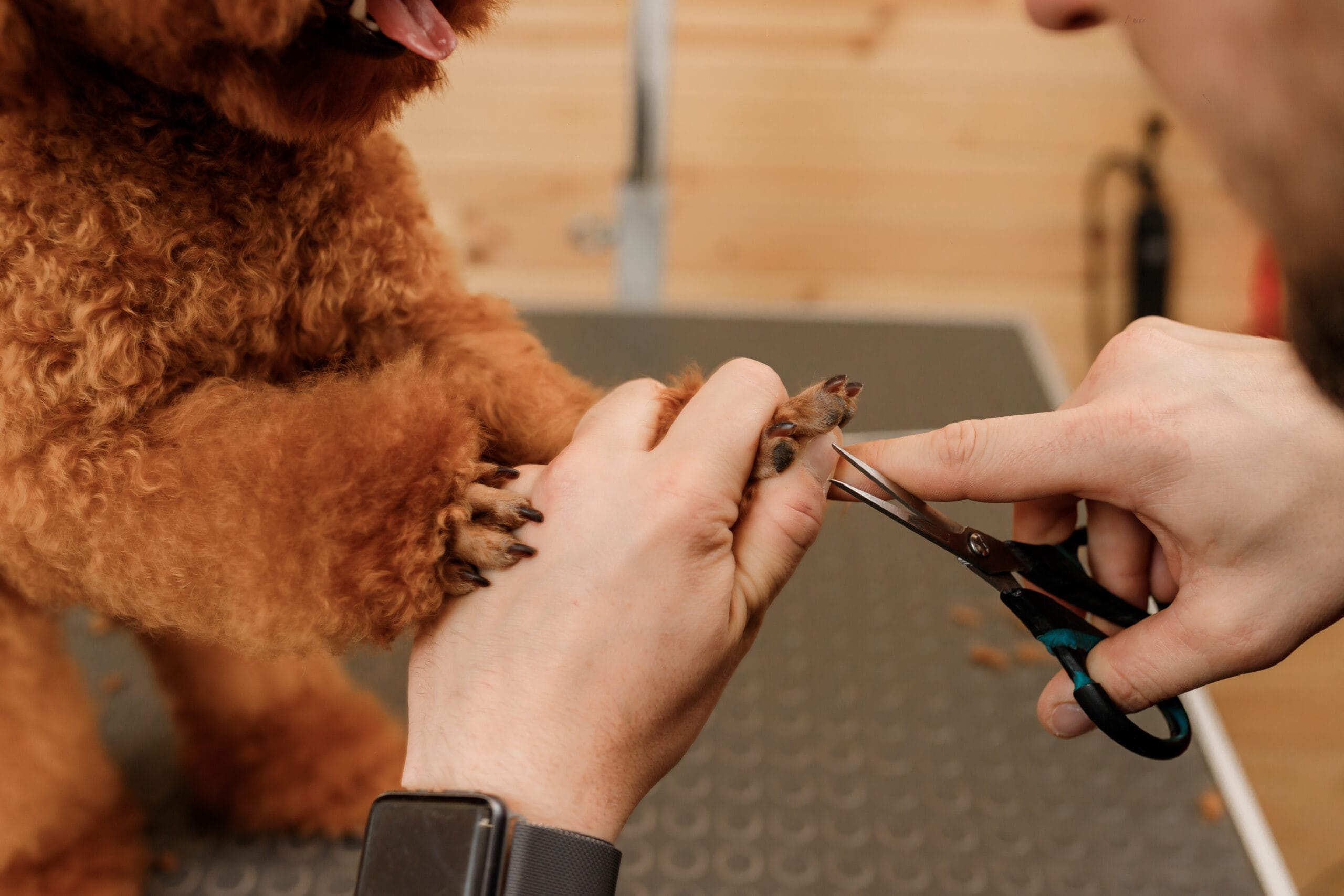
Another reason your dog might not enjoy getting his nails trimmed is that he doesn’t like having his paws handled. For some dogs, having their paws touched is downright unpleasant. (We also look at why dogs curl their paws.)
This is often the case with dogs who have had bad experiences with paw-related procedures in the past, such as having a foreign object (such as a tick or thorn) removed from their paw. Pain can play a part too: a dog with arthritis or a sore paw may find having a leg lifted and held uncomfortable. If your dog suddenly reacts to paw handling, have your vet take a look.
The solution: If your dog doesn’t like having his paws touched, try desensitizing him to it beforehand. Spend a few minutes each day massaging his paws. Pair each touch with a treat, starting with just touching his leg and slowly working down to holding a toe. This will help him get used to the sensation of being handled, and make the nail-trimming process less stressful.
3Unpleasant past experiences

If your dog has had bad experiences with nail trimming in the past, it’s likely that he associates the experience with something negative. Perhaps he was restrained too tightly, the quick was cut, or dull clippers squeezed and pinched the nail instead of cutting it cleanly.
The solution: If your dog has had bad experiences with nail trimming in the past, try to make the experience more positive for him. Use sharp, good-quality clippers, hold him gently and comfortably, start with just one nail per session, and make sure to reward your dog with a lot of treats. This way you condition your dog’s emotions for a better experience.
4That terrible clipping noise

For some dogs, the sound of the nail clippers is enough to send them running for the hills. If your dog hates the sound of the clippers, it’s likely that he associates it with something negative, such as pain or restraint.
The solution: A possibility is to buy another clipper that makes less noise. Some owners switch to filing instead; see why dogs like emery boards and how to file your dog's nails instead of clipping. But a better solution is to get your dog used to the sound of the clippers beforehand: click the clippers near your dog (or clip a piece of dry spaghetti) and give a treat after each click, until the sound predicts good things.
5It's time-consuming

In addition to being held, your dog has to be patient while you trim each and every one of his nails. For some dogs, this is simply too much to ask. They would much rather be running around and playing than sitting still for a long period of time.
The solution: The best solution is to trim your dog’s nails in several short sessions throughout the week, rather than one long session. This way your dog won’t get too bored or restless, and the experience will be less stressful for him.
6You're trimming your dog's nails wrong

If you’re not trimming your dog’s nails properly, it’s no wonder he doesn’t enjoy the experience. If you’re not careful, you can easily cut your dog’s quick (the blood vessel and nerve inside the nail), which is painful for him and bleeds. The quick is easy to see in white nails but hidden in dark ones, so take off just a thin sliver at a time. And if the nails are very long, the quick grows longer too, so trimming a little every week or two helps it recede over time.
The solution: Make sure you know how to properly trim your dog’s nails before you start. If you’re unsure, ask your veterinarian or a professional groomer to show you how. And if you do accidentally cut your dog’s quick, don’t panic! Press styptic powder (or cornstarch if you don't have any) onto the nail tip and hold gentle pressure with a clean cloth to stop the bleeding, and give your dog a lot of treats. If the bleeding hasn't stopped after 5 to 10 minutes, call your vet.
Additional tips for clipping your dog’s nails
Now that you know some of the reasons why your dog might not enjoy getting his nails trimmed, here are a few additional tips to make the experience go more smoothly:
- Have everything you need ready before you start. This includes sharp nail clippers or a grinder, a clean cloth, styptic powder or cornstarch (to stop the bleeding if you accidentally cut the quick), and plenty of treats.
- Start with just one paw, and trim a few nails at a time. This way your dog won't get too overwhelmed or anxious.
- Take your time, and be as gentle as possible. If your dog starts to get antsy, take a break and try again later.
- Reward your dog generously with treats throughout the process.
Final thoughts
Clipping your dog’s nails doesn’t have to be a stressful experience for either of you. By following these tips, you can help your dog learn to enjoy the process. And who knows? With enough patience and practice, he might even start looking forward to it!