Best Supplements & Multivitamins for Senior Dogs (2026)
 Written by Tim de Jong
As an Amazon Associate we earn from qualifying purchases, at no extra cost to you. Disclosure

Pick by your dog
Swipe ›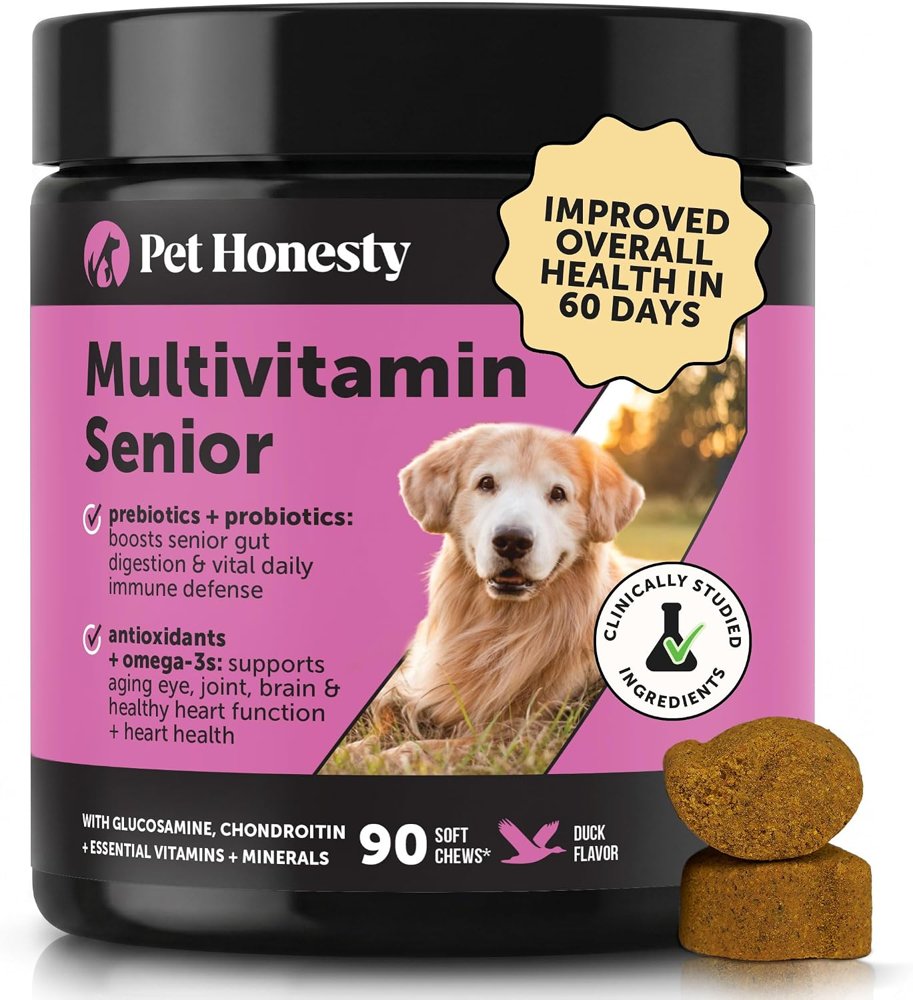
Our picks
| Pick | Best for | Buy |
|---|---|---|
| Top pickPetHonesty Senior Multivitamin | Best Senior Multivitamin Overall | Check price |
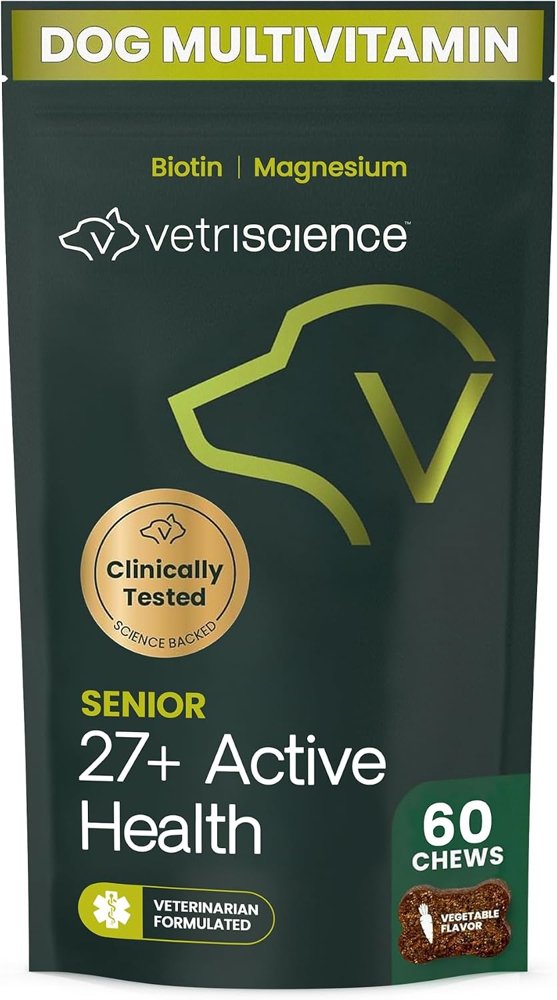
| VetriScience Senior 27+ Multivitamin | Best Budget Senior Multivitamin | Check price |
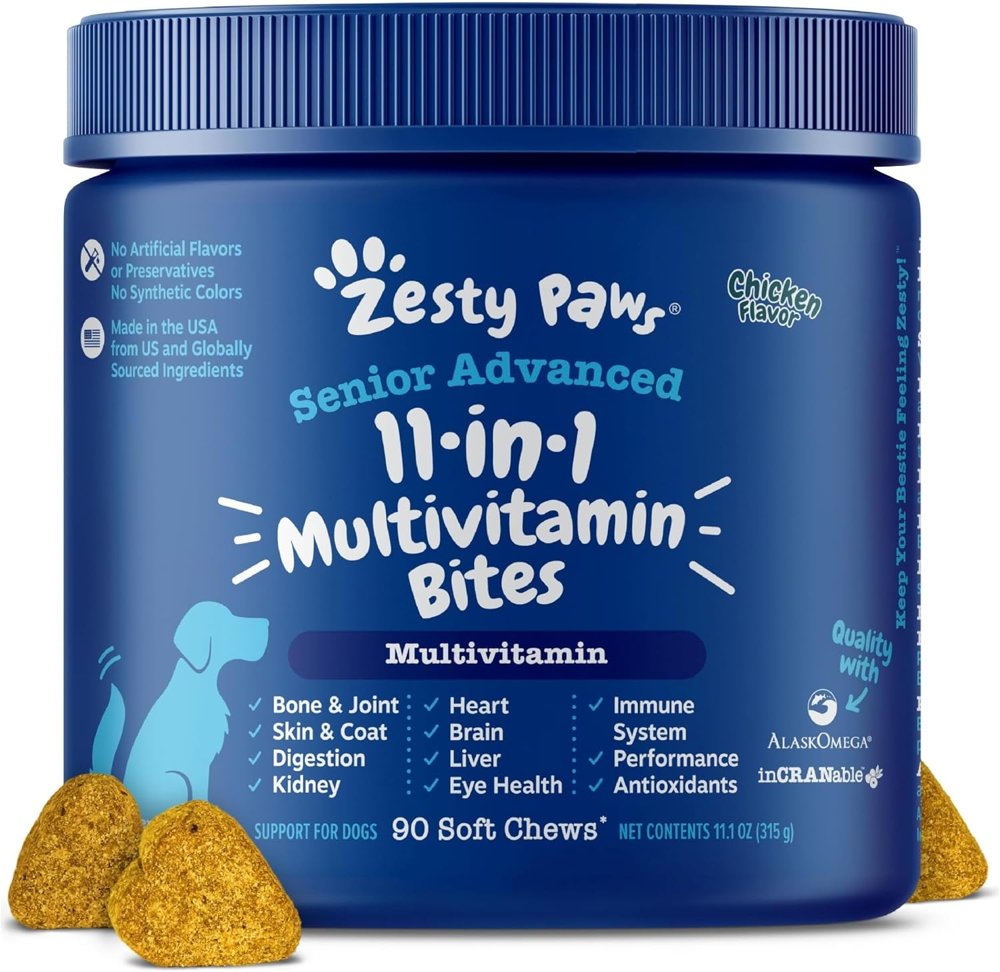
| Zesty Paws Senior Advanced 11-in-1 Bites | Best All-in-One Senior Chew | Check price |
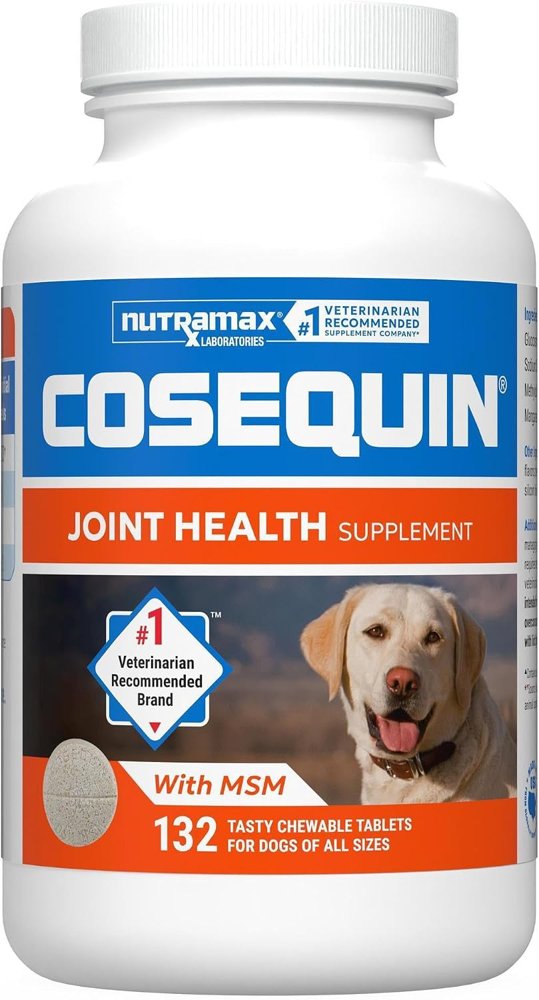
| Nutramax Cosequin Joint Supplement | Best Joint Supplement for Senior Dogs | Check price |
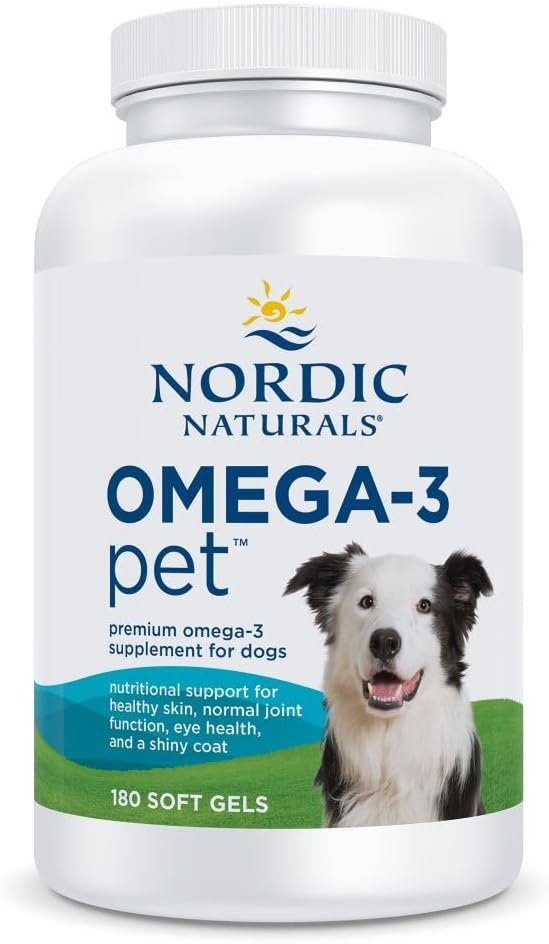
| Nordic Naturals Omega-3 Pet Soft Gels | Best Fish Oil for Senior Dogs | Check price |
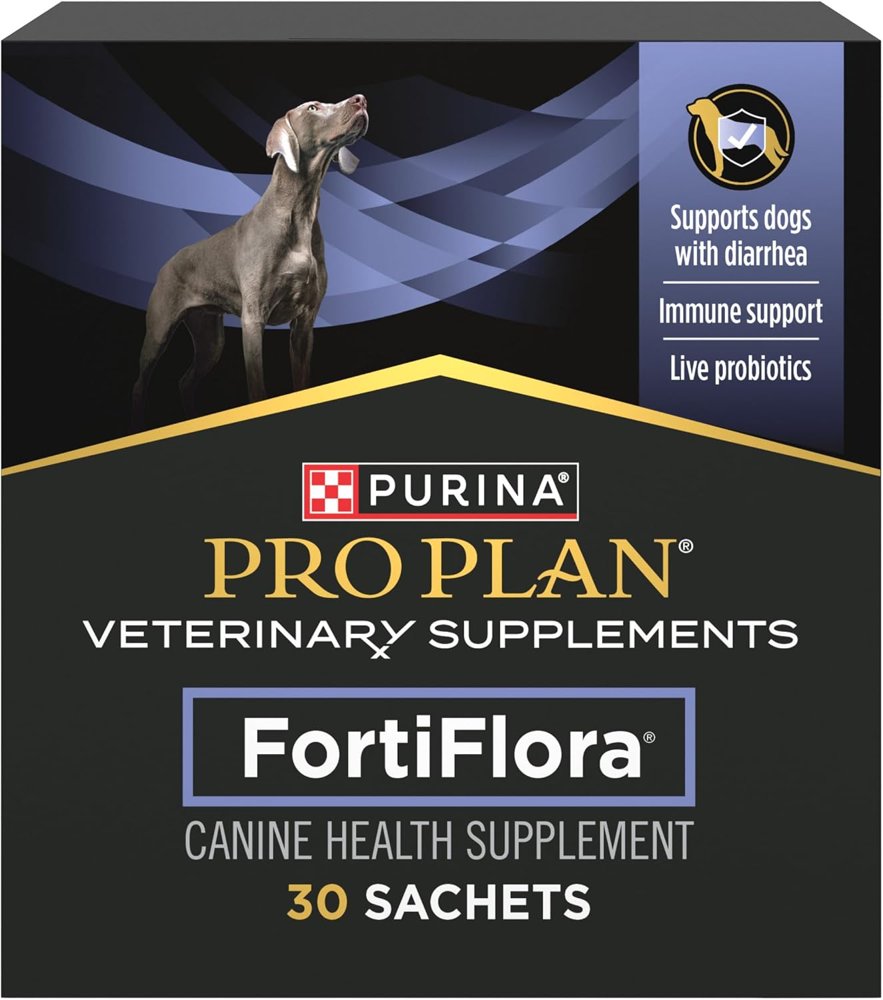
| Purina Pro Plan Veterinary FortiFlora | Best Probiotic for Senior Dogs | Check price |
Walk down the supplement aisle with an older dog in mind and everything claims to be "for seniors". In practice, senior dog supplements fall into four groups that do different jobs: a multivitamin, a joint supplement, an omega-3 fish oil, and a probiotic. Most older dogs need one or two of these at most, and some need none.
Quick answer: The best senior dog multivitamin is the PetHonesty Senior Multivitamin, with VetriScience Senior 27+ as the budget pick. For stiff joints, Nutramax Cosequin (glucosamine, chondroitin and MSM) is the most proven option, and Nordic Naturals Omega-3 Pet is our fish oil pick. A senior dog on a complete and balanced food rarely needs a multivitamin, so start with the supplement that matches a specific problem and check with your vet first.
Below: which senior dogs benefit from supplements, the safety rules that matter most for older dogs, and our 6 picks by type.
Do Senior Dogs Need Supplements or Vitamins?
Not automatically. A commercial dog food labeled "complete and balanced" (AAFCO in the US, FEDIAF in Europe) already contains the vitamins and minerals your dog needs, including senior formulas. Adding a multivitamin on top of that mostly adds cost, and in some cases too much of the fat-soluble vitamins A and D.
Where supplements earn their place is in targeting the changes that come with age:
- Stiff joints and arthritis. Osteoarthritis is one of the most common problems in older dogs. Omega-3 fish oil has the strongest evidence of the supplements here, and glucosamine with chondroitin is widely used alongside it.
- Homemade or limited diets. Home-cooked diets are very often short on calcium, zinc, vitamin D and other micronutrients. These dogs genuinely need a supplement, ideally one chosen by a veterinary nutritionist for that recipe.
- Poor appetite. An older dog that eats less of its food also takes in fewer vitamins and minerals. A vet check comes first, but a multivitamin can help close the gap.
- Sensitive digestion. Probiotics can help some dogs with recurring loose stools or after antibiotics.
- Dry skin and dull coat. Omega-3s support skin and coat, once allergies, parasites and thyroid disease have been ruled out.
If you're not sure whether your dog counts as a senior yet, our dog age calculator shows their age in human years and their life stage. Small breeds usually become seniors around 10 to 12, large and giant breeds as early as 6 to 8. Our senior dog health checklist is a good way to spot age-related changes worth raising with your vet.

Which Senior Dog Supplement Matches Which Problem?
| Your senior dog's issue | Supplement type to discuss with your vet | Our pick |
|---|---|---|
| Homemade diet, picky eater, eating less | Senior multivitamin | PetHonesty Senior / VetriScience Senior 27+ |
| Slowing down, stiff after naps, mild arthritis | Joint supplement + omega-3 | Cosequin + Nordic Naturals |
| Wants one chew that covers several bases | Multivitamin with glucosamine | Zesty Paws Senior Advanced |
| Dry skin, dull coat | Omega-3 fish oil | Nordic Naturals Omega-3 Pet |
| Loose stools, gassy, after antibiotics | Probiotic | Purina FortiFlora |
Two things are worth knowing before you buy. First, joint supplements and fish oil take time: expect four to six weeks before you can judge whether they help. Second, none of these replace pain relief for a dog that is clearly sore. If your dog limps, struggles with stairs or won't jump into the car anymore, your vet can prescribe proper arthritis treatment, and supplements then work as support alongside it. A hip brace can also help dogs with hip dysplasia stay mobile.
Safety Tips Before You Start
- Don't double up. Giving a multivitamin on top of a complete senior food, or stacking several supplements that each contain vitamins, can push fat-soluble vitamins like A and D to harmful levels. Check the labels of every chew your dog gets.
- Never use human vitamins. They can contain doses that are too high for dogs, as well as iron, vitamin D, or xylitol (a sweetener that is toxic to dogs).
- Don't use cod liver oil as your omega-3 source. It's high in vitamins A and D. Use a fish oil made for dogs instead.
- Tell your vet about every supplement, especially if your dog takes medication, has kidney or liver disease, or has surgery coming up. Fish oil at high doses can affect blood clotting, and some supplements interact with drugs.
- Follow the label dose for your dog's weight and count the calories. Soft chews are treats too, and extra weight is hard on old joints.
- Call your vet if your senior dog loses weight, stops eating, drinks or urinates much more than usual, or seems confused or in pain. These signs need a diagnosis, not a vitamin.
What to look for on the label: the NASC Quality Seal (the US National Animal Supplement Council audits member companies), a clear amount of each active ingredient per chew, a dosing chart by weight, and a brand that names who formulated the product. For fish oil, look for the actual EPA and DHA content, not just "fish oil" or "omega-3" in milligrams.
The 6 Best Supplements and Multivitamins for Senior Dogs
We picked these based on ingredient lists and doses, the type of supplement, how long the brand has been around, and review volume and patterns on Amazon. We haven't tested them in a lab; the ratings below are our editorial scores.
1PetHonesty Senior Multivitamin
Get it if
You want one daily chew that covers the basics for an older dog.
Skip if
Your vet has your dog on a prescription diet with its own supplements.
PetHonesty's senior formula is the most complete "senior" multivitamin we found in one chew. Alongside the usual vitamins and minerals, it adds glucosamine and chondroitin for joints, a probiotic and prebiotic blend with pumpkin for digestion, and omega-3s and antioxidants, so it touches most of the areas where older dogs tend to struggle.
That breadth is the reason it's our top pick for a dog that needs general support, for example a picky senior that's eating less, or a dog on a home-cooked diet (with your vet's input on the recipe). It's a soft chew that most dogs take as a treat, and it comes in several flavors, including duck, which helps if your dog is tired of chicken.
PetHonesty is one of the most widely used dog multivitamin brands, and the senior formula is built specifically for older dogs rather than relabeled from an adult chew.
One caveat: the joint ingredients in a multivitamin are a "nice to have". If stiffness is your dog's main issue, a dedicated joint supplement or fish oil (below) delivers more of what matters.
Pros
- Multivitamin, joint support and probiotics in one chew
- Soft chew most dogs eat as a treat
- Several flavors to choose from
- Huge review base
Cons
- Joint ingredient doses are lower than a dedicated joint supplement
- Pricier per chew than basic multivitamins
2VetriScience Senior 27+ Multivitamin
Get it if
You want a simple, affordable senior multivitamin.
Skip if
Your dog only eats meat-flavored chews.
If you want a straightforward senior multivitamin without paying for a long list of extras, VetriScience Senior 27+ is the one to look at. VetriScience is a long-established, vet-focused supplement brand and a NASC member, and this formula is built around what the name says: more than 27 vitamins, minerals, fatty acids and antioxidants aimed at older dogs.
The ingredient list includes vitamins A, C and E as antioxidants, biotin and methionine for skin and coat, and omega-3 and omega-6 fatty acids from fish oil. The brand positions it specifically for senior dogs on homemade or raw diets, which is exactly the group most likely to need a multivitamin.
It's one of the most affordable quality senior multivitamins. The veggie-flavored chew avoids chicken and beef, which is useful for dogs with food sensitivities. If your dog is fussy, a meat-flavored chew may go down more easily.
Pros
- Usually the cheapest quality senior multivitamin
- Focused, senior-specific formula
- Veggie flavor avoids common meat proteins
- Established, vet-focused brand
Cons
- No meaningful joint support, so pair it with a joint supplement if needed
- Fussy dogs may prefer a meat-flavored chew
3Zesty Paws Senior Advanced 11-in-1 Bites
Get it if
Your senior dog won't take more than one supplement.
Skip if
You want to control the dose of each ingredient separately.
Zesty Paws Senior Advanced is the pick for owners who want one chew that covers several bases. Besides the vitamins, it contains glucosamine, OptiMSM and turmeric for joints, CoQ10 and Lutemax 2020 (lutein and zeaxanthin) aimed at heart, brain and eye health, and psyllium, cranberry and probiotics for digestion and bladder support.
That's a lot in one bite, and it's the main appeal for a senior who needs "a bit of everything" and won't tolerate three separate supplements. Zesty Paws is a NASC member.
The trade-off with any all-in-one is dose: with this many ingredients in one soft chew, none of the joint ingredients come close to what a dedicated joint supplement gives. It also contains a little cod liver oil, so don't add a separate cod liver oil on top.
Pros
- Joint, heart, brain, gut and bladder support in one chew
- Easy-to-give soft chew dogs treat as a snack
- NASC member brand
- Strong review track record
Cons
- Many ingredients at modest doses
- One of the pricier options per day for large dogs
4Nutramax Cosequin Joint Supplement
Get it if
Stiff joints are your senior dog's main problem.
Skip if
Your dog won't eat tablets; try the soft-chew version.
If your senior dog's main issue is stiffness, a dedicated joint supplement is a better buy than another multivitamin, and Cosequin is the one we'd start with. Nutramax has made it for over 25 years, bills it as the number one vet-recommended retail joint supplement brand, and has backed its products with published research, which is rare in the pet supplement world.
Each chewable tablet combines glucosamine hydrochloride, chondroitin sulfate and MSM. The evidence for glucosamine and chondroitin in dogs is mixed, so set your expectations: some dogs move noticeably better after four to six weeks, others don't change. They are, however, very safe for long-term use, which is why many vets are happy to recommend a trial. Most dogs start on a higher loading dose for the first few weeks, then drop to a maintenance dose (follow the weight chart on the label).
Cosequin is the joint supplement vets mention most often, and it has been on the market for decades. If your dog won't eat tablets, Nutramax also makes Cosequin Senior soft chews.
Pros
- Long-established, vet-trusted brand
- Glucosamine, chondroitin and MSM at meaningful doses
- Safe for long-term daily use
- Huge review base and good value per dose
Cons
- Results vary from dog to dog
- Tablets are harder than soft chews for some picky seniors
5Nordic Naturals Omega-3 Pet Soft Gels
Get it if
You want omega-3 for joints, skin and brain with easy dosing.
Skip if
You have a giant breed; a liquid fish oil is cheaper per dose.
Of all the supplements in this list, omega-3 fish oil has the best evidence behind it for older dogs. The fatty acids EPA and DHA have anti-inflammatory effects that can help arthritic dogs move more comfortably, and they support skin, coat and heart health. Vets also use them in dogs with kidney disease.
Nordic Naturals is a well-known fish oil brand on the human side, and its pet version uses the same approach: wild-caught fish oil in triglyceride form with no artificial flavors or preservatives. What we like most for seniors is that the EPA and DHA content per soft gel is stated clearly, which makes it easy to dose. That matters, because the useful dose for joints depends on your dog's weight and is often higher than the label's general wellness dose, so ask your vet for a target.
Small dogs can swallow a soft gel hidden in food, or you can pierce it and squeeze it onto a meal. For giant breeds, a pump-bottle liquid fish oil is usually cheaper per dose. Start low and build up over a week or two, as fish oil can cause loose stools or fishy breath at first.
Pros
- Clear EPA and DHA content per soft gel for accurate dosing
- Triglyceride-form oil from a respected brand
- Unflavored, no artificial additives
- Supports joints, skin, coat and heart
Cons
- Large dogs need several soft gels a day
- Can cause loose stools or fishy breath at first
6Purina Pro Plan Veterinary FortiFlora
Get it if
Your older dog has soft stools or just finished antibiotics.
Skip if
Digestion isn't an issue for your dog.
FortiFlora is the probiotic many vet clinics keep on the shelf, and it's the one we'd choose for a senior dog with a sensitive stomach. Each sachet contains a single, well-studied probiotic strain (Enterococcus faecium SF68) plus antioxidants, and Purina markets it for the dietary management of diarrhea in puppies and adult dogs.
It's a powder you sprinkle over food once a day, and because it's palatable, even fussy older dogs tend to eat it without noticing. That makes it handy after a course of antibiotics, during a food change, or for a dog whose stools are often soft.
A probiotic isn't a fix for ongoing digestive trouble, though. Vomiting, diarrhea that lasts more than a day or two, blood in the stool, or weight loss in a senior dog all need a vet visit first.
Pros
- Well-studied single probiotic strain
- Palatable powder, easy to give
- Individually sealed daily sachets
- Widely used by vets
Cons
- Sachets cost more per day than bulk probiotic powders
- Contains animal digest, not ideal for dogs on strict elimination diets
How to Use Senior Dog Supplements Safely
- Start one at a time. Introduce each supplement on its own for a couple of weeks, so you know which one helped, or which one upset the stomach.
- Keep a simple log. Note how your dog gets up after naps, handles stairs and walks. Joint supplements and fish oil take four to six weeks to show results, and small changes are easy to miss.
- Re-check the whole diet. A senior food, a multivitamin and a multi-ingredient chew can overlap. Our guide on how often to feed your senior dog covers the diet side.
- Don't expect miracles for specific conditions. For incontinence, poor sleep or cloudy eyes, there are targeted options: see our guides to supplements for dog incontinence, sleep aids for restless senior dogs and eye supplements for dogs with cataracts, and talk to your vet about medical treatment.
- Think about how you give it. If your senior has dental problems, soft chews and powders are easier than hard tablets. Soft treats for older dogs also work well for hiding pills.
FAQ
What is the best supplement for senior dogs?
It depends on the problem you're trying to solve. For stiff joints, an omega-3 fish oil with a stated EPA and DHA content (such as Nordic Naturals Omega-3 Pet) has the best evidence, often combined with a glucosamine and chondroitin supplement like Cosequin. For dogs on homemade diets or eating poorly, a senior multivitamin such as PetHonesty Senior is the better choice.
Do senior dogs need a multivitamin?
Most don't. A senior dog eating a complete and balanced commercial food already gets the vitamins and minerals it needs. A multivitamin makes sense for dogs on homemade diets, dogs that eat much less than they used to, or dogs your vet has flagged for a specific deficiency.
What vitamins are good for older dogs?
Antioxidant vitamins E and C, B vitamins, and minerals like zinc are common in senior dog vitamins, and omega-3 fatty acids (EPA and DHA) are among the most useful additions for older dogs. Avoid adding extra vitamins A and D unless your vet recommends it, since they build up in the body and can become toxic.
When should I start giving my dog senior supplements?
Around the time your dog becomes a senior: roughly 7 to 8 years for most medium and large dogs, earlier for giant breeds and later for small breeds. Many vets suggest starting fish oil or a joint supplement at the first signs of stiffness rather than waiting for obvious arthritis.
Can I give my senior dog human vitamins or fish oil?
Don't give human multivitamins, which can contain too much vitamin D or iron, or xylitol. Plain human fish oil capsules can be used under vet guidance, but pet-specific products make dosing simpler and skip flavorings that may not suit dogs. Never use cod liver oil as an omega-3 supplement.
Are senior dog supplements safe?
Supplements from reputable brands are generally safe at the label dose, but "natural" doesn't mean risk-free. Fish oil can affect clotting at high doses, some ingredients interact with medications, and stacking products can overdose fat-soluble vitamins. Always tell your vet what your dog takes.
Conclusion – The Right Supplement for Your Senior Dog
The best senior dog supplement is the one that matches a real need. For an older dog on a homemade diet or with a fading appetite, the PetHonesty Senior Multivitamin is our top multivitamin, and VetriScience Senior 27+ does the job for less. If you'd rather give one chew that covers several bases, Zesty Paws Senior Advanced is the all-in-one pick.
For the most common senior problem, stiff joints, skip the multivitamin and look at Cosequin and Nordic Naturals Omega-3 Pet instead, and keep FortiFlora for a sensitive stomach. Whatever you choose, run it past your vet, start one product at a time, and give it a few weeks before you judge the results.

Get The Ideal Dog Routine, free
A 10-page guide written by a vet: a sample daily routine, exercise and alone time, and grooming and vet check schedules.
We'll email you the download link. Unsubscribe anytime.