What Happens If You Cut a Dog's Whiskers? (And Do They Grow Back?)
 Written by Tim de Jong
Maybe the groomer took them off, maybe you slipped with the scissors while tidying your dog's face. Either way, you're now looking at a muzzle with short stubs where the whiskers used to be and wondering what you've done. The good news: nothing permanent.
If you cut a dog's whiskers, it doesn't hurt and they grow back. The whisker shaft has no nerves, just like a hair, and the follicle keeps producing it, so cut whiskers regrow to full length over several weeks to a few months. Until then your dog loses some of the touch information whiskers provide, so they may misjudge gaps or bump into things in the dark. Pulling a whisker out, on the other hand, is painful.
Dogs use their whiskers to sense when something is close, judge the width of a gap and protect their eyes. Contrary to popular belief, cutting a dog's whiskers does not blind them. Still, it's best not to cut them, because they're an important part of your dog's senses.
What are whiskers and why do dogs have them?
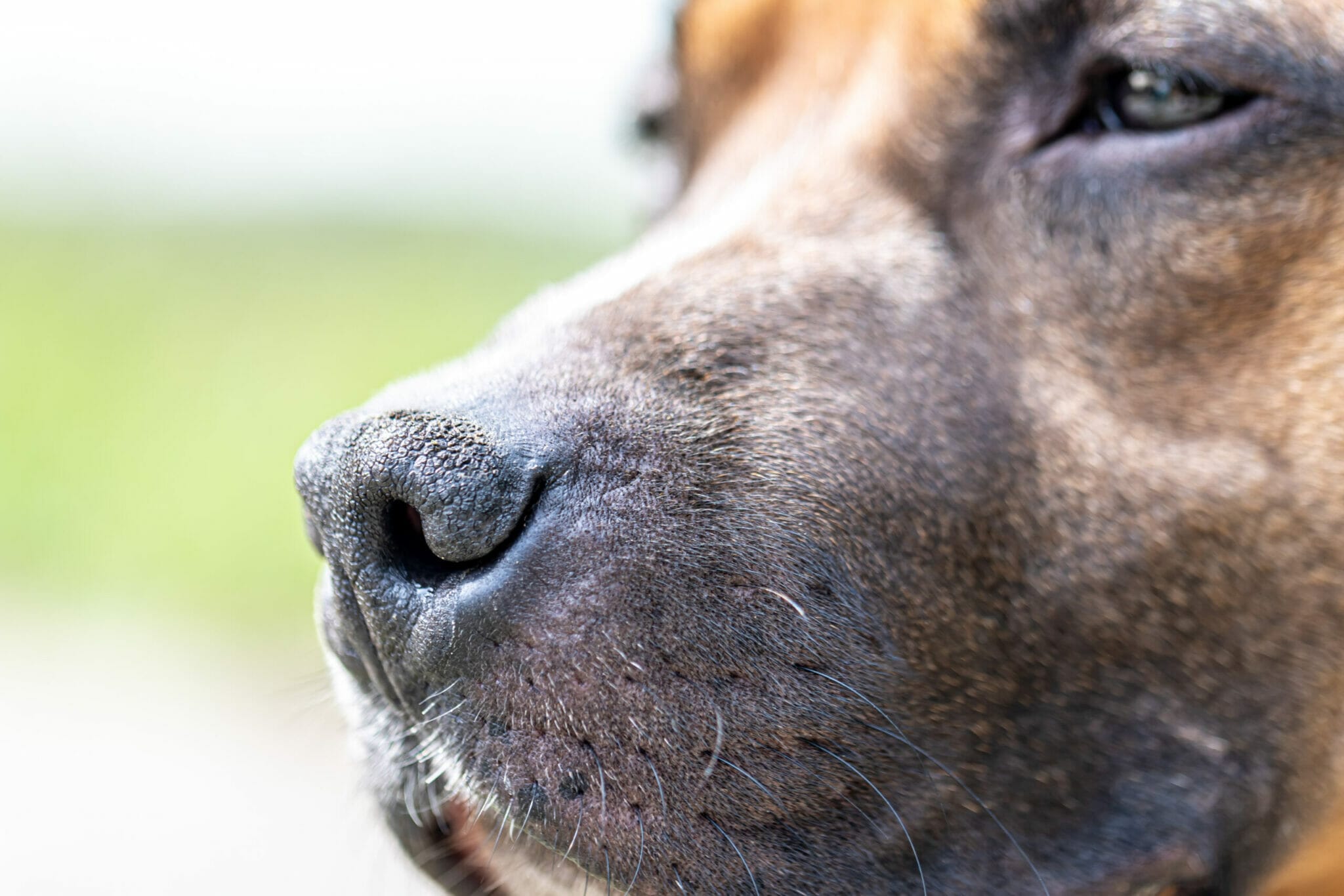
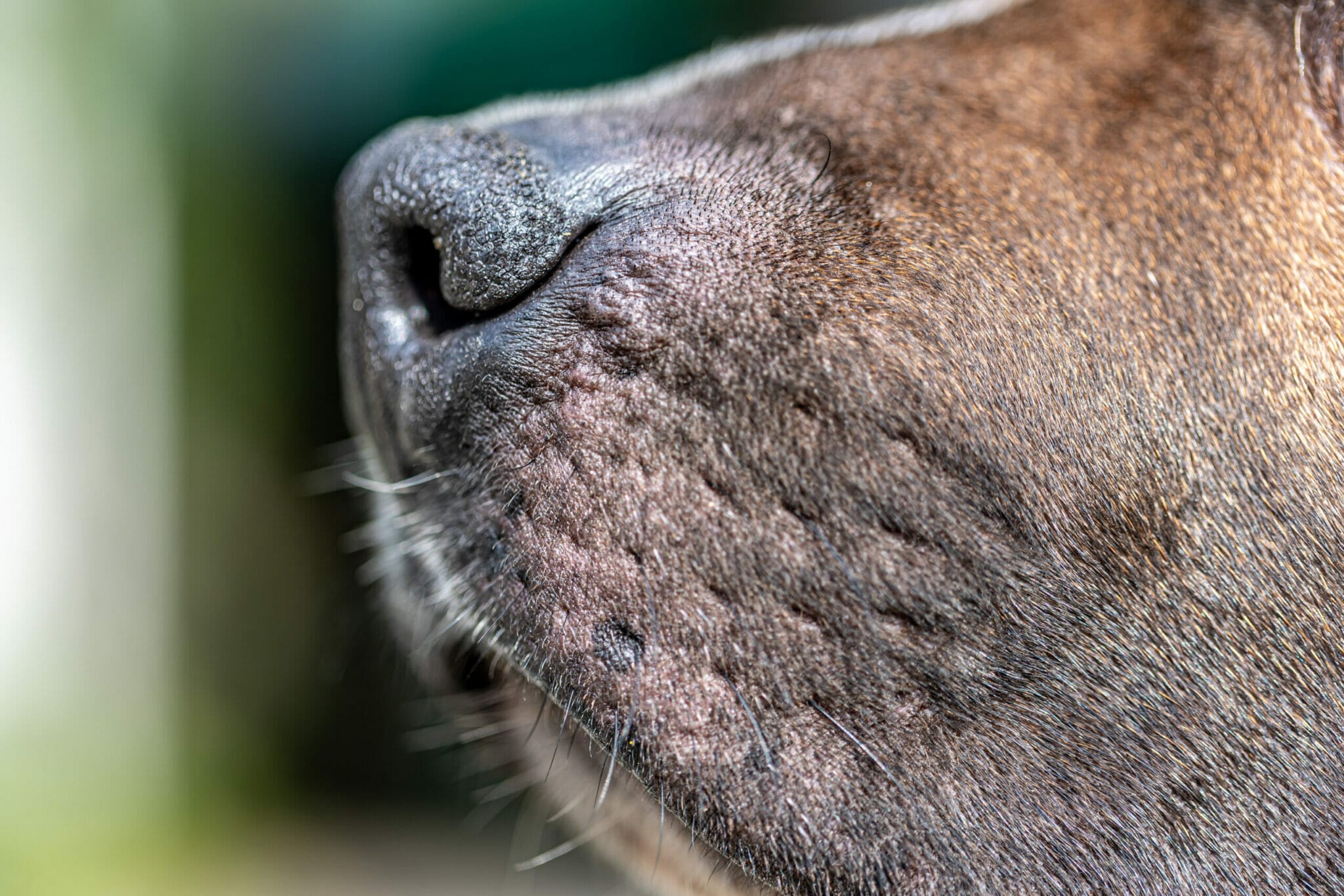
Whiskers are long, thick hairs that grow on the sides of a dog's muzzle, above their eyes, and on the cheeks and chin. Unlike the rest of a dog's fur, whiskers are special touch hairs called vibrissae. They are stiffer than normal hairs and sit in deep follicles packed with nerves and blood vessels, so even a tiny movement of the whisker sends a signal to the brain. That's why they play an important role in a dog's sensory system.
1Avoid collisions
Dogs use their whiskers to sense when something is close to them. The whiskers are very sensitive and can detect even slight air movement. This helps dogs avoid collisions and navigate in low-light conditions.
2Determine size
Whiskers also help dogs judge the width of a hole or space and get a feel for objects right in front of the nose, an area dogs can't see well. This is especially useful for hunting and working dogs that push through undergrowth or tight spaces.
3Protect the eyes
The whiskers above a dog's eyes act as an early warning system. When something brushes against them, such as a branch or a blade of grass, the dog automatically blinks or turns its head, which helps protect the eyes from injury.
4Maintain balance
Finally, whiskers add to a dog's overall awareness of its body and surroundings. Together with their other senses, the touch signals from the whiskers help a dog move confidently, adjust its body and avoid obstacles, especially in the dark.
What happens if you cut a dog's whiskers?
Cutting a dog's whiskers is painless, but it takes away some of the sensory information your dog relies on until they grow back. What you might notice:
- More caution in the dark. Some dogs move more slowly at night or hesitate in narrow spaces.
- Bumping into things. A dog may knock its nose or face against furniture, door frames or its food bowl a little more often.
- Blinking less quickly. Without the brow whiskers, a branch or blade of grass can get closer to the eye before the dog reacts.
- Nothing at all. Plenty of dogs, especially indoor pets with good eyesight, carry on as if nothing happened.
Senior dogs with poor eyesight and dogs that are already anxious tend to rely on touch more, so they're the ones most likely to seem a bit off. The effect fades as the whiskers grow back. If your dog seems unsettled after a grooming appointment in general, see how long a dog may act weird after grooming.
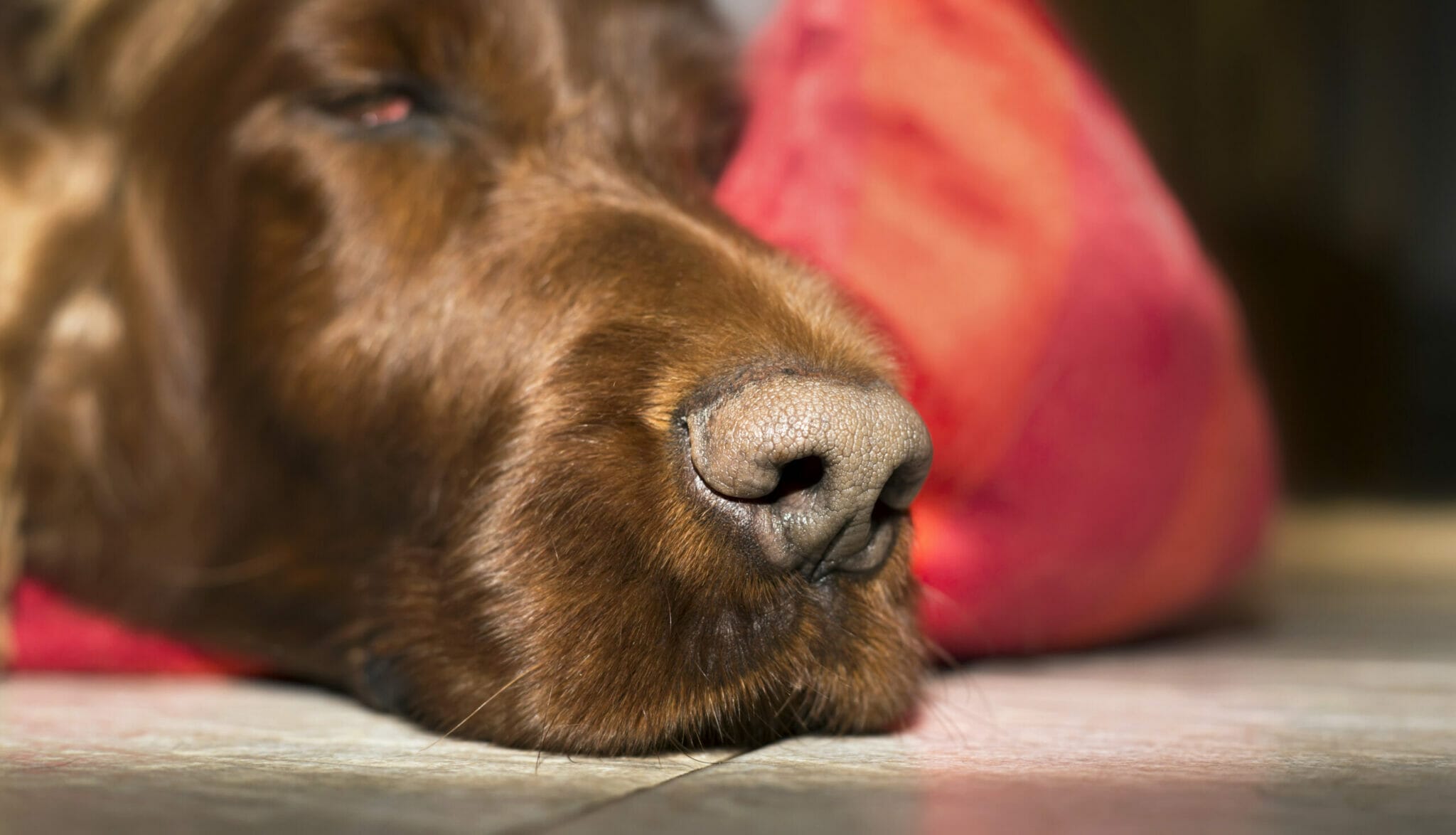
Can you cut a dog's whiskers? Is it okay?
You can, in the sense that it won't injure your dog. But for most pet dogs there's no good reason to, and the general advice from vets is to leave them alone. Whiskers aren't ordinary fur; they're sense organs, and trimming them is purely cosmetic.
It's okay, or at least not a big deal, if:
- a few whiskers got clipped while you trimmed around the face or removed a mat,
- your groomer trimmed them as part of a breed cut and your dog seems fine,
- you trimmed them once and won't do it again.
It's better to avoid cutting them if your dog is a senior, has poor vision, is nervous, or is a working or sporting dog that moves through brush and the dark. Those dogs get the most use out of their whiskers.
If you're tidying your dog's face yourself, use rounded-tip scissors, cut fur around the whiskers rather than across them, and stop if your dog is wriggling. Never trim near the eyes with sharp scissors on a moving dog. For hair around the muzzle, thinning shears can blend the coat without cutting the whiskers short.
Does it hurt to cut a dog's whiskers?
No. The part of the whisker you see is dead keratin, just like hair or the tip of a nail, so cutting it is no more painful than a haircut. The sensitivity is all at the base: each whisker sits in a follicle surrounded by nerves and blood vessels, and that's where touch signals are picked up.
That's also why pulling is a completely different thing. Tugging or plucking a whisker pulls on that sensitive follicle and hurts. Even pulling or bending the whiskers roughly during play or handling can be uncomfortable, so teach children to stroke the face gently.
The one real risk with trimming is the scissors themselves. A wriggling dog can get nicked on the lip or near the eye. If your dog flinches or cries out when you touch its muzzle, even without any trimming, something else may be going on; see why a dog yelps when touched on the side of the face.
What happens if you accidentally pull out a dog's whisker?
Because the follicle is packed with nerves and blood vessels, plucking a whisker hurts and may cause a little bleeding, and the open follicle can occasionally become infected.
So, if you accidentally pull out a dog's whisker, don't panic. In most cases the follicle isn't damaged and a new whisker grows back on its own. Keep the spot clean, and see your vet if it becomes swollen, red or oozing. Never deliberately pluck a dog's whiskers.
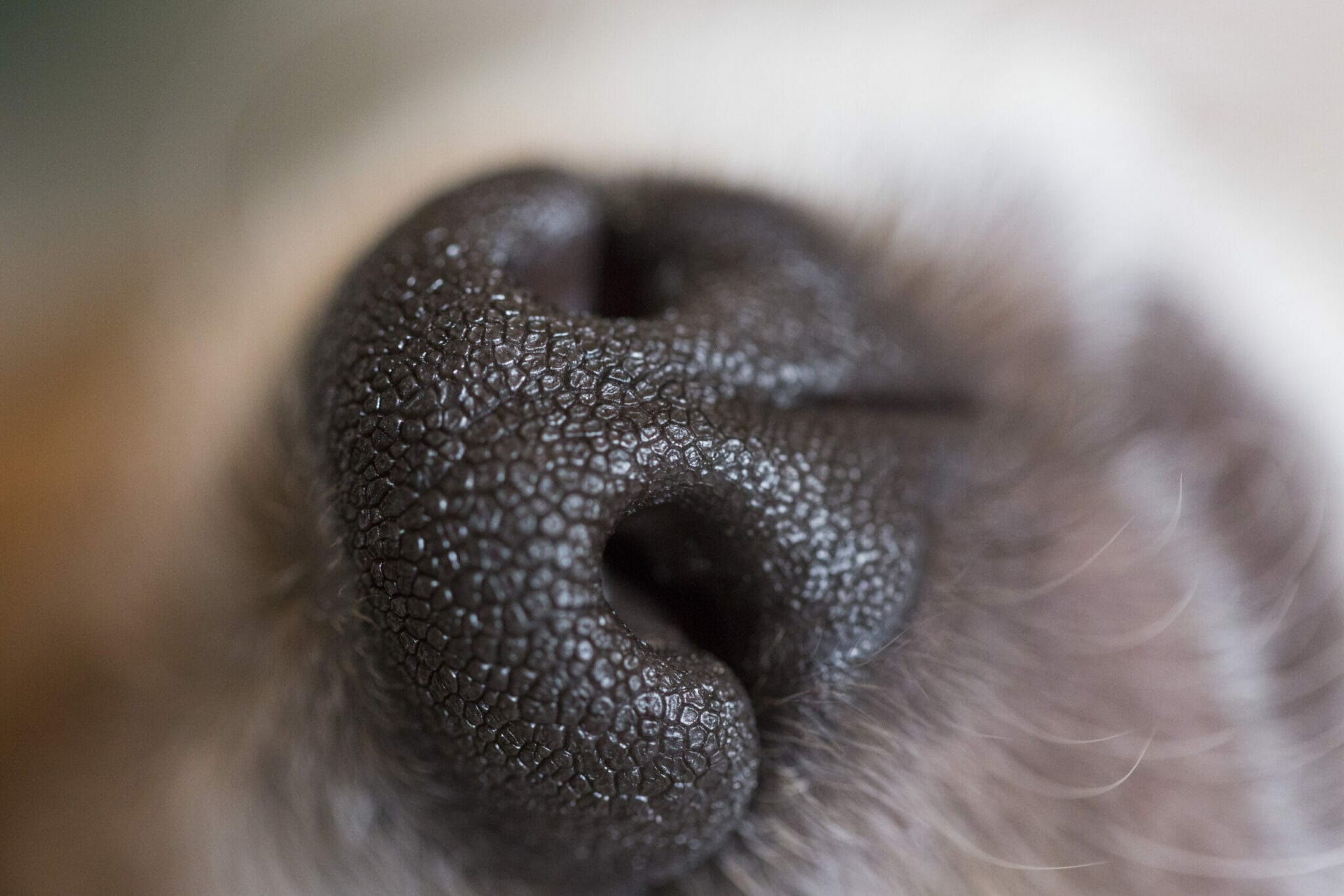
How to stop whisker bleeding?
If the spot where a whisker came out is bleeding, here's what to do:
- First, take a paper towel or soft cloth and apply light pressure to the area.
- After a few minutes, increase the pressure slightly and see if the bleeding has stopped.
- If the bleeding does not stop, continue to apply pressure for a few more minutes.
- If the bleeding still does not stop after 10–15 minutes of steady pressure, see your veterinarian. They can check whether there's a more serious problem and treat it.
Do dog whiskers grow back?
Yes, dog whiskers grow back, whether they were cut, broke off or fell out. The follicle under the skin is what produces the whisker, and cutting the visible part doesn't touch it. A trimmed whisker simply keeps growing from the base, and a whisker that falls out or gets pulled is normally replaced by a new one from the same follicle.
How long do dog whiskers take to grow back?
Expect several weeks for whiskers to be clearly visible again and roughly two to three months for them to reach full length. Exact timing varies with the dog, its age, its health and where the whisker is, so treat that as a ballpark rather than a deadline. Longer whiskers on the muzzle naturally take longer to get back to full length than the short ones on the chin.
Like the rest of the coat, whiskers grow in cycles. A trimmed whisker regrows from its stub, and eventually it's shed and replaced as part of the normal cycle anyway.
What to do while your dog's whiskers grow back
- Keep the lights on. A night light in hallways or near stairs helps a dog that suddenly seems clumsier after dark.
- Skip new tight spaces. Give your dog a bit more room around crates, dog doors and narrow gaps for a few weeks.
- Don't trim again. Let the whiskers reach full length before your next grooming appointment, and tell the groomer to leave them.
- Watch for skin trouble. If no whiskers come back after a couple of months, or the muzzle is red, scabby or losing other hair, have your vet take a look.
Do groomers cut dog whiskers?
Some do. Many groomers trim the face for a clean, neat look, and on breeds with a lot of facial hair, such as poodles, bichons, schnauzers and some terriers, the whiskers can get cut along with the coat. In the show ring, trimming whiskers has also been a traditional part of presenting some breeds. Other groomers leave whiskers alone by default. It depends on the groomer and the style you ask for.
If you'd rather keep your dog's whiskers, just say so when you book or drop off: "please don't trim the whiskers." A good groomer will scissor around them. It also helps to ask how they'll handle the face if your dog has a lot of hair around the eyes and muzzle, since some trimming there is needed to keep the eyes clear.
If your groomer already trimmed them, don't worry. It didn't hurt your dog and the whiskers will grow back. For other things to watch for after a groom, see how to soothe a dog's ears after grooming, and if you're budgeting for regular appointments, try our dog grooming cost calculator.
Do dogs shed whiskers?
Yes. Just like the rest of a dog's fur, whiskers shed and are replaced naturally, usually one at a time, so you rarely notice. Finding a single whisker on the floor or in the dog bed is completely normal. If your dog is losing lots of whiskers at once, or has hair loss, redness or scabs on the muzzle, it could be a sign of a skin problem or illness, and it's worth a vet check.
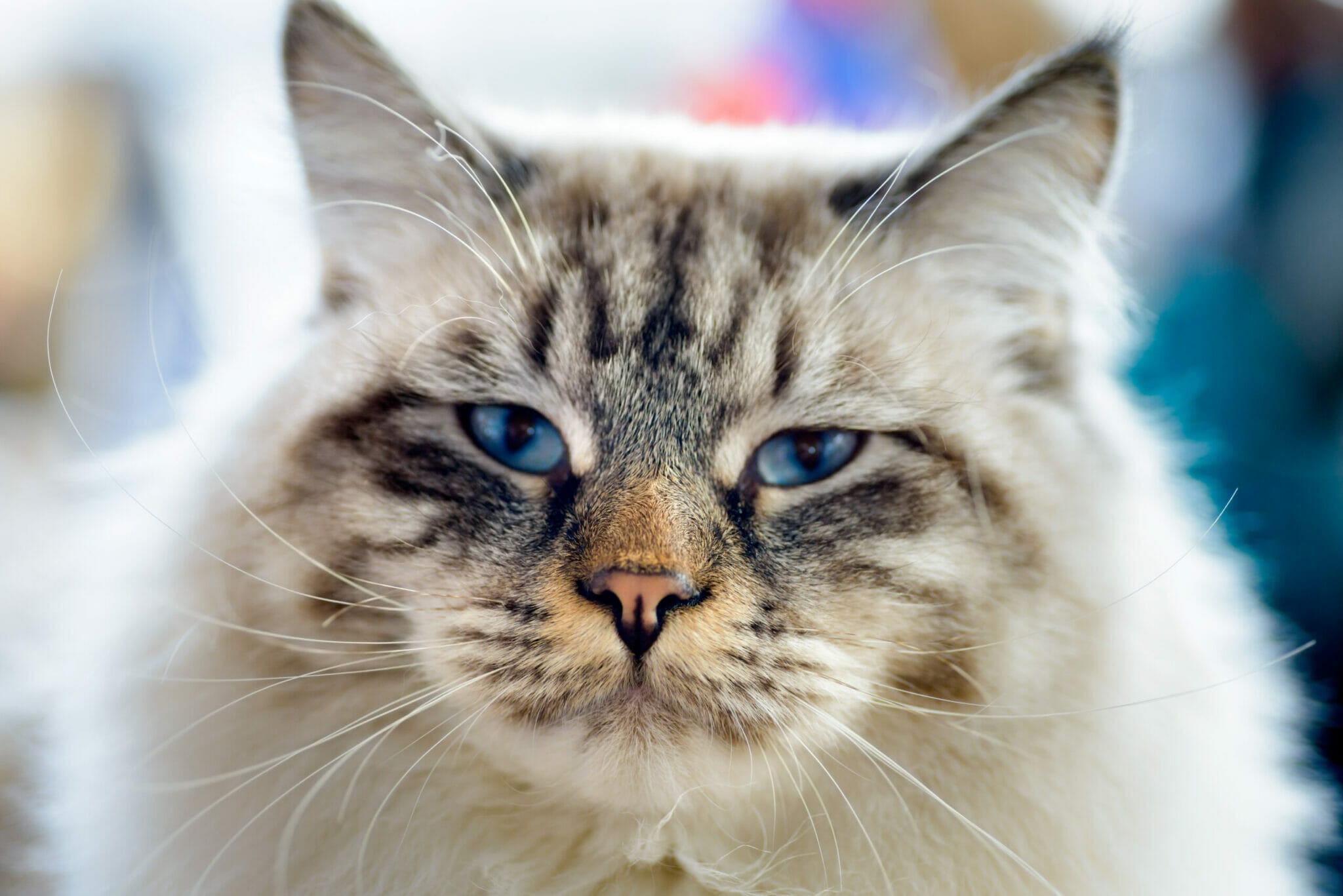
Are dog whiskers the same as cat whiskers?
Dog whiskers and cat whiskers serve the same purpose, but there are some differences. Cats tend to rely on their whiskers even more than dogs do, and their whiskers are usually longer relative to their face, roughly matching the width of their body to help them judge tight gaps. Dog whiskers vary much more from breed to breed, from short and stubby to long and wiry.
FAQ
1Do dog whiskers grow back if cut?
Yes. Cutting only removes the visible part of the whisker; the follicle under the skin is untouched and keeps producing it. Cut whiskers usually regrow to full length in roughly two to three months.
2Will my dog's whiskers grow back if they were pulled out?
In most cases, yes. A new whisker grows from the same follicle. Pulling hurts, though, and the spot can bleed a little. Keep it clean and see your vet if it becomes swollen, red or starts oozing.
3Is it okay to cut a dog's whiskers?
It won't harm your dog, but there's no health reason to do it and it temporarily dulls an important sense. Most vets recommend leaving them alone, especially on senior dogs, dogs with poor eyesight and nervous dogs. If a few get trimmed by accident, it's not a problem.
4Does cutting a dog's whiskers hurt?
No. The whisker shaft has no nerves, so cutting it is painless, like a haircut. The nerves are in the follicle at the base, which is why pulling a whisker hurts and cutting one doesn't.
Can cutting a dog's whiskers make them blind?
No. Whiskers are touch sensors, not part of the eyes. A dog without whiskers can see just as well as before, but it may be less aware of things very close to its face, particularly in the dark.
Should I ask my groomer not to cut my dog's whiskers?
If you want to keep them, yes. Many groomers trim the face by default, so mention it when you drop your dog off. A good groomer will work around the whiskers.
Final word
Whiskers are an important part of a dog's sensory system. They help dogs avoid collisions, judge the width of spaces, protect their eyes, and move confidently. Cutting a dog's whiskers doesn't hurt or blind them, but it temporarily dulls this sense and is best avoided, while pulling a whisker out is painful.
Dog whiskers do grow back, usually reaching full length within a few months. If they don't return, or your dog is losing a lot of whiskers along with other hair or has a sore muzzle, ask your vet to check for a skin problem.

Get The Ideal Dog Routine, free
A 10-page guide written by a vet: a sample daily routine, exercise and alone time, and grooming and vet check schedules.
We'll email you the download link. Unsubscribe anytime.