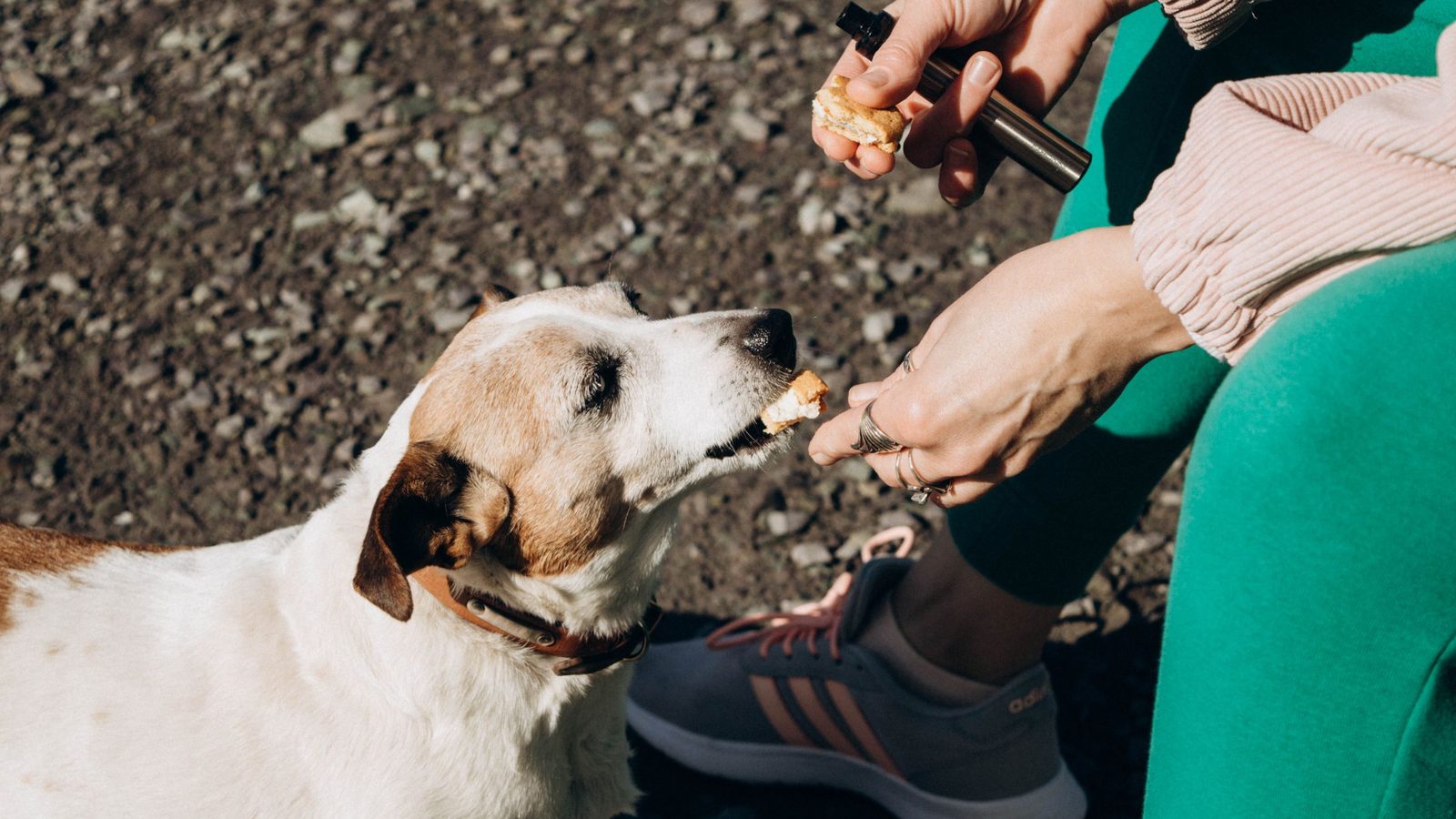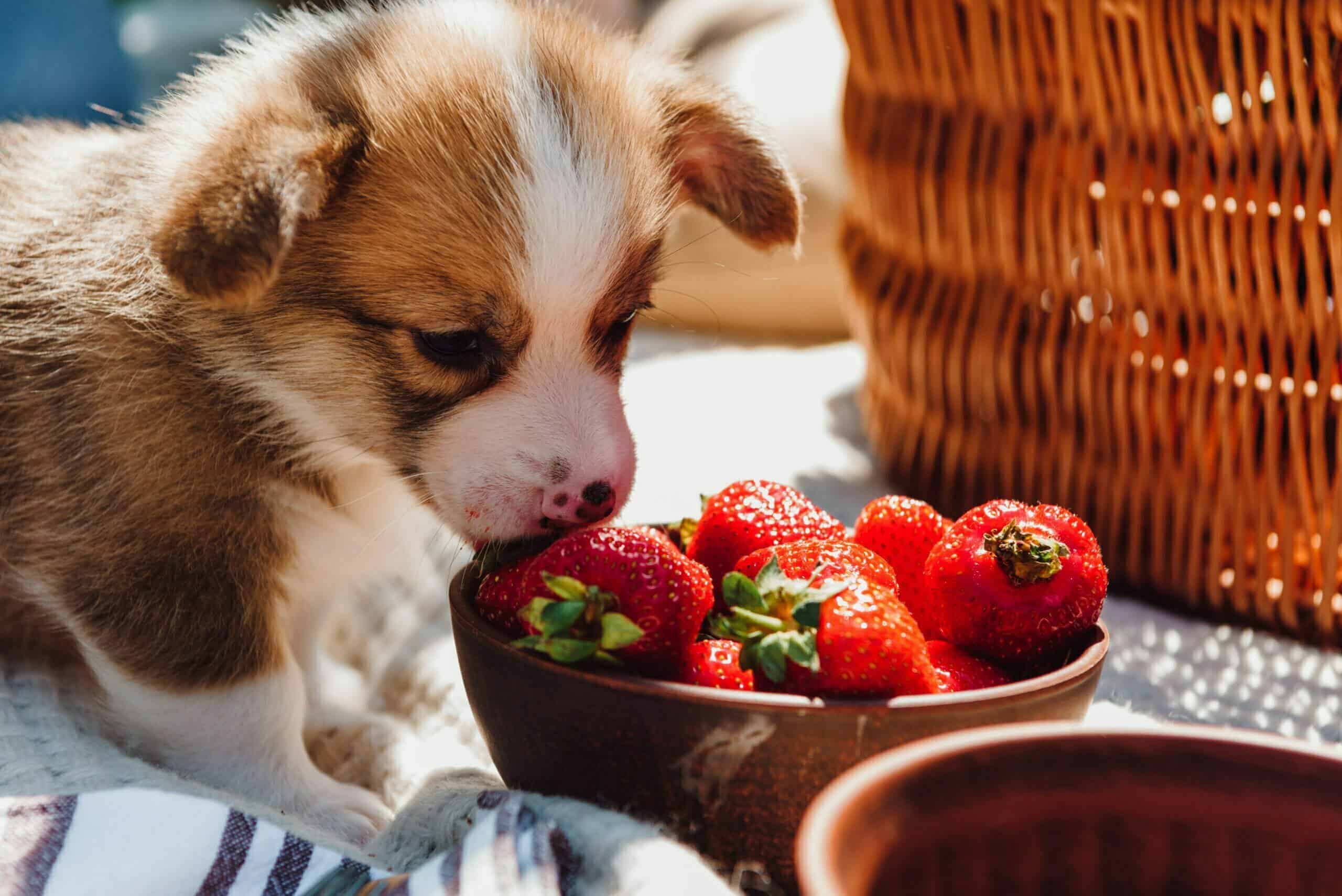

Vegetables are some of the best treats you can give a dog. They are low in calories, and most are cheap and already in your fridge. But the vegetable drawer also holds the onion family, which is toxic to dogs, so it helps to know where the line is.
The risk levels in this guide come from the sourced list behind our toxic to dogs checker, which uses the ASPCA, Pet Poison Helpline and the American Kennel Club. A vegetable that is missing here is not automatically safe. When in doubt, check the tool or call your vet.
Which vegetables can dogs eat? A quick table
| Vegetable | Verdict | The catch |
|---|---|---|
| Carrots | Yes | Cut into bite-size pieces; wash or peel |
| Green beans | Yes | Plain only: no salt, butter, onion or garlic |
| Cucumber | Yes | Plain, not pickled; cut up to prevent choking |
| Sweet potatoes | Yes, cooked | Plain and cooked; no butter, sugar or spices |
| Pumpkin | Yes | Plain 100% pumpkin, not pie filling |
| Broccoli | Yes, small amounts | Florets can irritate the stomach; stalks can block small dogs |
| Corn | Caution | Kernels are fine; the cob can cause a blockage |
| Ripe tomatoes | Caution | The AKC says to mostly avoid; sauces may hold onion or garlic |
| Spinach | Caution | High in oxalic acid, which blocks calcium absorption |
| Tomato plant, green tomatoes | No | Leaves, stems and unripe fruit contain solanine |
| Rhubarb | No | Toxic; can cause kidney failure |
| Onions | No | Damage red blood cells, raw or cooked |
| Garlic | No | Same problem, and stronger gram for gram |
| Leeks and chives | No | Same Allium family |
How much vegetable can a dog eat?
Vegetables count as treats, so they fall under the same cap as everything else: no more than 10% of your dog's daily calories, with the other 90% coming from a complete and balanced diet. That is the guideline from the UC Davis Nutrition Support Service, whose nutritionists describe fruits and vegetables as good options because they are usually low in protein, fat, sodium and phosphorus.
Their examples show how little energy plain vegetables carry:
| Serving | Calories |
|---|---|
| 50 g raw baby carrots | 18 |
| 78 g (1/2 cup) boiled carrots | 27 |
| 63 g (1/2 cup) boiled green beans | 22 |
| 180 g (3/4 cup) boiled summer squash (zucchini) | 28 |
| 51 g (1/4 cup cubed) baked butternut squash | 21 |
A neutered, moderately active 50 lb adult needs about 1,400 calories a day, so its treat budget is about 140. That is a lot of green beans. The dog treat calculator works out the budget for your dog, and our calorie calculator shows where the daily total comes from.
Broccoli is the one with a stated ceiling. The AKC's chief veterinarian says it is fine as less than 10% of a dog's daily intake, and that more than 25% is considered toxic. In practice a few small pieces is plenty.
Low calories also make vegetables a useful swap if your dog needs to lose weight, because you can replace a high-calorie biscuit with a carrot stick. Do it gradually, and keep it inside the treat budget. For more ideas see our post on low-calorie dog treats.
Are raw or cooked vegetables better for dogs?
The sources do not rank one over the other, and both are fine for the vegetables marked "yes". What matters is how you serve them.
- Raw is the easy route for carrots, cucumber and green beans. The risk is choking on hard chunks, so cut them to bite size, especially for small dogs.
- Cooked is better for dogs that struggle with hard food, such as seniors or dogs with sore teeth. Steaming or boiling works. UC Davis lists most of its vegetable examples boiled.
- Plain either way. No salt, butter, oil, onion, garlic or seasoning. Green beans are only safe if they are plain, and cucumber only if it is not pickled, because pickles contain harmful salt and spices.
- Pumpkin should be plain 100% pumpkin. Pie filling has sugar and spices.
One cooking rule matters more than the rest. Cooking does not make onion or garlic safer, so a cooked onion is just as risky as a raw one.
Why are onions, garlic and leeks dangerous for dogs?
Onions, garlic, chives and leeks belong to the Allium family. They damage a dog's red blood cells, which can lead to anemia, plus nausea, vomiting and diarrhea. Pet Poison Helpline notes that Japanese breeds such as Akitas and Shiba Inus are more susceptible.
The numbers our onion and garlic toxicity calculator uses:
- Toxicosis is consistently noted above about 5 g of raw onion per kg of body weight (0.5% of body weight) in one sitting.
- Clinical signs appear at roughly 15 to 30 g of raw onion per kg.
- Garlic is estimated to be 3 to 5 times more toxic than onion, and the calculator uses 5.
- Cooking and drying do not remove the toxin. Onion powder is nearly all dry matter, so it is far more concentrated than fresh onion.
For a 50 lb (23 kg) dog, 5 g per kg works out to roughly 115 g, or a bit over 4 oz, of raw onion. That is a threshold where toxicosis is consistently noted, not a safe amount, and it falls fast for small dogs. A 10 lb dog reaches the same marker at about 23 g.
The delay is the tricky part. After a big dose, signs can appear within a day, but more often there is a lag of several days while red blood cells break down. Look for weakness, pale gums, fast breathing and dark or red-brown urine over the following week.
Everyday exposure is more common than a raw onion on the floor. Think soups, gravy, pasta sauce, baby food, onion rings, stuffing and seasoning mixes. Garlic supplements deserve the same caution, since poisoning can follow repeated small amounts as well as a single large dose. Our calculator converts powders and cooked servings so you can see where your dog's dose falls.
If your dog ate any of these, call your vet or a poison hotline: ASPCA Animal Poison Control at (888) 426-4435 or Pet Poison Helpline at (855) 764-7661. Have the amount, the form (raw, cooked or powder), the time and your dog's weight ready.
What about tomatoes, corn, spinach and mushrooms?
Tomatoes. The ASPCA says ripe tomato fruit is non-toxic, while the green parts (stems, leaves and unripe fruit) contain solanine and can cause drooling, loss of appetite, severe stomach upset, weakness and a slow heart rate. A bite of ripe tomato is fine. Keep dogs out of the tomato bed, which is where our guide on keeping dogs out of the vegetable garden comes in.
Corn. The kernels are fine, but the cob is the risk, since it can cause an intestinal blockage. If your dog swallows a cob, call your vet and watch for vomiting, no stool or belly pain.
Spinach. The AKC lists spinach as safe but not recommended, because it is high in oxalic acid. Skip it as a regular treat, and ask your vet first if your dog has kidney or bladder stone problems.
Mushrooms. Plain supermarket mushrooms are generally safe, according to the AKC. Wild mushrooms are a different matter. Pet Poison Helpline says Amanita, Galerina and Lepiota cause most fatal mushroom poisonings in pets, and signs can start within 15 to 30 minutes or take up to 24 hours. A dog that ate a wild mushroom needs a call to a vet or hotline right away, with a photo or sample of the mushroom if you can.
Rhubarb. The plant is toxic to dogs and can cause kidney failure, tremors and drooling.
How do I add vegetables to my dog's diet?
Introduce one vegetable at a time in a small amount, and wait a day to see how your dog's stomach copes. Some dogs get gas or loose stool from the first bite of broccoli or too much pumpkin.
A few ways to use them:
- Carrot sticks or green beans as training rewards, cut small.
- Frozen green beans or carrot coins as a crunchy treat.
- A spoonful of plain pumpkin stirred into a meal.
- Cucumber slices on a hot day, since they are low-calorie and hydrating.
Vegetables are a treat, not a replacement for dog food. If you want to make your dog's food at home, vegetables are only one part of a bigger recipe, as our guide to making balanced homemade dog food explains. For the fruit side of the treat budget, see fruits dogs can eat.
FAQ
Can dogs eat vegetables every day?
A small portion within the 10% treat budget is fine for most healthy dogs. Ask your vet if your dog has a medical condition or eats a prescription diet.
Is garlic ever OK in dog food?
Our list rates garlic toxic. Some supplements contain it, but the same compounds damage red blood cells, so ask your vet before giving any garlic product.
What if my dog ate something not on this list?
Search the toxic to dogs checker, and call your vet or a hotline if it is not there. See also is it okay to share food with your dog.
The short version
Carrots, green beans, cucumber, pumpkin and a little broccoli are easy wins, served plain and cut to size. Corn off the cob, ripe tomato and spinach need care. Onions, garlic, chives and leeks are toxic raw, cooked or powdered, so check every sauce, soup and seasoning before sharing it.
Get The Ideal Dog Routine, free
A 10-page guide written by a vet: a sample daily routine, exercise and alone time, and grooming and vet check schedules.
We'll email you the download link. Unsubscribe anytime.