Many fruits make an easy treat for dogs. A few are risky because of a pit, a seed or a peel, and two (grapes and raisins) can cause kidney failure. This guide sorts the common ones into clear groups so you can decide in a few seconds what to share.
Every risk level below comes from the same sourced list that powers our toxic to dogs checker, which draws on the ASPCA, Pet Poison Helpline and the American Kennel Club. If a fruit is not on this page, that does not mean it is safe. Check the tool or ask your vet.
Which fruits can dogs eat? A quick table
| Fruit | Verdict | The catch |
|---|---|---|
| Apples | Yes | Remove the core and seeds |
| Bananas | Yes, occasionally | High in sugar; no peel |
| Blueberries | Yes | Small dogs can choke on them |
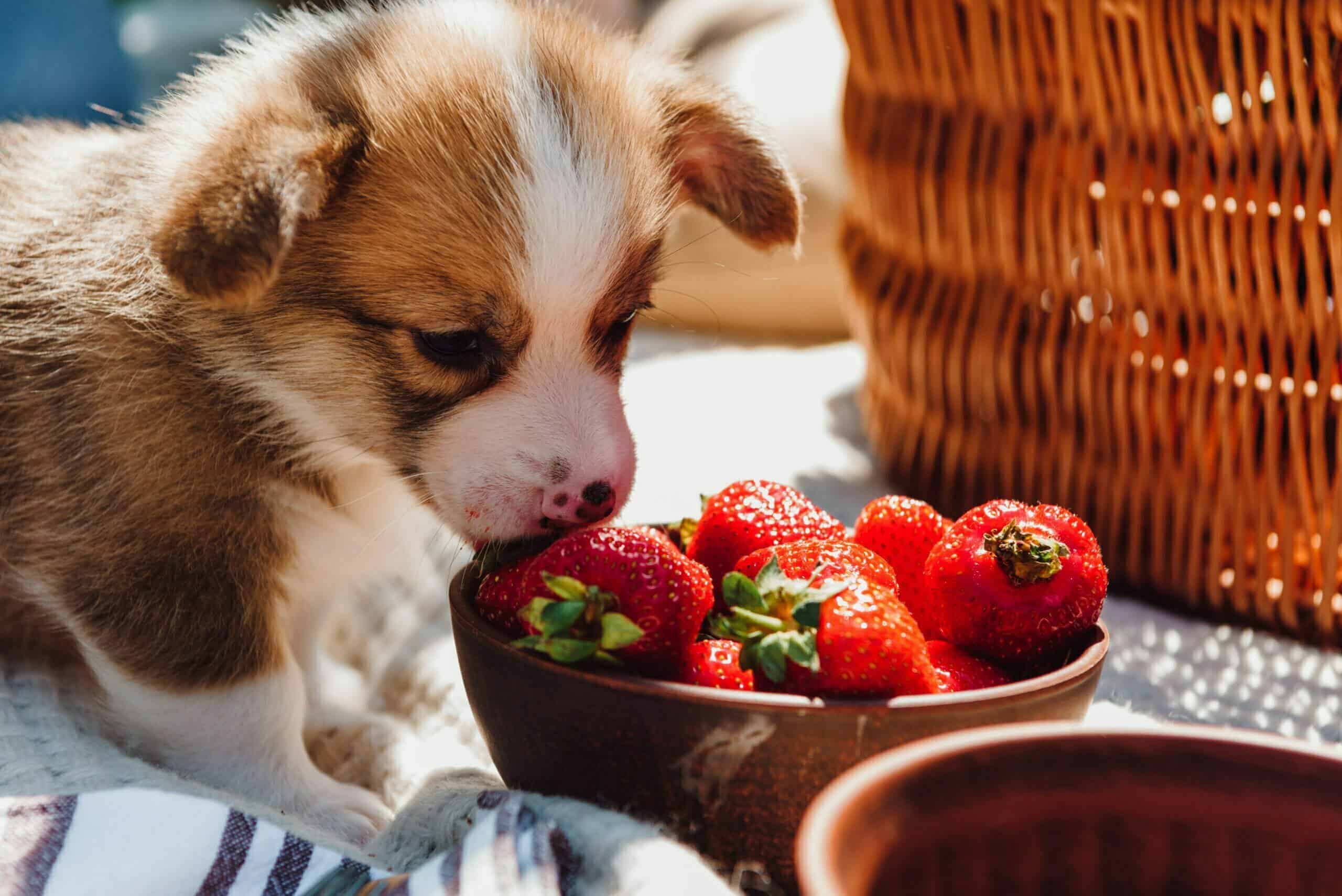
| Strawberries | Yes | Remove stems and leaves; no canned or syrup-packed |
| Watermelon | Yes | No seeds or rind |
| Mango | Yes, occasionally | Remove the pit and skin |
| Oranges | Yes, small amounts | Remove peel and seeds; the acid can upset a sensitive stomach |
| Pineapple | Yes, small amounts | Fresh is best; skip the core, skin and anything in syrup |
| Peaches | Caution | The flesh is fine; the pit is the problem |
| Cherries | Caution | Pits and stems are the hazard |
| Avocado | Caution | The seed can cause a blockage; the AKC still says to avoid it |
| Star fruit | No | Sour varieties are toxic |
| Grapes | No, never | Can cause sudden kidney failure |
| Raisins, sultanas, dried currants | No, never | Same danger as grapes |
"Yes" means safe in small amounts, plain, and prepared the way the table says. It does not mean a bowlful.
How much fruit can a dog eat?
Treats of any kind, fruit included, should stay under 10% of your dog's daily calories. That is the guideline from the UC Davis Nutrition Support Service, and it leaves at least 90% for a complete and balanced food.
Here is what that looks like in numbers. A neutered adult that weighs 50 lb and gets a few walks a day needs about 1,400 calories a day by the formula our calorie calculator uses. Ten percent of that is about 140 calories for everything that is not a meal, including dental chews and the bit of cheese used to hide a pill.
UC Davis lists the calories in some typical servings:
| Serving | Calories |
|---|---|
| 1 medium strawberry (12 g) | 4 |
| 1/4 cup raw apple with skin (31 g) | 14 to 16 |
| 1/2 cup diced watermelon (76 g) | 23 |
| 1/4 cup sliced raw pear (35 g) | 20 |
| 1/4 cup balled honeydew melon (44 g) | 16 |
| 1/8 cup mashed banana (28 g) | 25 |
A few strawberries barely register, while banana adds up quickly. For a 10 lb neutered adult the whole treat budget is only about 40 calories, so one or two small pieces is the whole allowance. Put your dog's weight into the dog treat calculator to see the exact number.
The AKC suggests one to three strawberries a day for most dogs. Dogs with diabetes or kidney disease need a vet's advice first. Our post on strawberries for dogs with kidney disease covers that case. Wild mock strawberries are a different plant; see whether mock strawberries are bad for dogs.
How do I prepare fruit for my dog?
Most problems with safe fruit come from the parts around the flesh, not the flesh itself.
- Wash it. Rinse fruit the way you would for yourself.
- Remove cores, pits and seeds. Apple seeds contain a small amount of cyanide, and the core and stem can cause choking. Mango pits hold small amounts too, and are a choking and blockage risk.
- Take off peels and rinds where the table says so. Banana peel is not toxic but is hard to digest and can cause a blockage. Watermelon seeds and rind can do the same.
- Cut it small. Blueberries are fine for a Labrador and a choking risk for a Chihuahua. Slice for small dogs.
- Choose plain fruit. Canned fruit in syrup adds sugar, and the AKC warns against anything containing xylitol, which is dangerous for dogs.
If your dog swallows a mango pit, a peach pit or a whole banana peel, call your vet. Watch for vomiting, not eating, belly pain or no stool, which can mean a blockage.
Which fruits are bad for dogs?
Three fruits come with real warnings besides grapes.
Cherries and peaches. The flesh of a peach is fine, but the pit contains cyanide-releasing compounds, and cherry pits and stems carry the same hazard. Pet Poison Helpline says poisoning is not expected if a dog swallows a whole cherry pit, because the pit has to be chewed and crushed to release cyanide. A swallowed pit can still cause stomach upset or a blockage, depending on your dog's size. Signs of cyanide poisoning include vomiting, drooling, trouble breathing and bright red gums, which is an emergency.
Avocado. This one confuses people. Pet Poison Helpline calls avocado non-toxic to dogs and says the persin it contains mainly affects birds, rabbits and horses. The real danger is the seed, which can block the intestines. The AKC still advises dogs to avoid it, and we would too.
Star fruit. Sour star fruit (carambola) holds dangerous amounts of soluble oxalates. Pet Poison Helpline lists vomiting, drooling, weakness, tremors, low blood calcium and kidney damage. Sweet varieties contain minimal oxalate, but since it is hard to tell which kind you have, leave it out.
Ripe tomatoes are botanically a fruit, but most people treat them as a vegetable, so they appear in our vegetable guide.
Why are grapes and raisins so dangerous for dogs?
Grapes and raisins can cause sudden kidney failure in dogs, and no safe amount is known. In our checker they are the only fruits rated "dangerous", the top risk level.
Raisins, sultanas and dried currants count the same as grapes. They hide in trail mix, hot cross buns and raisin bread. The suspected cause is tartaric acid, which is also why cream of tartar is a concern.
The timeline is what makes this one so risky:
- Vomiting or diarrhea usually starts within 6 to 12 hours.
- Kidney failure can follow within 24 to 72 hours.
- Dogs can look normal in the meantime.
Some dogs eat grapes and seem fine, but that tells you nothing about the next time. The amount of tartaric acid varies from fruit to fruit, and dogs differ in how they react. The Merck Veterinary Manual says more than one grape or raisin per 10 lb of body weight may be enough to pose a risk. That is a warning marker, not a safe limit.
If your dog eats even one, call your vet, an emergency clinic or a poison hotline right away. Treatment works best before signs appear. The grape and raisin toxicity checker puts the amount your dog ate in context. The ASPCA Animal Poison Control number is (888) 426-4435 and Pet Poison Helpline is (855) 764-7661. Both are open 24/7 and may charge a fee.
What about pumpkin?
Plain pumpkin (100% pumpkin, not pie filling) is rated safe in our list. It can help with both diarrhea and constipation, and a small spoonful added to a meal is the usual approach. Ask your vet for an amount that suits your dog. We cover pumpkin, carrots and the rest in the vegetable guide.
How do I introduce a new fruit?
Start with a piece the size of a pea or a fingernail, depending on your dog's size. Wait a day. If there is no vomiting, loose stool or itching, you can offer a normal portion now and then. Add only one new food at a time, so you know what caused any upset.
Even safe fruit can cause diarrhea if you overdo it. Our list says as much for pineapple and watermelon, and oranges can upset a sensitive stomach.
Two more habits help. Keep fruit bowls out of reach, since a counter-surfing dog will not stop at one grape. And check labels on anything fruit-flavored for xylitol, raisins or chocolate before you share it.
FAQ
Can dogs eat fruit every day?
A small piece within the 10% treat budget is fine for most healthy dogs, but fruit contains sugar, so mix it up with low-calorie vegetables. Ask your vet if your dog is overweight or diabetic.
Is frozen fruit OK?
Our list says blueberries are a safe treat fresh or frozen. Keep the pieces small enough that your dog cannot choke.
Can puppies have fruit?
Check with your vet first. A puppy's nutrition has to come from a complete and balanced puppy food, so any fruit should be a tiny extra.
What if my dog ate something not listed here?
Search the toxic to dogs checker, and if the item is not there, call your vet or a poison hotline. For more on sharing food, see is it okay to share food with your dog.
The short version
Apples, blueberries, strawberries, watermelon, bananas, mango, oranges and pineapple are fine when prepared plainly and kept to a small treat. Peaches and cherries need the pit removed, avocado is best skipped, star fruit is out, and grapes and raisins are an emergency every time. Keep all treats under 10% of daily calories and the list stays easy to remember.

Get The Ideal Dog Routine, free
A 10-page guide written by a vet: a sample daily routine, exercise and alone time, and grooming and vet check schedules.
We'll email you the download link. Unsubscribe anytime.