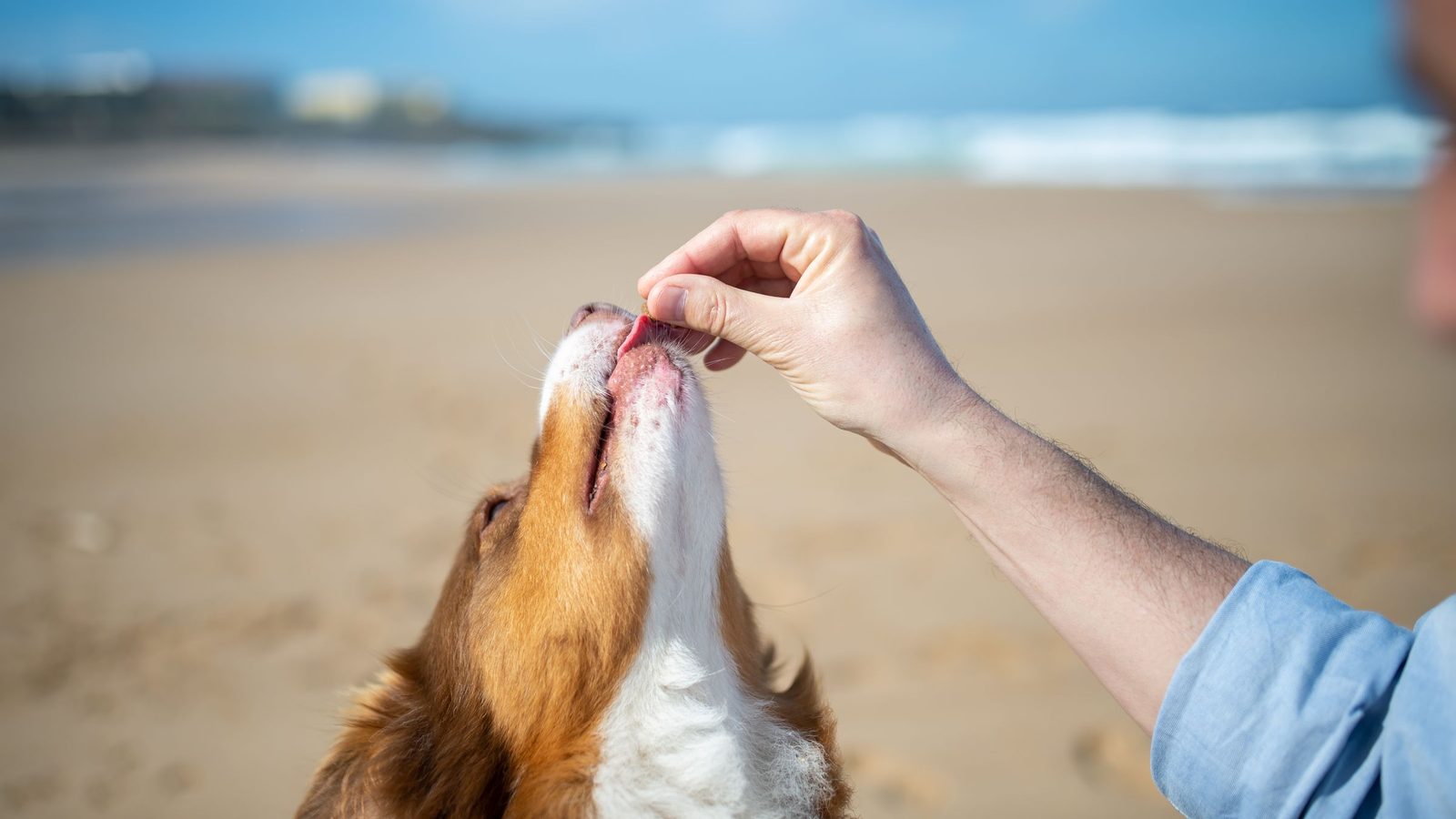
Mango is soft, sweet and fragrant, and plenty of dogs will sit politely for a piece. The flesh is safe. The trouble is the big pit in the middle, which dogs love to chew because of the fruit still clinging to it.
Yes, dogs can eat mango in small amounts. Ripe, peeled mango flesh cut into small cubes is a safe occasional treat for most healthy dogs. Always remove the pit, which can cause choking or an intestinal blockage and contains small amounts of cyanide compounds, and keep portions small because mango is high in sugar.
Is mango good for dogs?
A dog on a complete and balanced dog food doesn't need mango, but as a treat it brings a few nice extras:
- Vitamins A, C and E and some vitamin B6. Mango is a good source of vitamin A and C in particular.
- Fiber. A modest amount, which is fine in a treat-sized portion. Too much can loosen stools.
- Soft texture. Ripe mango is easy to chew, which can suit older dogs with sore teeth.
- Lots of flavor in a small piece. A cube or two is usually enough to feel like a big reward.
The downside is sugar. Mango is one of the sweeter fruits you can share, which is why our guide to fruits dogs can eat rates it "yes, occasionally", with the pit and skin removed.
Risks of feeding mango to dogs
- The pit. This is the big one. Mango pits are large, flat and slippery. A dog can choke on one, or swallow it and end up with a stomach or intestinal blockage that may need surgery. The pit also contains small amounts of cyanide-releasing compounds. Cyanide poisoning from a single pit is not the usual concern, especially if it wasn't chewed up, but the blockage risk alone is reason enough to keep pits away from dogs.
- The skin. Mango skin is tough and hard to digest, and big pieces can cause an upset stomach or, in small dogs, a blockage. Mango belongs to the same plant family as poison ivy, and the skin contains urushiol, the compound that causes rashes in some people. How much that matters for dogs isn't well studied, but it's one more reason to peel it.
- Sugar and calories. Too much mango adds calories quickly and can be a problem for overweight or diabetic dogs.
- Upset stomach. Eating a lot at once can cause diarrhea or vomiting, especially in dogs with sensitive stomachs.
- Allergies. Uncommon, but possible. Watch for itching or tummy trouble after the first taste.
Mango in prepared foods is another story. Mango salsa often contains onion, garlic and chili. Mango sorbet, yogurt and smoothies are full of sugar, and some "sugar-free" products contain xylitol, which is dangerous for dogs. Check anything you're unsure about in the toxic to dogs checker.
How much mango can a dog eat?
Treats of all kinds should stay under 10% of your dog's daily calories, leaving the other 90% for their regular food. Mango has more sugar and calories than most fruit, so portions should be smaller than for something like watermelon or cucumber.
These amounts are rough guides for an occasional treat, using cubes of about 2 cm (3/4 inch):
| Dog size | Example weight | Rough amount of fresh mango |
|---|---|---|
| Extra-small | 2 to 10 lb | 1 to 2 small, thumbnail-size pieces |
| Small | 11 to 20 lb | 2 to 3 small cubes |
| Medium | 21 to 50 lb | 3 to 4 cubes (about 2 tablespoons) |
| Large | 51 to 90 lb | 4 to 6 cubes (about 1/4 cup) |
| Giant | over 90 lb | up to about 1/3 cup of cubes |
If your dog has had other treats that day, give less. The dog treat calculator shows your dog's exact daily treat budget. Once or twice a week is plenty.
How to prepare mango for dogs
- Pick a ripe mango. It should give slightly when pressed. Unripe mango is harder and more likely to upset the stomach.
- Wash and peel it. Remove all of the skin.
- Cut the flesh off the pit. Slice the two "cheeks" off either side of the flat pit, then trim the rest.
- Throw the pit away straight into a lidded bin. Don't leave it on a plate, the counter or in an open trash bag.
- Cut the flesh into small cubes sized for your dog.
- Serve it plain. No sugar, chili powder, lime or yogurt.
Raw, ripe mango is the best way to serve it. There's no need to cook it.
Frozen mango ideas: Freeze small cubes for a summer treat, or mash ripe mango, mix it with a little plain water and freeze it in an ice cube tray. A little mashed mango also works as a filling for a stuffed toy; our post on how dogs get food out of a Kong has tips for making those last.
Can puppies eat mango?
Yes, in tiny amounts, once a puppy is weaned and eating solid puppy food. Offer one small, peeled piece and wait a day to make sure their stomach handles it. Puppies are notorious for grabbing things off the floor, so be extra careful with pits and peels. For everyday rewards, purpose-made puppy treats are easier to portion.
Dogs with health conditions:
- Diabetes: Mango's sugar can affect blood glucose. Ask your vet before offering it at all.
- Obesity: Mango is calorie-dense for a fruit. Low-calorie options like cucumber or green beans are a better fit for weight loss.
- Pancreatitis: Mango is very low in fat, but dogs on a strict diet should only get treats their vet approves.
- Kidney disease: Dogs on a prescription kidney diet need vet approval for any extra food.
- Sensitive stomach: Start with a single small piece, or skip it.
If your dog has any medical condition, ask your vet first.
Mango questions people search
Can dogs eat mango pits?
No. A mango pit can cause choking or an intestinal blockage, and it contains small amounts of cyanide compounds. Never give your dog a pit to chew, even one with fruit still on it.
Can dogs eat mango skin?
It's best not to. The skin is tough, hard to digest and contains urushiol. Peel the mango before sharing it.
Can dogs eat dried mango?
Only rarely, and only a very small piece. Drying concentrates the sugar, and many brands add even more sugar. Dried mango is also chewy and sticky, which can be a choking risk for small dogs. Fresh or frozen mango is a much better choice.
Can dogs eat frozen mango?
Yes. Plain frozen mango cubes make a good hot-weather treat. Let them soften a little for small dogs or gulpers, and check the bag to make sure nothing has been added.
Can dogs drink mango juice or eat mango smoothies?
Skip them. Juice and smoothies concentrate the sugar without the fiber, and smoothies may contain yogurt, sweeteners or other fruits. A lick from a spill won't hurt, but don't pour your dog a glass.
Can dogs eat mango salsa or mango chutney?
No. Salsa and chutney usually contain onion, garlic, chili, salt or sugar. Onion and garlic are toxic to dogs in any form.
What to do if your dog ate a mango pit or too much mango
Too much mango flesh: Expect an upset stomach at worst. Watch for diarrhea, vomiting or gas over the next day. Keep water available, skip treats, and call your vet if symptoms last more than 24 hours, if you see blood, or if your dog seems unwell.
A mango pit: Call your vet, even if your dog seems fine. A pit can take hours or days to cause problems as it moves through the gut. Signs of a blockage include:
- repeated vomiting, especially after eating or drinking
- not eating
- a painful or bloated belly
- straining or not passing stool
- weakness or lethargy
If your dog chewed the pit into pieces, also watch for signs of cyanide poisoning: drooling, trouble breathing, bright red gums or collapse. These are an emergency. Call your vet or the ASPCA Animal Poison Control Center at (888) 426-4435 (open 24/7; a consultation fee may apply). Don't try to make your dog vomit unless your vet tells you to, since a pit can get stuck on the way back up.
Mango skin: A small piece usually passes. A large amount can cause vomiting or, rarely, a blockage, so watch for the same signs.
FAQ
Is mango toxic to dogs?
No. Ripe mango flesh is not toxic to dogs. The pit and skin are the problem, and too much mango can upset the stomach.
How much mango can I give my dog?
A cube or two for a small dog and up to about a quarter cup for a large dog, as an occasional treat. Keep all treats under 10% of daily calories.
What happens if a dog eats a mango pit?
It can cause choking or a blockage in the stomach or intestines. Call your vet right away, even if your dog looks fine.
Can dogs eat mango every day?
It's better as an occasional treat, once or twice a week. Mango is high in sugar for a fruit.
Is dried mango safe for dogs?
It's not toxic, but it's very sugary and often sweetened. Fresh or frozen mango is a better choice.
The bottom line
Dogs can enjoy mango as an occasional treat, as long as it's ripe, peeled and cut into small pieces. The pit is the real danger, so throw it away somewhere your dog can't reach. Keep portions small because of the sugar, skip dried mango, salsa and juice, and check with your vet first if your dog has diabetes, is overweight or has another health condition.

Get The Ideal Dog Routine, free
A 10-page guide written by a vet: a sample daily routine, exercise and alone time, and grooming and vet check schedules.
We'll email you the download link. Unsubscribe anytime.