The 6 Best Dog Winter Coats for 2026 (Warm, Waterproof and Easy On)
 Written by Tim de Jong
As an Amazon Associate we earn from qualifying purchases, at no extra cost to you. Disclosure
Pick by your dog
Swipe ›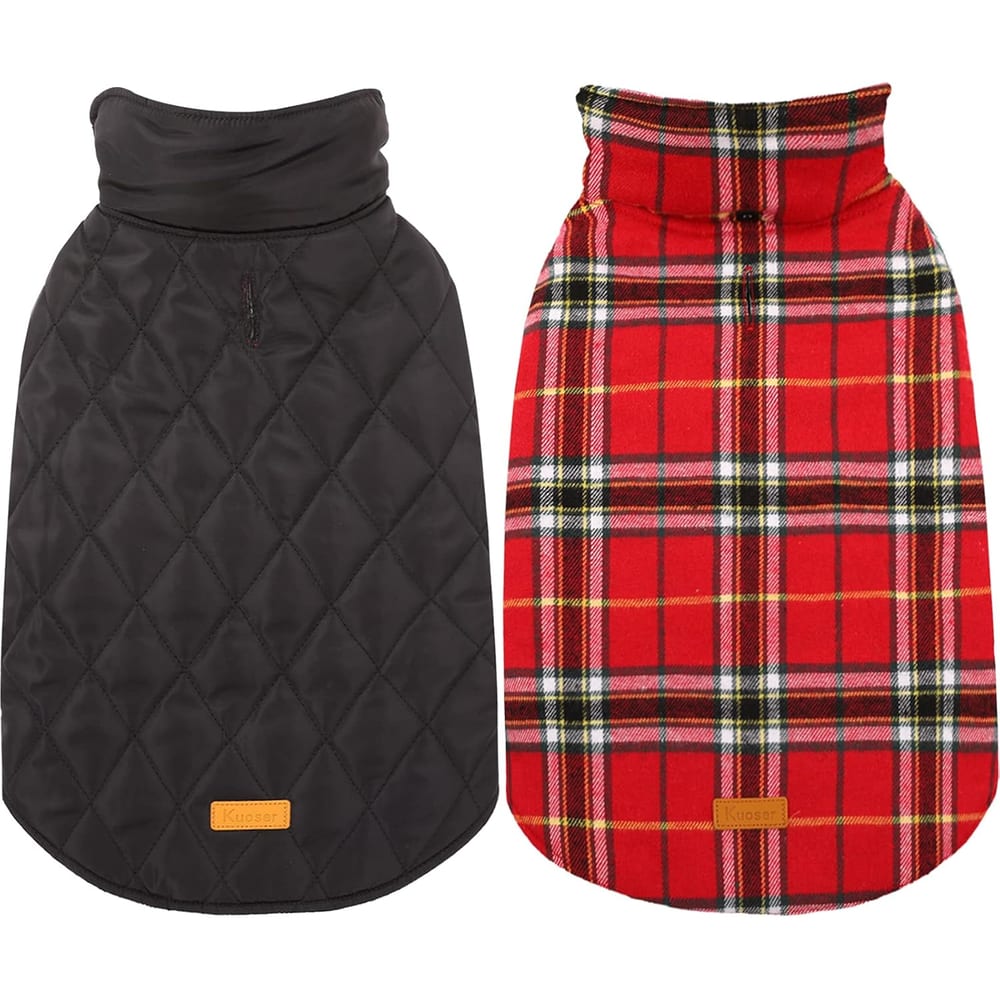
Our picks
| Pick | Best for | Buy |
|---|---|---|
| Top pickKuoser Waterproof Reversible Dog Coat | Best Overall | Check price |
| Spark Paws Dog Winter Coat | Best for Freezing Walks | Check price |
| Carhartt Firm Duck Insulated Dog Chore Coat | Best Rugged Coat | Check price |
| FUAMEY Fleece Dog Coat With Harness | Best for Small Dogs | Check price |
| Small Dog Waterproof Coat With Faux Fur Hood | Best for Small Dogs | Check price |
| Ruffwear Overcoat Fuse Insulated Vest & Harness | Best for Active Dogs | Check price |
Some dogs are built for winter. A Husky or a Bernese Mountain Dog will happily lie in the snow for an hour. A Whippet, a Chihuahua or a Frenchie is a different story: they start shivering a few minutes into a cold walk and want to turn around before you've reached the end of the street.
A good winter coat fixes that. It should keep the wind and wet out, trap warmth against your dog's body, and go on and off quickly without a wrestling match. Below are the six we'd buy for 2026, plus how to tell whether your dog needs one and how to measure for a coat that fits.
The short answer: the Kuoser Waterproof Reversible Dog Coat is the best all-round winter coat for most dogs, with a waterproof shell, double fleece lining and a leash hole. For truly freezing walks, the fully fleece-lined Spark Paws Dog Winter Coat is warmer, and the Carhartt Insulated Chore Coat is the toughest pick for working and outdoor dogs.
Does my dog need a winter coat?
Not every dog does. A winter coat makes the biggest difference for:
- Small and toy breeds, which lose heat quickly because they're close to the cold ground.
- Short-coated and single-coated breeds, such as Boxers, Pit Bulls, Dobermans, Dalmatians and Frenchies.
- Lean, low-fat breeds, such as Greyhounds, Whippets and Italian Greyhounds.
- Senior dogs, puppies and dogs that are unwell, which are less able to regulate their body temperature.
- Recently clipped dogs, such as Poodles and Doodles after a short winter trim.
Dogs with a thick double coat, like Huskies, Malamutes, Samoyeds, Newfoundlands and Border Collies, usually don't need one and can overheat in it.
As a rough guide, many small and short-coated dogs benefit from a coat below about 45°F (7°C), most need one below about 32°F (0°C), and wind and rain make it feel much colder. Our is it too cold for my dog tool checks the risk for your dog's size and coat type.
Coat, sweater or snowsuit?
- A coat has a weather-resistant outer shell and an insulating lining. It's the best choice for rain, wind and snow.
- A sweater is soft and warm but soaks up water. It's fine for dry, cold days and indoors in a cold house.
- A snowsuit covers the legs and belly too. It's great for deep snow and dogs that collect snowballs in their fur. We cover those in our guide to the dog snowsuit with attached boots.
1Kuoser Waterproof Reversible Dog Coat
Get it if
You want one coat that handles most winter weather.
Skip if
Your dog has a very deep, barrel-shaped chest; check the size chart carefully.
The Kuoser is one of the most popular dog coats around, and it earns that spot by getting the basics right. The solid-colored side is a windproof, waterproof polyester shell, and a double layer of fleece underneath keeps the warmth in. Flip it inside out and you have a second look for dry days.
It closes with hook-and-loop straps around the neck and belly, so there are no legs to thread through, and it has a leash hole for a harness or collar. It comes in seven sizes, from small dogs like Yorkies and Shih Tzus up to Labradors and Great Danes.
Pros
- Waterproof, windproof shell with double fleece lining
- No leg holes; quick to put on
- Reversible, with a leash hole
Cons
- Only one side is waterproof
- Belly coverage is limited for deep snow
2Spark Paws Dog Winter Coat
Get it if
You live somewhere with real winters and long walks.
Skip if
Your dog runs hot; this is a heavy coat.
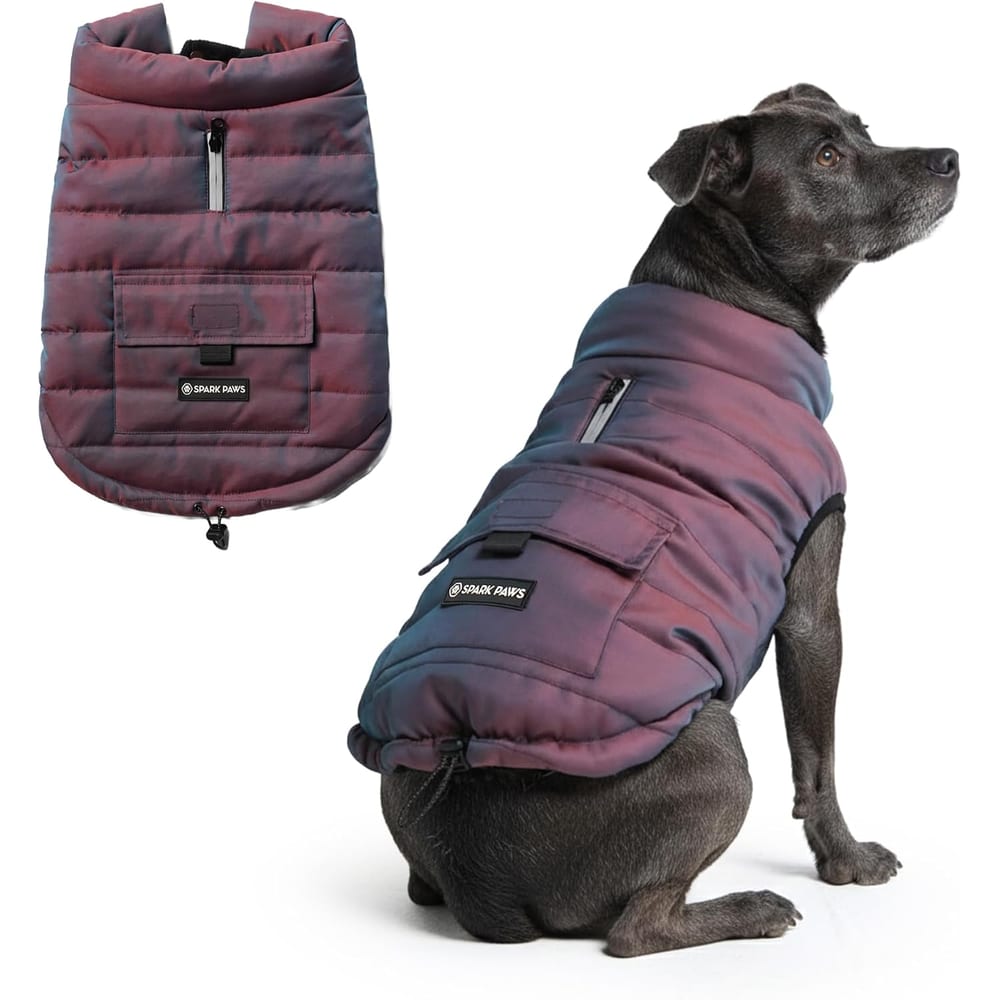
Spark Paws designed this as a proper winter coat rather than a light layer, and it shows: a premium outer fabric over a full fleece lining, with a double-breasted front. The front opens wide, so you can get it on without pulling anything over your dog's head.
It comes in seven sizes from small to 4XL, and adjustable toggles on the back let you fine-tune the fit. Spark Paws says the sizing is made to work on thick double coats and barrel chests, which is where many dog coats struggle. Measure your dog's chest girth before ordering.
Pros
- Full fleece lining; very warm
- Wide-opening front, easy to put on
- Back toggles for a better fit on broad dogs
Cons
- Too warm for mild days
- Bulkier than a light shell
3Carhartt Firm Duck Insulated Dog Chore Coat
Get it if
Your dog works outside, hikes or crashes through brush.
Skip if
You want something light and packable.
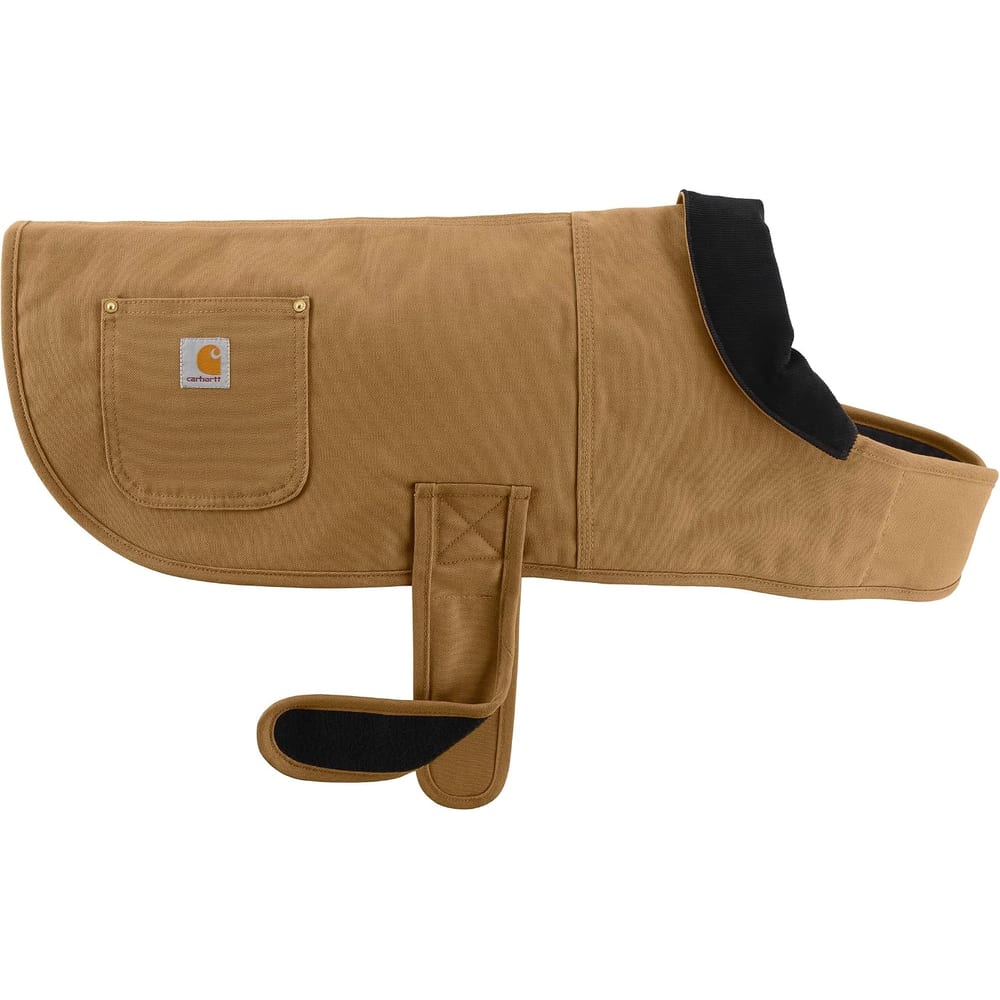
Carhartt's dog coat is the canine version of its workwear jacket. The shell is a 12-ounce firm-hand duck canvas that stands up to wind, cold and rough use, the main seams are triple-stitched, and inside there's a quilted insulated liner with a corduroy-lined collar.
It's the coat for farm dogs, hiking dogs and dogs that come home from every walk covered in mud and twigs. Canvas is heavier and stiffer than a nylon shell, and it's weather-resistant rather than fully waterproof, so it's better suited to cold, dry and windy days than to driving rain.
Best With Built-in Harness
Pros
- Tough duck canvas built to last
- Insulated quilted liner
- Triple-stitched main seams
Cons
- Heavier and stiffer than nylon coats
- Not fully waterproof
4FUAMEY Fleece Dog Coat With Harness
Get it if
You have a calm walker and want coat and harness in one.
Skip if
Your dog pulls hard or lunges on the leash.
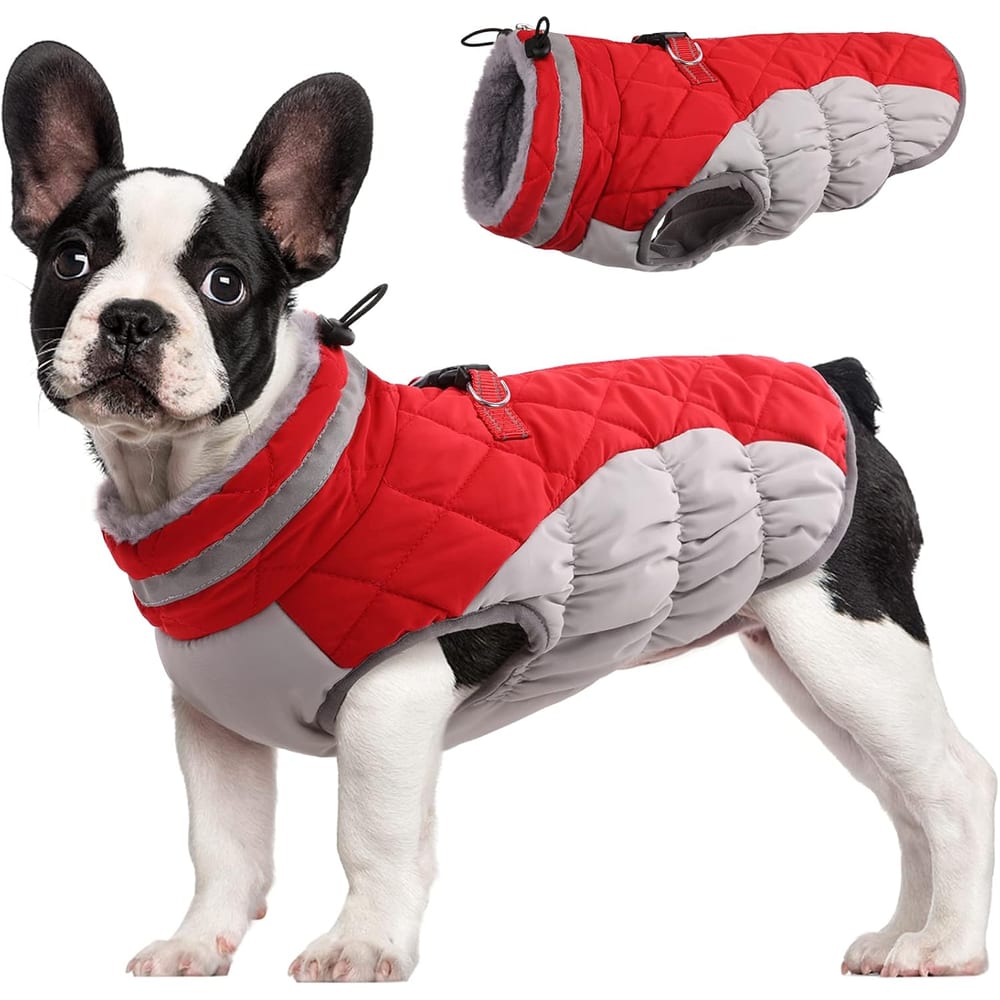
Putting a harness on over a coat (or under it) is a daily annoyance in winter. This coat solves it with a built-in harness and two D-rings for the leash. The shell is water-resistant polyester with a double-layer fleece lining, and the back zipper is designed not to snag your dog's hair. There are reflective details for dark winter evenings.
Be realistic about the harness, though. The maker itself recommends it for calm, small dogs, and suggests a separate harness for dogs that pull or lunge, and for medium and large dogs. If that's your dog, look at the Kuoser with its leash hole instead.
Pros
- Built-in harness with two D-rings
- Double fleece lining
- Snag-free zipper and reflective details
Cons
- Built-in harness isn't for strong pullers
- Water-resistant, not fully waterproof
5Small Dog Waterproof Coat With Faux Fur Hood
Get it if
You have a Chihuahua, Yorkie, Maltese or other small dog that hates the cold.
Skip if
Your dog won't tolerate a hood.
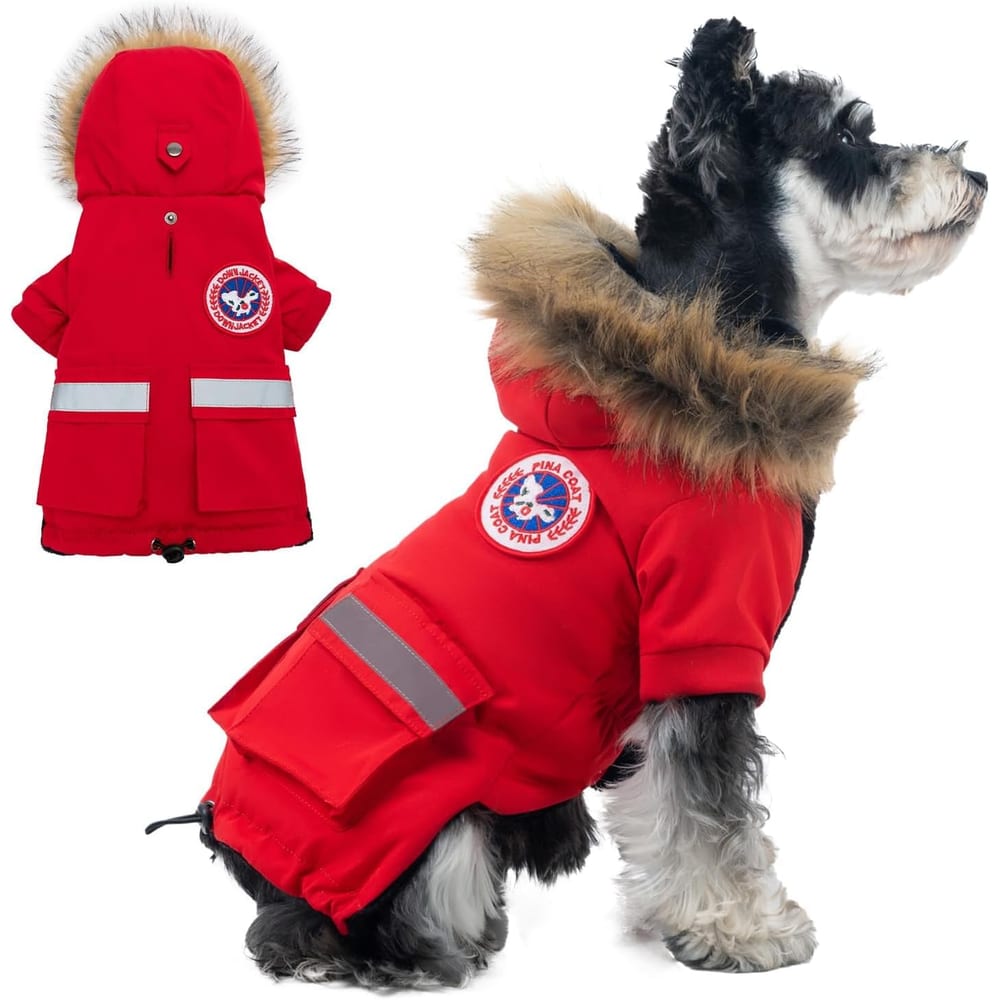
Small dogs lose heat from their neck and head as much as their body, and this coat covers both. It's made from a polyester-cotton blend with a waterproof treatment, lined with thick, soft flannel, and topped with a faux fur hood. An elastic band at the bottom helps keep cold air out, and there's a small pocket for poop bags.
It comes in seven sizes from XS to 3XL, aimed at breeds like Chihuahuas, Yorkies, Poodles, Maltese, Shih Tzus, Pomeranians, Beagles and Schnauzers. If your dog is between sizes, the maker recommends sizing up.
Pros
- Faux fur hood protects neck and ears
- Thick flannel lining
- Waterproof, windproof outer fabric
Cons
- Some dogs refuse to wear a hood
- Not for medium and large breeds
6Ruffwear Overcoat Fuse Insulated Vest & Harness
Get it if
You hike, run or spend long days outside with your dog.
Skip if
You just need a warm coat for short city walks.
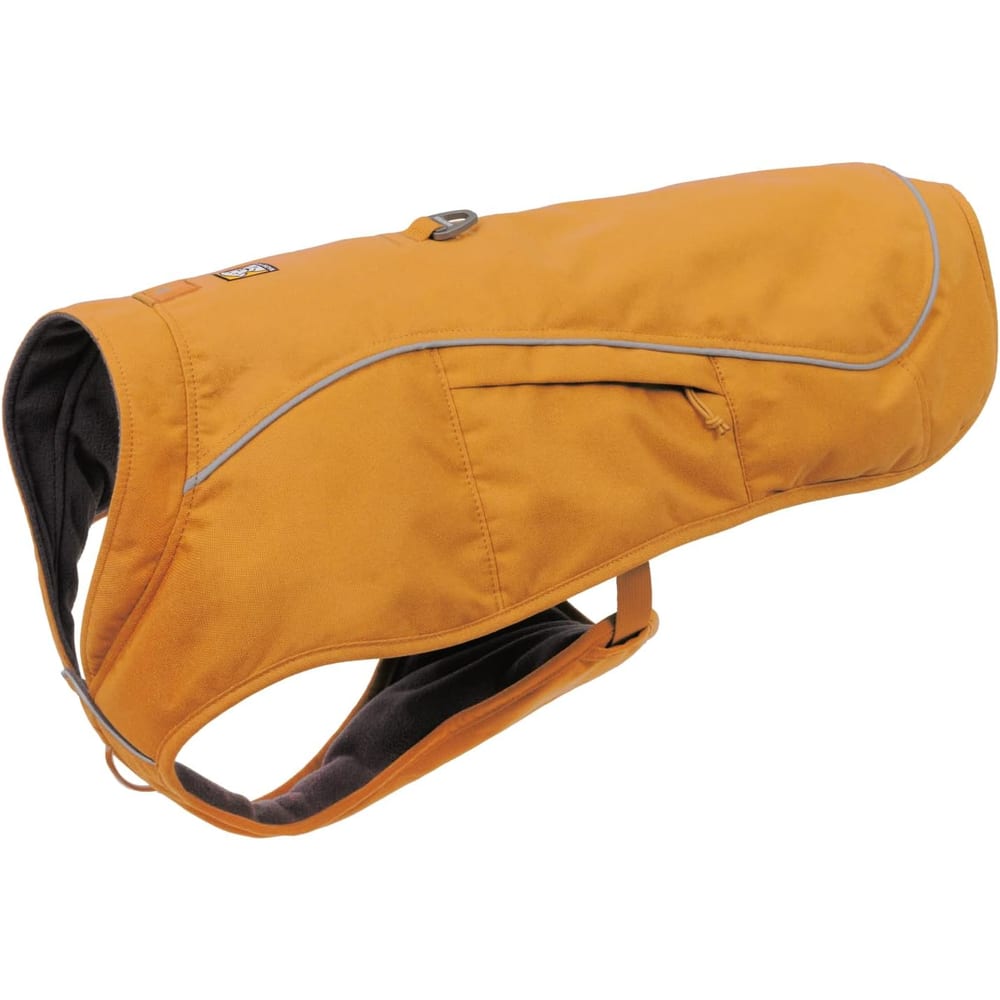
Ruffwear makes gear for dogs that do a lot, and the Overcoat Fuse is a workwear-style insulated vest with a proper harness built in. The harness has two leash points, an aluminum V-ring on the back and a reinforced webbing loop on the chest, so you can clip to the front for better control. The shell is weather- and abrasion-resistant, with extra coverage over the hips and thighs.
Thoughtful details make it great for trail days: two low-profile zippered pockets, reflective accents and a loop for a safety light. It's an investment, but it replaces both a coat and a harness. Unlike the FUAMEY above, this harness is built for real use.
Pros
- Strong built-in harness with back and chest clips
- Tough, weather-resistant shell with hip coverage
- Pockets, reflective trim and light loop
Cons
- Premium price
- Vest style is less warm than a fully lined coat
How to measure your dog for a winter coat
- Chest girth: measure around the widest part of the ribcage, just behind the front legs. This is the most important number.
- Neck: measure around the base of the neck, where a collar sits.
- Back length: measure from the base of the neck to the base of the tail.
- Compare with the size chart for that specific coat. Sizes vary a lot between brands.
- If your dog is between sizes, size up, especially for deep-chested breeds.
Our dog sweater size calculator works for coats too and gives you a size from your dog's measurements.
A good fit lets you slide two fingers under the coat at the neck and chest, doesn't rub behind the front legs, and leaves room for your dog to pee without soaking the coat.
Tips for winter walks
- Protect the paws. Salt, ice and snow are hard on paws. Use dog snow boots or a winter paw balm.
- Dry your dog off when you get home, including between the toes.
- Take the coat off indoors so your dog doesn't overheat.
- Watch for signs of cold: shivering, lifting paws, slowing down, whining or trying to turn back.
- Shorten walks in extreme cold and stay visible with reflective gear in the dark.
- Give them a warm place to rest afterward. Older dogs especially appreciate one of the best heated dog beds.
FAQ
At what temperature does a dog need a coat?
Small, short-coated, lean, senior and young dogs often benefit from a coat below about 45°F (7°C) and most need one below freezing. Thick-coated breeds rarely need one. Wind, rain and how long you're outside matter as much as the number on the thermometer.
Is it cruel to put a coat on a dog?
No. For dogs that feel the cold, a well-fitting coat is a kindness. Introduce it gradually with treats, and make sure it doesn't rub or restrict movement.
Should dogs wear coats indoors?
Usually not. Indoors, most dogs are warm enough and can overheat in a winter coat. A light sweater can help very thin or hairless dogs in a cold house.
Can a dog wear a coat with a harness?
Yes. Choose a coat with a leash hole so you can put the harness underneath, or a coat with a built-in harness. Strong pullers do best with a separate, properly fitted harness.
How do I get my dog used to wearing a coat?
Start indoors. Let your dog sniff it, reward them, then put it on for a few seconds and take it off again. Build up the time, and go for a walk right after putting it on so the coat becomes a signal for something fun.
Final thoughts on the best dog winter coats
The Kuoser Waterproof Reversible Dog Coat is the easiest recommendation for most dogs: waterproof, fleece-lined and quick to put on. If your winters are properly cold, the fully lined Spark Paws coat is warmer, and the Carhartt Chore Coat is the toughest choice for dogs that work and play outside. Small dogs will be happiest in a hooded coat, and active dogs that hike or run are best served by the Ruffwear Overcoat Fuse with its built-in harness. A good coat also makes a practical present; see our Christmas gifts for dogs for more ideas.
Get The Ideal Dog Routine, free
A 10-page guide written by a vet: a sample daily routine, exercise and alone time, and grooming and vet check schedules.
We'll email you the download link. Unsubscribe anytime.