The 6 Best Dog Snow Boots That Actually Stay On (2026)
 Written by Tim de Jong
As an Amazon Associate we earn from qualifying purchases, at no extra cost to you. Disclosure
Pick by your dog
Swipe ›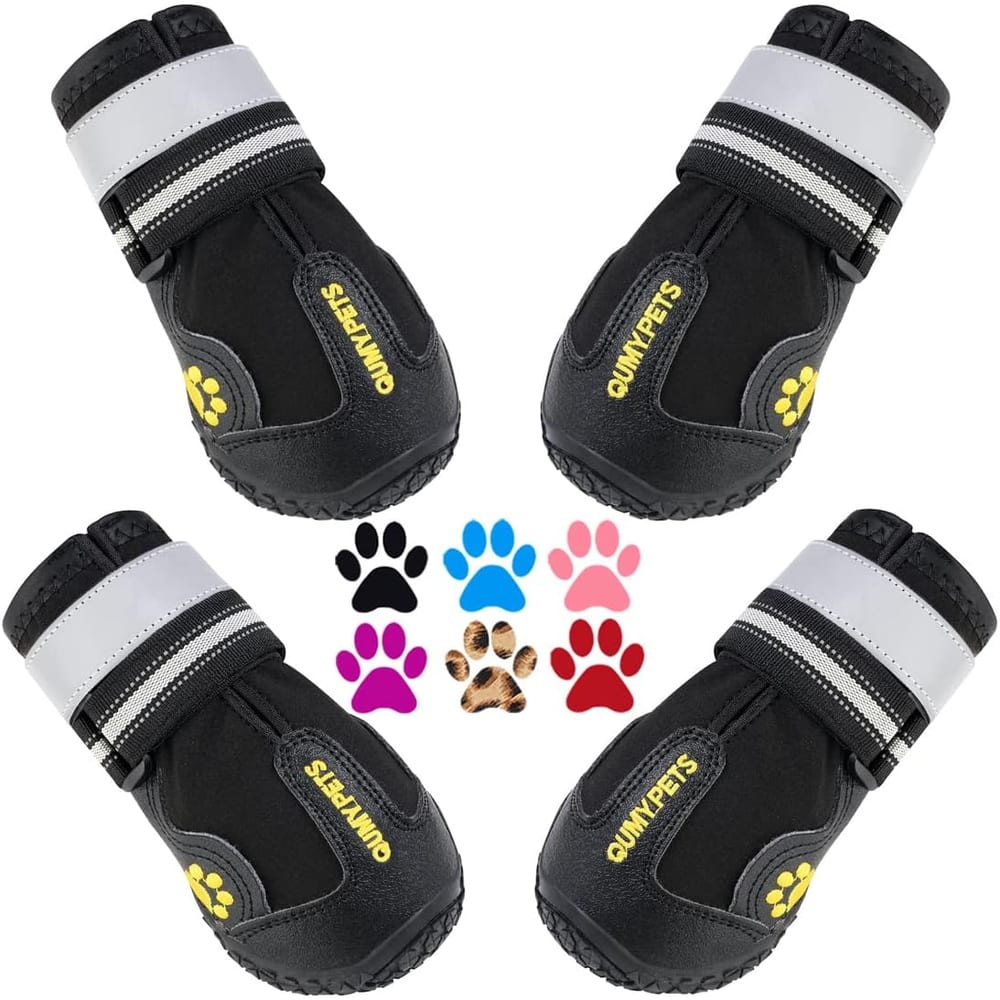
Our picks
| Pick | Best for | Buy |
|---|---|---|
| Top pickQUMY Dog Boots for Winter | Best Overall | Check price |
| Canada Pooch Dog Suspender Boots | Best Suspender Boots | Check price |
| Dimicoo Waterproof Dog Boots for Winter | Best Fleece-Lined Boots | Check price |
| Waterproof Stay-On Dog Boots | Best for Small and Medium Dogs | Check price |
| Dog Snow Booties for Medium to Large Dogs | Best for Large Dogs | Check price |
| Musher's Secret Paw Wax | Best Boot Alternative | Check price |
Snow itself isn't the main problem for most dogs' paws. It's everything that comes with it: road salt and chemical de-icers that dry out and crack the pads, sharp ice crusts, and the hard snowballs that build up between the toes of hairy-footed dogs until they're limping.
Dog snow boots solve all of that, as long as they fit and stay on. That's the hard part. A boot that's too loose ends up in a snowbank, and a boot that's too tight rubs. Below are the six we'd buy for 2026, plus how to measure your dog's paws and help them get used to wearing boots.
The short answer: the QUMY Dog Boots are the best all-round snow boots, with a wide split opening, two adjustable reflective straps and sizing by paw width. If your dog keeps losing boots, Canada Pooch Suspender Boots connect all four boots so they can't fall off. And if your dog refuses boots entirely, Musher's Secret paw wax is the best alternative.
Does my dog need snow boots?
Boots are most useful if:
- You walk on salted sidewalks or roads. Salt and de-icers can sting, dry and crack paw pads, and dogs lick the residue off later.
- Your dog gets snowballs between their toes. Common in dogs with hairy feet, like Golden Retrievers, Poodles, Doodles and spaniels.
- You walk on icy crusts or rough terrain, which can cut the pads.
- Your dog is a senior or has mobility issues and needs extra grip.
- Your dog lifts their paws, limps or stops on cold walks. Our is it too cold for my dog tool checks whether the day's temperature is a risk for your dog's size and coat.
If your dog walks mostly on soft, unsalted snow and never seems bothered, a good winter paw balm and a trim of the fur between the toes may be all you need.
Regular boots vs. suspender boots
- Regular boots fasten around the lower leg with one or two straps. They're quick to put on and fine for most dogs once you get the size right.
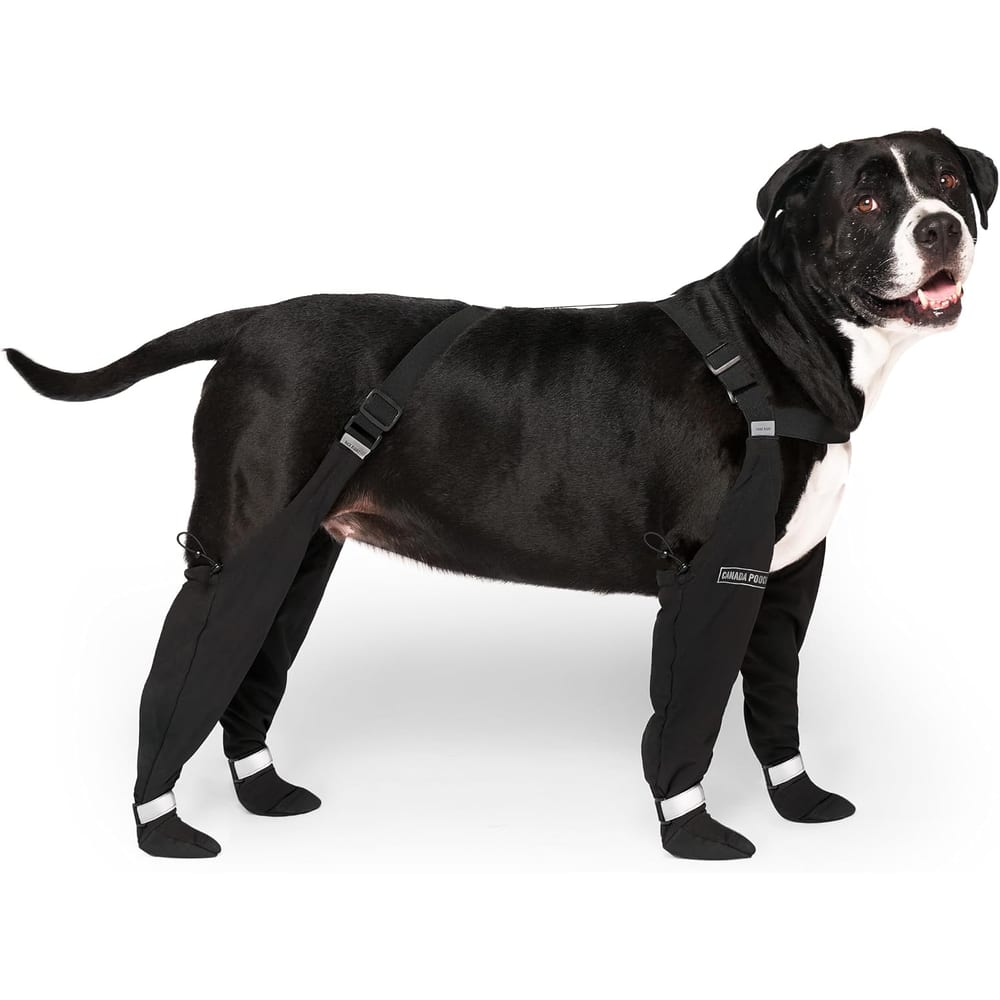
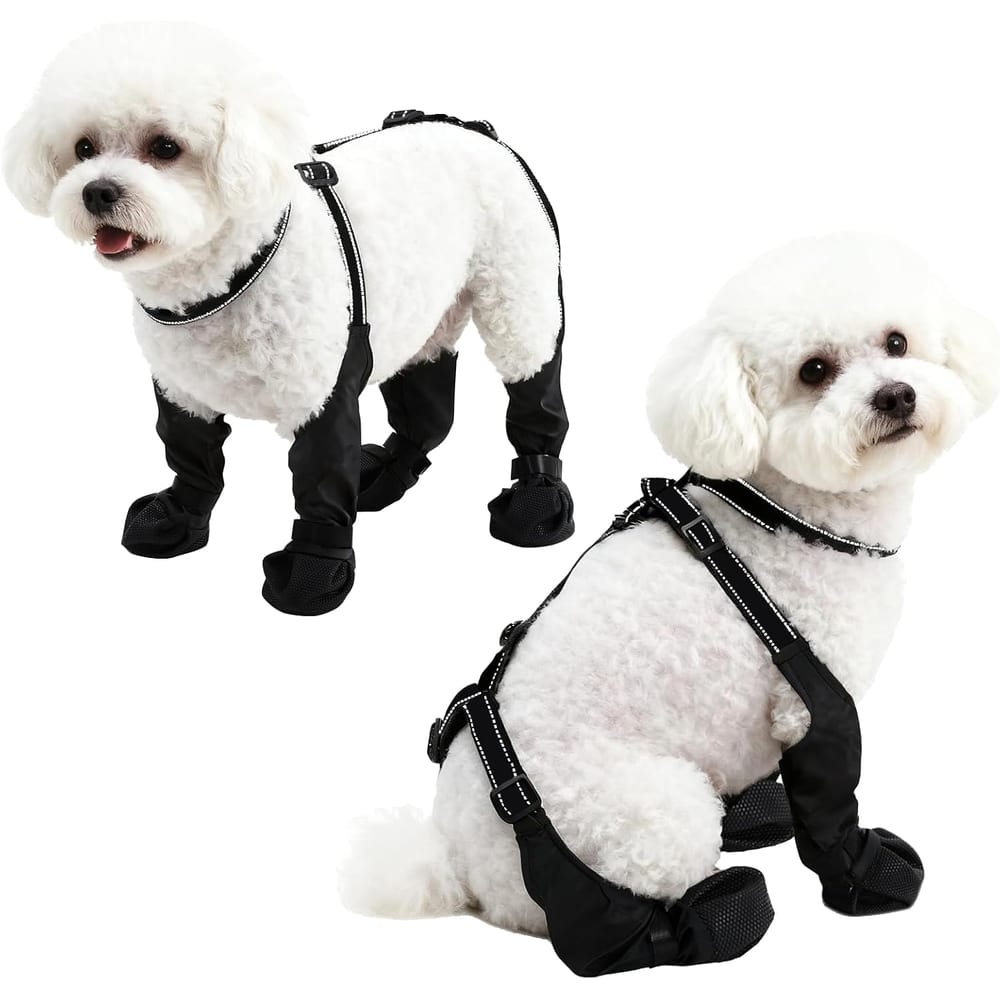
- Suspender boots are connected by elastic straps that run over the dog's back, so a boot can't slip off and get lost. They're great for dogs that kick boots off, and for dogs with skinny legs where straps don't grip well.
1QUMY Dog Boots for Winter
Get it if
You want one pair of boots for snow, salt and summer pavement.
Skip if
Your dog has very skinny legs; suspender boots stay on better.
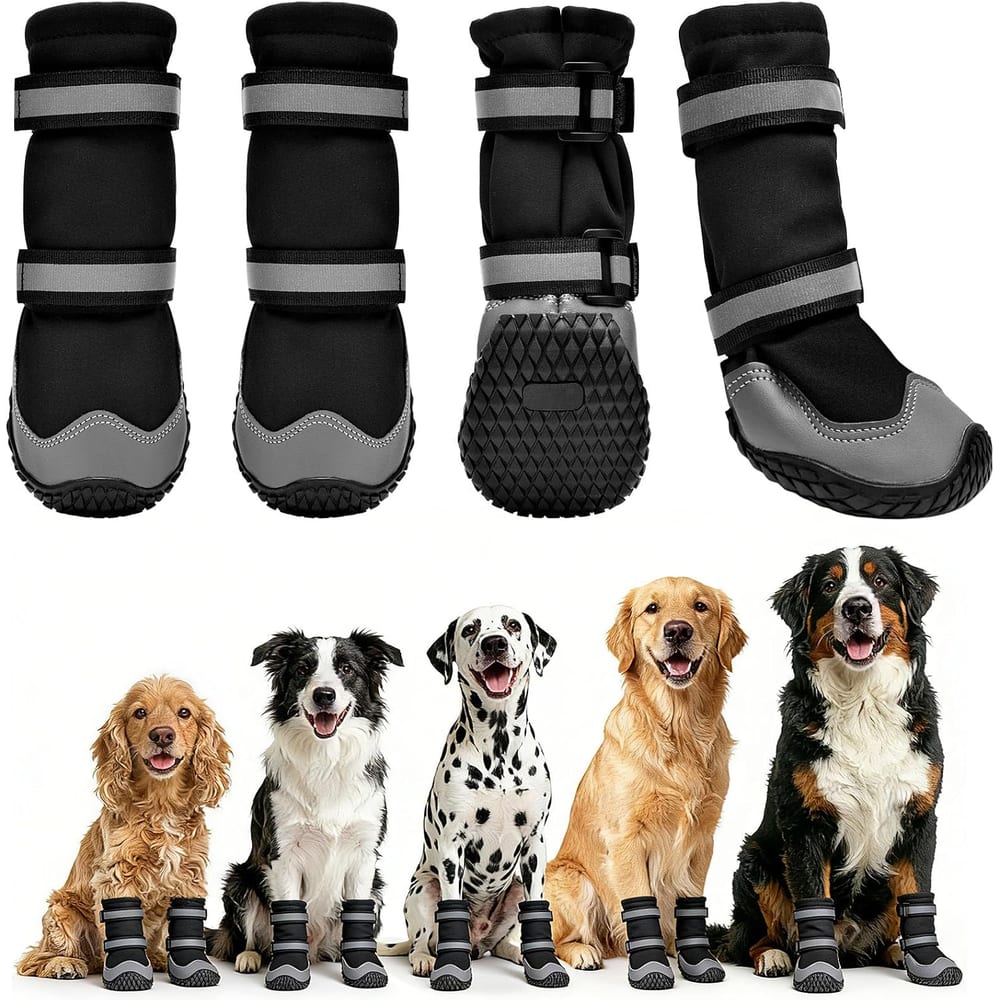
QUMY's boots are some of the most widely used dog boots, and their sizing system is the reason. Instead of guessing by weight, you measure the width of your dog's paw and pick from eight sizes, from about 1.8 inches wide (roughly 11–23 lb dogs) up to 3 inches (roughly 74–88 lb). Weight is only a secondary guide.
The boots open wide along a split seam, which makes them easier to slide on than narrow-mouthed booties, and two adjustable straps cinch them in place. The straps are reflective, which helps on dark winter evenings. The same boots work as protection against hot pavement in summer.
Pros
- Eight sizes chosen by paw width
- Wide opening makes them easy to put on
- Two adjustable reflective straps
Cons
- Measuring carefully is a must
- Not lined, so less warm than fleece boots
2Canada Pooch Dog Suspender Boots
Get it if
Your dog keeps losing boots in the snow.
Skip if
Your dog hates anything over their back.
Suspender boots are the answer to the most common boot complaint: losing them. All four boots are connected with adjustable straps, so even if one loosens, it stays with your dog. Canada Pooch's version also has extended leg coverage that keeps snowballs, salt, mud and slush off the paws and lower legs.
The shell is water-resistant polyester-spandex, the rubber soles give footing on messy winter surfaces, and the hook-and-loop straps are reflective. They come in short and regular lengths; Canada Pooch suggests short for dogs like Pugs, French Bulldogs and Beagles, and regular for Poodles, Doodles, Golden Retrievers and Dobermans.
Pros
- Connected design means no lost boots
- Tall leg coverage keeps out snow and salt
- Short and regular lengths for different leg types
Cons
- Takes longer to put on than single boots
- Some dogs need time to accept the back straps
3Dimicoo Waterproof Dog Boots for Winter
Get it if
Your dog's paws get cold, not just wet.
Skip if
You also want boots for summer; these are too warm.
Most dog boots protect the paws but do little to keep them warm. Dimicoo's boots add a soft fleece lining inside a waterproof, high-top shell, which makes them a good pick for small and short-coated dogs that feel the cold, and for long walks in freezing temperatures.
The high top helps keep snow out, and each boot uses two straps plus a drawstring for a snug fit. Reflective strips add visibility, and the anti-slip soles help on icy paths. Because of the lining, these are winter-only boots.
Pros
- Fleece lining keeps paws warm
- Waterproof high-top design keeps snow out
- Dual straps plus drawstring for a secure fit
Cons
- Too warm for mild weather
- Lining takes longer to dry
4Waterproof Stay-On Dog Boots
Get it if
You have a small or medium dog and want simple, waterproof boots.
Skip if
You have a large breed.
These boots are made for small and medium dogs, which often get left out by boots sized mostly for big breeds. They're waterproof to keep paws dry in rain, snow and slush, with anti-slip rubber soles for grip on wet and icy surfaces.
Bright reflective strips make your dog easier to see on early-morning and evening walks, which is when most winter walks happen. They're a straightforward, affordable pair for everyday use around the neighborhood.
Pros
- Sized for small and medium dogs
- Waterproof with anti-slip soles
- Reflective strips for dark walks
Cons
- Not for large breeds
- No warm lining
5Dog Snow Booties for Medium to Large Dogs
Get it if
You have a Lab, Shepherd, Golden or other big dog.
Skip if
You walk mostly in deep, wet snow; these aren't the most waterproof.
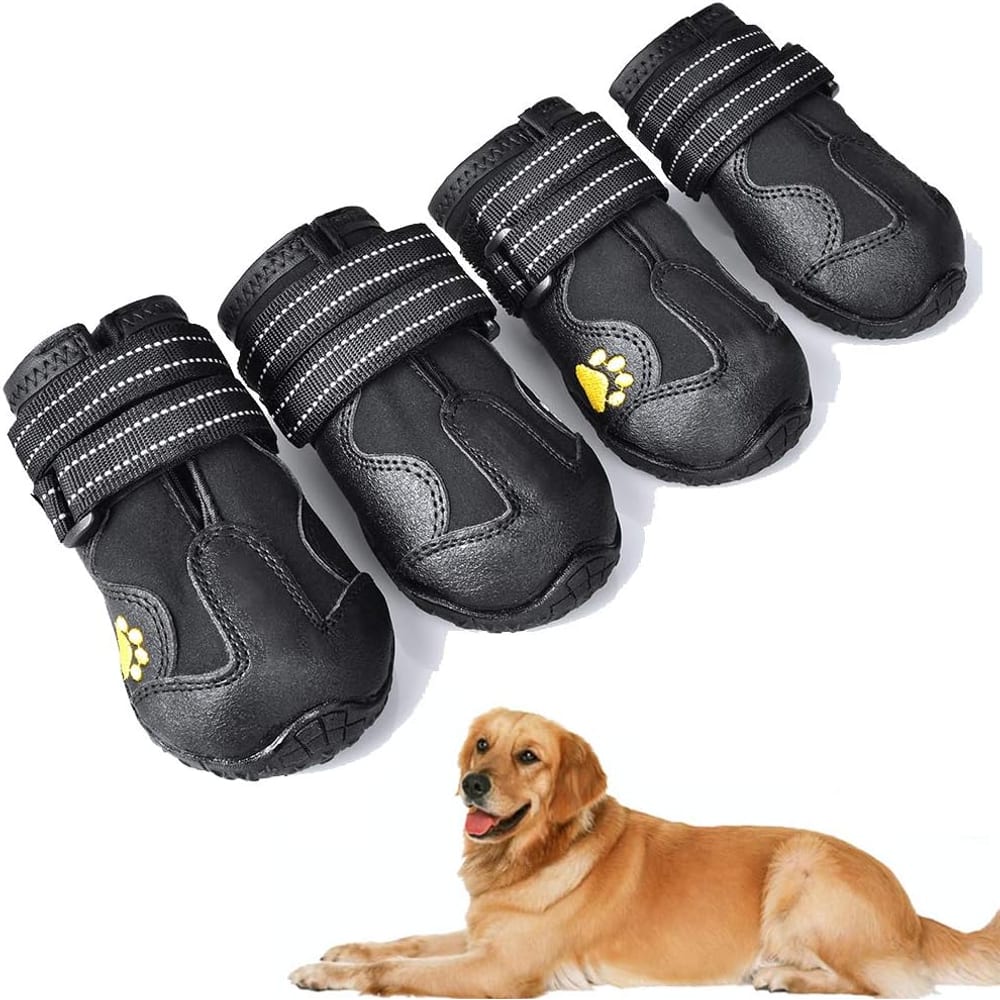
Big dogs need big boots, and these are sized for them: the largest size fits dogs of roughly 66–90 lb, like Labradors, German Shepherds, Golden Retrievers and Samoyeds. Check the size chart to choose by paw measurements.
They have tough, anti-slip soles for stability, and the fabric is soft and breathable, so they work indoors on slippery floors as well as outside. That makes them handy for older large dogs that struggle on tile. They're hand washable. For very wet snow, a fully waterproof boot or suspender boots will keep paws drier.
Pros
- Sized for large breeds
- Anti-slip soles help on ice and slippery floors
- Soft, breathable and hand washable
Cons
- Less waterproof than other picks
- Sizing between brands varies; measure first
6Musher's Secret Paw Wax
Get it if
Your dog absolutely won't walk in boots.
Skip if
You walk on heavily salted roads every day; boots protect better.
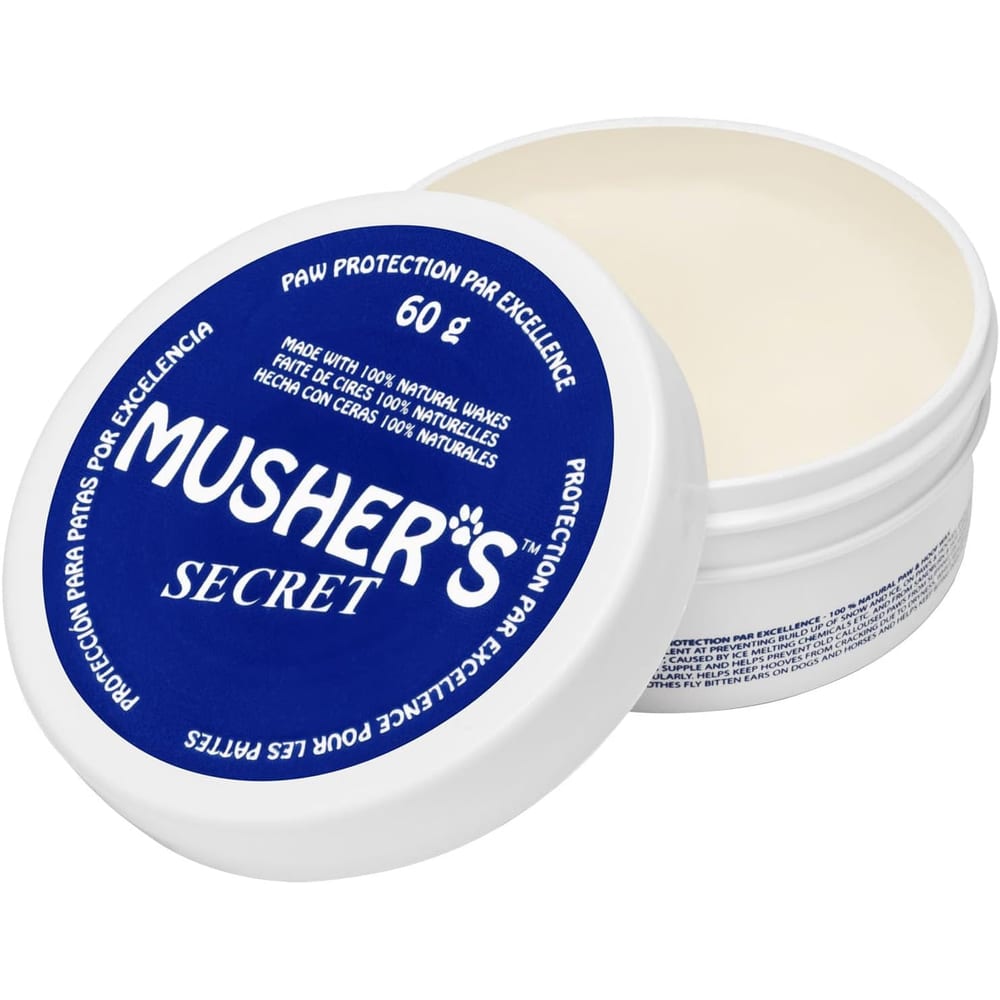
Some dogs never accept boots, no matter how patient you are. For them, paw wax is the next best thing. Musher's Secret is a classic: a wax made from food-safe oils and waxes that you rub into the pads before a walk. It creates a thin barrier against salt, ice and snow, and helps stop snowballs from sticking between the toes. The brand says it's safe even if your dog licks it.
It won't protect against sharp ice as well as a boot, and you'll need to reapply it before every walk. But it's quick, invisible to your dog and a good backup for days when the boots are drying. We compare more balms in our guide to the best dog paw balm for winter.
Pros
- No boots for your dog to fight
- Helps stop snowballs and salt burn
- Safe if licked, according to the brand
Cons
- Needs reapplying every walk
- Less protection than boots on sharp ice
How to measure your dog's paws for boots
- Stand your dog on a piece of paper with their weight on the front paw. If they won't stand still, lift the opposite front leg so they put weight on the paw you're measuring.
- Mark the widest points on each side of the paw, and the front of the longest nail and the back of the pad.
- Measure the width and length of what you've marked.
- Compare with the size chart for that brand. Width matters most for most boots.
- Measure the back paws separately. They're often smaller than the front paws.
- If your dog is between sizes, check whether the brand recommends sizing up or down. A boot that's too big will slip off.
How to get your dog used to boots
Almost every dog does a funny, high-stepping walk the first time they wear boots. That's normal, and it passes quickly with practice:
- Start indoors. Put one boot on, give a treat, take it off. Repeat a few times.
- Build up to all four boots over a few short sessions.
- Distract with fun. Play a game, throw a toy or go straight out the door for a walk while your dog has the boots on.
- Keep the first walks short and reward generously.
- Check for rubbing after each walk, especially at the dewclaws and top of the paw.
Winter paw care tips
- Trim the fur between the toes to reduce snowballs.
- Wipe paws after every walk with a damp cloth to remove salt and de-icer, even if your dog wore boots.
- Check the pads for cracks, cuts and redness.
- Moisturize dry pads with a dog-safe balm.
- Use pet-safe ice melt on your own steps and driveway.
Pair boots with one of the best dog winter coats for dogs that feel the cold, or a dog snowsuit with attached boots for full coverage in deep snow. If your dog tends to scuff or drag their paws, our guide to boots for dogs that drag their feet covers more durable options.
FAQ
Do dogs really need snow boots?
Not all of them. Boots help most on salted roads, icy terrain and for dogs that get snowballs between their toes, as well as for seniors that need grip. Dogs that walk on soft, unsalted snow and show no discomfort may be fine with paw balm and regular paw checks.
Why does my dog walk funny in boots?
Dogs feel the ground through their paws, and boots change that feeling. The high-stepping walk is normal and usually fades after a few short practice sessions.
How do I keep dog boots from falling off?
Measure carefully and choose the right size, tighten the straps snugly (you should fit one finger under them), and put the strap above the dewclaw if there is one. If boots still slip, try suspender boots.
Can dogs wear boots all day?
No. Take them off once you're indoors so the paws can breathe and dry, and check for rubbing. Boots are for walks and outdoor time.
Is road salt bad for dogs' paws?
Yes. Salt and chemical de-icers can dry out, crack and irritate paw pads, and dogs may lick the residue off later, which can upset their stomach. Boots or paw wax plus a wipe after walks help prevent that.
Final thoughts on the best dog snow boots
For most dogs, the QUMY Dog Boots are the best place to start: eight sizes by paw width, a wide opening and two reflective straps. Dogs that kick off boots will do better in Canada Pooch Suspender Boots, and dogs with cold paws will love the fleece-lined Dimicoo boots. If your dog refuses boots altogether, Musher's Secret paw wax still protects against salt and snowballs. Whatever you choose, measure the paws first. Fit makes all the difference.
Get The Ideal Dog Routine, free
A 10-page guide written by a vet: a sample daily routine, exercise and alone time, and grooming and vet check schedules.
We'll email you the download link. Unsubscribe anytime.