How does a retractable dog leash work? (Complete guide)
 Written by Tim de Jong
A retractable dog leash has a thin cord or tape wound around a spring-loaded spool inside a plastic handle. When your dog walks away, the cord unreels; when your dog comes back, the spring winds the slack back in. A button on the handle lets you brake or lock the cord at any length.
In this blog post, we’ll explain in more detail how retractable leashes work, their pros and cons, and how to use one safely – because used the wrong way, they can cause real injuries.
What is a retractable leash?
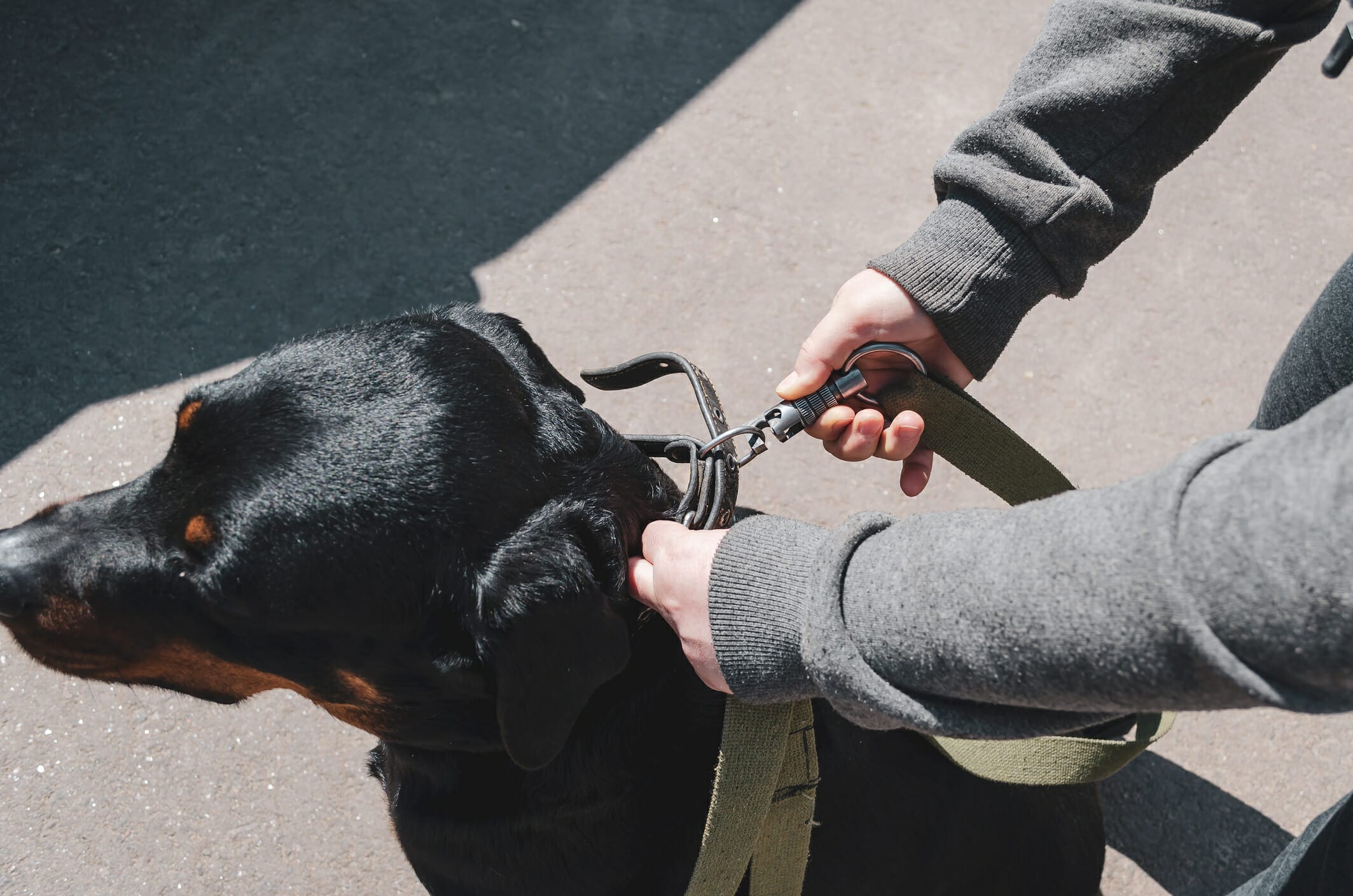
A retractable leash is a leash that consists of a handle with a cord or tape that extends and retracts. The cord is usually made of nylon, while the handle is typically made of plastic. There is also a clip that attaches the leash to your dog’s collar. (If your dog keeps snapping or slipping out of collars, see what to do when your dog keeps breaking his collar.)
Retractable leashes are very convenient because they allow you to adjust the length of the leash as needed. For example, if you’re walking in a crowded area, you can shorten the leash to keep your dog close. Or, if you’re in an open area and your dog wants to explore, you can lengthen the leash to give them some extra freedom.
It’s important to understand how the retractable mechanism works before using one with your dog, as it can be dangerous if used incorrectly. When used properly, however, a retractable leash can be a great tool for giving your dog the perfect amount of freedom on walks.
How does a retractable leash work?
A retractable leash has two main parts inside the handle: a spring-loaded spool and a brake.
The cord or tape is wound around a spool that is connected to a coiled metal spring. When your dog walks or pulls away from you, the cord unwinds from the spool and the spring tightens. When your dog comes back toward you, the spring unwinds again and pulls the slack back onto the spool. That's why there is always a little tension on the leash: your dog feels a slight, constant pull whenever the cord is extended.
The brake is controlled by a button or slider on the handle. Pressing it stops the spool from turning, so the cord can't extend any further. Most models also have a lock that holds the brake on, which lets you fix the leash at one length – for example, short when you pass people or walk near a road. When you release the brake, the cord can extend again up to its maximum length, which is often 10 to 26 feet depending on the model.
How to use a retractable dog leash safely
Now that you know how a retractable leash works, it’s important to learn how to use one safely and effectively. Here are some tips:
- Start by using the leash in a safe, controlled environment. This will help your dog get used to it and prevent any accidents from happening.
- Get the right size leash for your dog. Retractable leashes are rated for a maximum dog weight, so make sure you choose one that’s appropriate for your dog’s size and strength.
- Attach it to a harness, not a collar. If your dog runs to the end of a long cord at full speed, the sudden stop can jerk hard on the neck.
- Teach your dog to walk calmly on a leash before using a retractable leash. If your dog is not used to walking on a leash, they may get too excited and start pulling when they see the retractable leash.
- A retractable leash unfortunately encourages pulling, because the dog learns that pulling makes the leash longer. Dogs should be taught to walk close to their owner’s side and not to pull on the leash in order to get ahead.
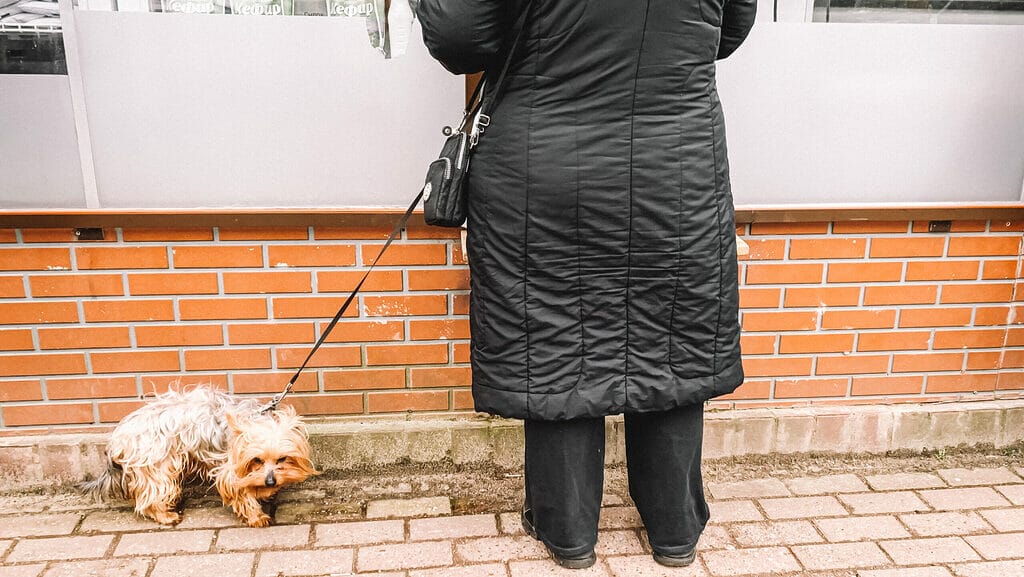
- Be aware of your surroundings. If you’re walking in a crowded area, it’s important to keep your dog close to you. Otherwise, they may get tangled up in the cord or run into someone.
- Never let go of the handle. Even if your dog is walking calmly on the leash, never take your hand off the handle. If they suddenly start running, you’ll need to be able to stop the cord from extending. A dropped handle can also clatter after your dog as the cord retracts, which frightens many dogs into running further.
- Never grab or wrap the cord. A thin cord pulled tight by a running dog can cause burns and deep cuts to fingers and legs. Use the brake instead.
- Lock it short near roads, other dogs and people, and inspect the cord regularly for fraying, as worn cords can snap.
If you want long-line freedom for recall practice instead, learn how to use a check cord for dog training.
What are the pros and cons of a retractable leash?
There are both pros and cons to using a retractable leash. Some people love them because they offer more freedom for their dog, while others find them difficult to control. (If your dog pulls or reacts on walks, see our best leashes for reactive dogs or a shock-absorbing bungee leash.) Here are some things to consider:
Pros
- Retractable leashes offer more freedom for your dog than a standard leash. This can be great if you have a dog that likes to explore.
- They're also very convenient because you can adjust the length of the leash as needed.
- They're handy for letting a well-trained dog sniff around in open spaces where off-leash walking isn't allowed.
Cons
- Retractable leashes can be difficult to control. If your dog is strong or excitable, they may be able to pull the leash out of your hand.
- A retractable leash can cause burns or cuts if the cord wraps around your skin.
- They can also be dangerous for small children or pets because the cord can wrap around them.
- On a long cord, your dog can reach a road, another dog or a person before you can stop them.
- The cords can snap, and the constant tension encourages pulling.
- Many trainers advise against them for dogs that pull, are reactive, or are still learning leash manners.
The best retractable leashes you can buy
So, now that you know everything there is to know about retractable leashes, you may be wondering which one is right for you and your dog. Here are some of the best retractable leashes on the market: