Dangers of Electrical Cords and Dogs: Symptoms, Treatment and Prevention
 Written by Tim de Jong
Yes, a dog can die from chewing an electrical cord that is plugged in. A live cord can cause severe mouth burns, fluid in the lungs (pulmonary edema), an abnormal heart rhythm, and in the worst cases cardiac arrest. Even if your dog seems fine afterward, take them to a vet right away, because some complications only show up hours later.
Chewing on cords is a common household hazard, especially for puppies. Below we cover the symptoms of electric shock in dogs, what to do in the first minutes, how vets treat it, and how to stop your dog from chewing cords in the first place.
Can a dog die from electrical cords?
Dogs can die from chewing electrical cords, but the severity of the injury depends on a few things. The biggest factor is whether the cord is plugged in: an unplugged cord carries no current, while a live one can deliver a dangerous shock. The voltage and how long your dog was in contact with the cord matter too.
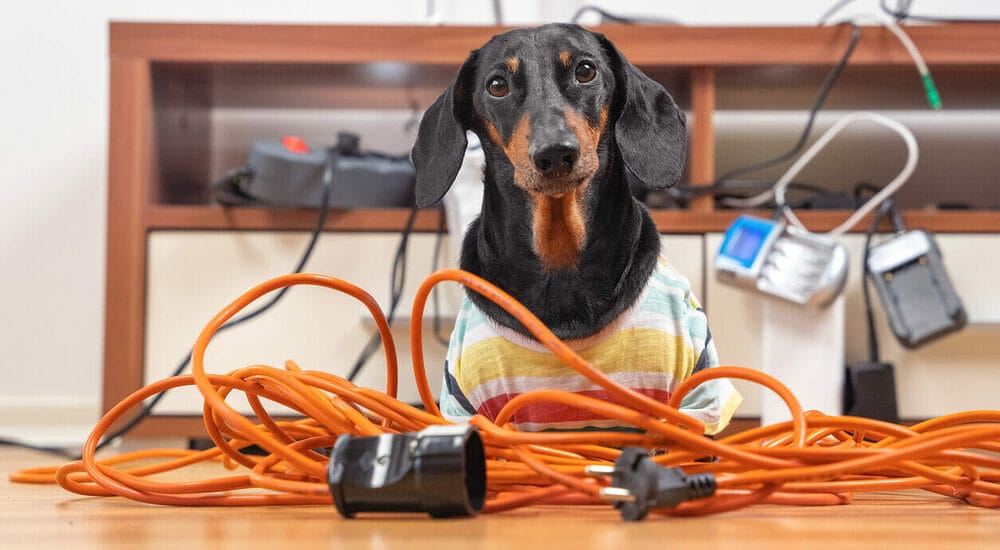
Chewing on live electrical cords can definitely be fatal depending on the severity of the shock. Common signs include burns and pain in and around the mouth, and muscle spasms.
Even if your dog survives the initial shock, it can still lead to an abnormal heart rhythm, seizures, and life-threatening conditions such as pulmonary edema.
Electric shock symptoms in dogs
The symptoms your dog shows after an electric shock depend on whether it was a mild or severe shock, the voltage, and the contact time. For dogs that have experienced mild shocks, you can watch out for symptoms like the ones listed below:
3 Mild electric shock symptoms in dogs
- Drooling or salivating
- Burns and pain in the mouth area
- Foul breath a few days later as burns become infected
Although these are considered mild symptoms, they can cause major problems if left untreated. The full extent of mouth burns often isn’t visible for a few days, which is why you need to take your dog to a vet clinic for proper medical attention.
If burns are left untreated, it can damage tissues and form ulcers. This may lead to infection and cause bigger health problems.

In worst case scenarios, if your dog experienced severe shock, it’s imperative that you take him to your veterinarian immediately. Strong shocks from electric cables can cause acute, life-threatening damage to your beloved pooch and they may show symptoms like:
5 Severe electric shock symptoms in dogs
- Twitching and muscular spasms
- Convulsions that look like seizures
- Collapse and unconsciousness
- Shortness of breath
- Irregular heartbeat
Dog owners need to know how extreme the damage can be if their pets have experienced severe electric shock. Sometimes, the muscle spasms and seizures are strong enough to injure joints and ligaments. It can even lead to bone fracture.
This might also damage their lungs which can lead to fluid build up. If your dog is experiencing labored breathing, this might be a sign that they have developed pulmonary edema, which can be fatal. Signs may progress within minutes up to two days, which is why it’s crucial that the veterinary clinic perform chest x-ray for a proper diagnosis.
Lastly, electric shocks can disrupt the heart’s rhythm (an arrhythmia). Your dog may collapse or even go into cardiac arrest, which can lead to brain damage and sudden death.
What to do right after your dog is shocked
- Don’t touch your dog yet. If your dog is still in contact with the cord, you could be shocked too.
- Cut the power first. Switch off the breaker or fuse, or pull the plug from the wall if you can do so safely. If you can’t cut the power, push the cord away with something dry and non-conductive, like a wooden broom handle.
- Check breathing and heartbeat. If your dog isn’t breathing, call your vet or emergency clinic immediately for guidance on the way.
- Go to the vet, even if your dog seems fine. Breathing problems from fluid in the lungs can develop over the next 24 to 48 hours, and mouth burns are easy to underestimate.
How do vets diagnose electric shock in dogs?
Your dog will need immediate veterinary care after experiencing electrocution. Upon arrival at the vet clinic, you will be asked about what happened so you need to answer the questions as thoroughly as possible.
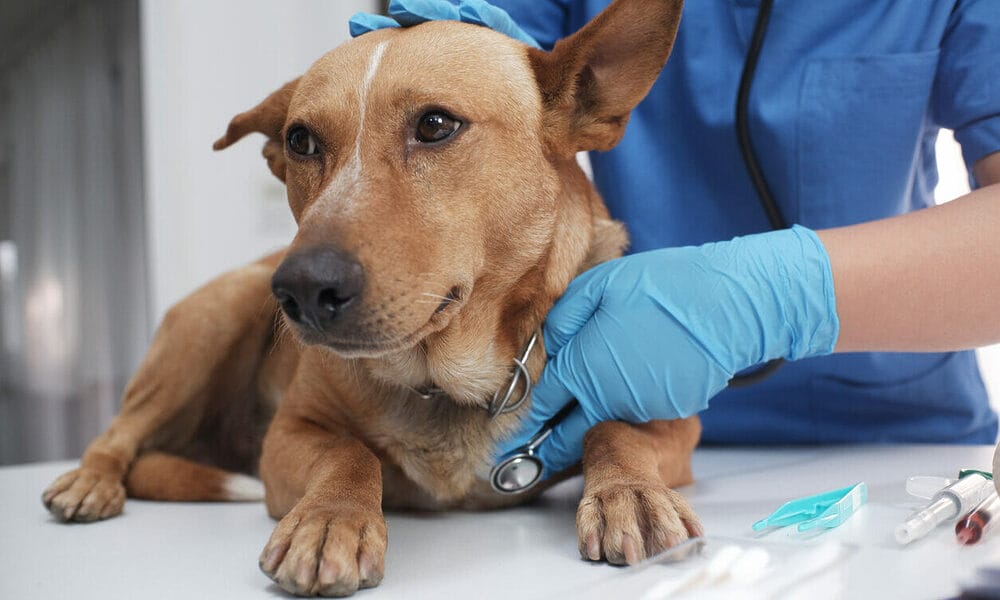
Your dog will be taken to the treatment area and if they show signs like difficulty in breathing, they will be placed inside an oxygen cage and will be monitored closely.
Once your dog is stable, your vet will perform a full physical examination.
They will check your dog’s mouth for burns and listen to their heart and lungs. Upon evaluation, your furbaby will need to undergo chest x-rays and an electrocardiogram to assess their lungs and the heart.
In case your dog develops pulmonary edema and other perilous complications, they will recommend hospitalization to be able to monitor and give any needed medical care for your pet closely and promptly.
Treatment and recovery for dogs that had an electric shock
The treatment and recovery of your four legged companion will depend on the severity of its condition. Your pooch may need to be hospitalized for a day or two for monitoring, since breathing problems can appear later, and mouth burns can take several days to show their full extent.
If there is fluid in the lungs, your vet may give oxygen and diuretics (medications that help remove excess fluid). Mouth burns may need cleaning, soft food, and sometimes antibiotics to prevent infection while the tissue heals. In case your dog is showing signs of discomfort, pain medication might also be given.
Once your vet doctor concludes that your dog is stable enough to go home, then your pet may be discharged. However, you will still need to provide careful home care in the coming weeks, such as soft food for a sore mouth and watching for any change in breathing.
Why do dogs chew on electrical cords?
Dogs are naturally very curious and will chew on anything when they are bored or lonely. This usually happens when adult dogs are left alone at home or when they have separation anxiety. All the more reason to give them plenty of safe chew toys.
Read More About: Why Do Dogs Chew On Electrical Cords?
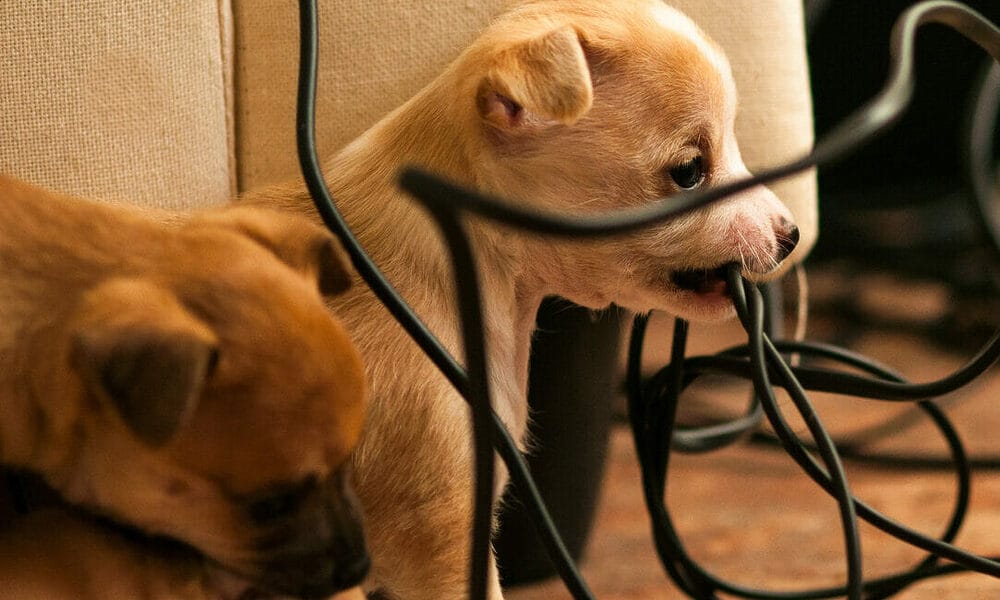
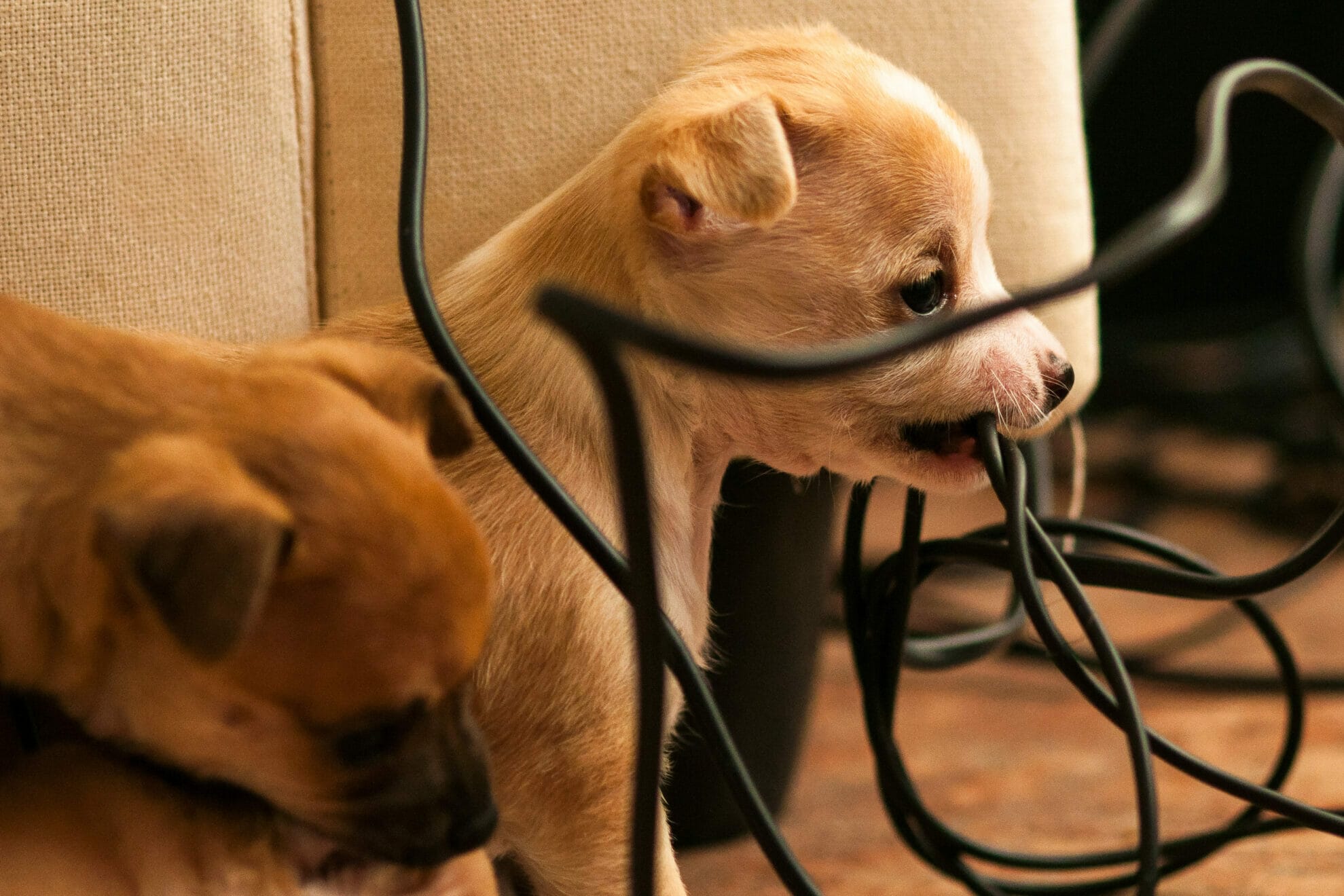
But chewing is also very common in puppies. They’re either very keen to discover the new things around them or they’re trying to relieve the discomfort of teething. Either way, whether you have an adult dog or one in its puppy stages, they somehow always end up tangled in electrical cords.
Because these cords hang low, they may be easier to reach. They also have a rubbery texture that feels a lot like a chew toy, which is likely why dogs think it’s okay to chew on them.
How to prevent your dog from chewing on electrical cords?
To prevent a serious accident like this from happening, here are a few tips to pet-proof your home:
1Training

It can begin as early as puppyhood. If you notice your dog chewing on a cord, redirect their attention to chew toys and other activities. You can also teach commands like “leave it” so they are aware that electric cords are a no-go.
2Block access
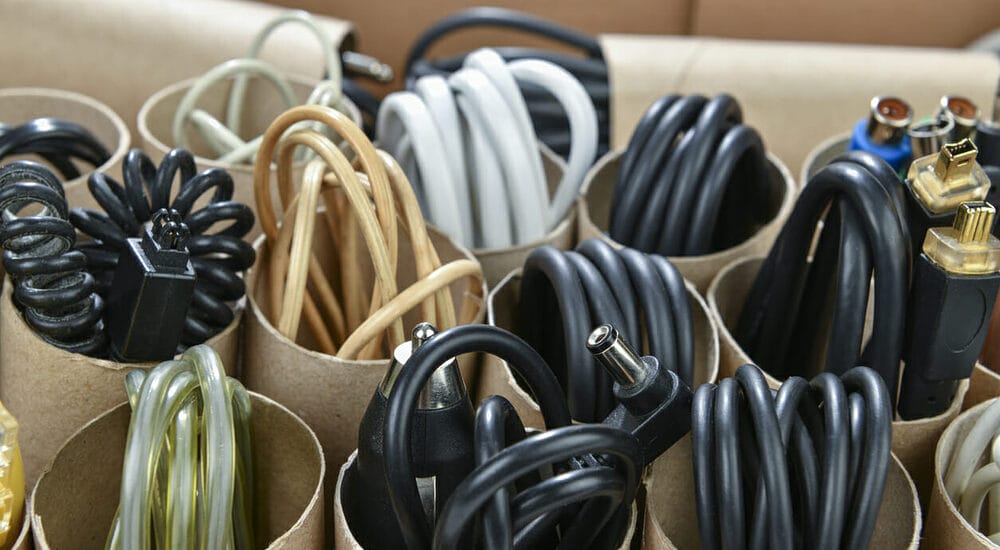
If you have an untrained dog, the best thing you can do is to block access to the cords. You can hide them behind furniture or you can get cable management boxes where you can neatly tuck away these unsightly cords.
Read More About: 5 Best Cord Protectors For Dogs
3Use deterrent spray

Make the cords taste and smell unappealing. You can purchase a pet-safe bitter tasting spray and rub it on the cords in your home. But please note that dogs react to taste and smell differently, so you want to make sure that you are using something your dog really dislikes. Reapply it regularly, since the taste wears off.
Read More About: Best Bitter Apple Spray For Dogs
4Unplug power cords
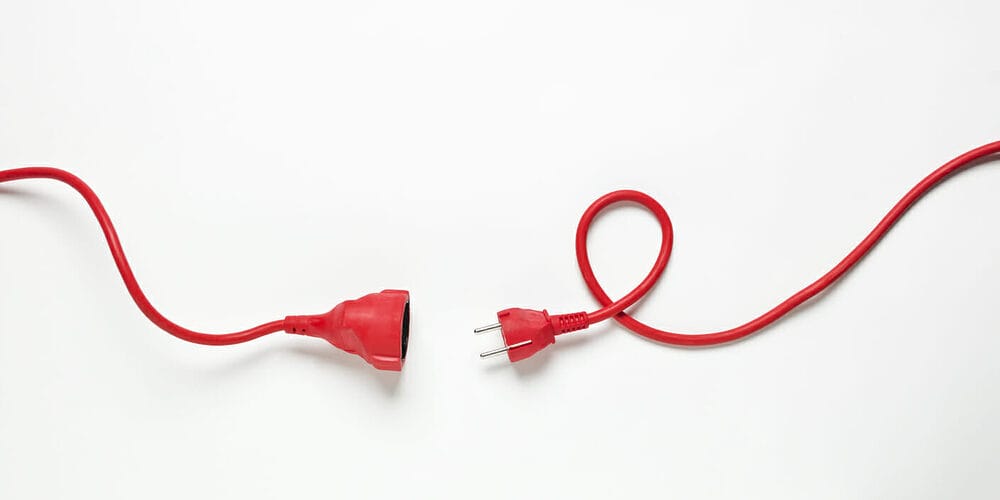
If you are leaving your pet at home, unplug any cords you don’t need and that your dog can reach. An unplugged cable can’t give your dog a shock, although swallowed pieces of plastic or wire can still cause problems, so replace any chewed cords.
Final thoughts – Better Safe Than Sorry
While there are serious risks that may happen when dogs chew on electrical cords, there are ways to prevent this kind of dangerous accident from happening. So, make sure to bear these in mind to keep your “ultimutt” best friend happy and healthy!