Dog daily routine builder
Enter when you get up, go to bed and leave for work. You get a timed daily schedule for your dog with walks, meals, potty breaks, training, rest and any visits needed while you're out.
 Tim de Jong
Your dog
Turn off for a day at home
Including your commute
Not sure? Try the exercise calculator
Meals a day
Two suits most adult dogs
Potty break at least every
About every 4 hours for adults; many seniors need to go more often
Bloat risk: keeps exercise an hour away from meals
Puppy under 6 months? Use the puppy potty schedule and the puppy sleep schedule instead.
Walks a day
3· 60 min in total
You're out for 9 h. 2 visits keep every stretch alone under four hours.
- Meals
- 7:10 am, 6:20 pm
- Potty stops
- 6 + walks
- Visits needed
- 11:30 am, 2:30 pm
- Longest alone
- 3 h
- Walks
- 25m + 10m + 25m
- Bedtime
- 10:30 pm
Built on RSPCA advice (no more than four hours alone; exercise, a potty break and a small meal before you leave), Penn Vet (adults out about every four hours) and PDSA bloat advice.
Your dog's daily routine
Change any time above and the day rebuilds itself. Keep the order the same from day to day so your dog knows what comes next.
- 6:30 amPottyWake up: straight out for a potty break
- 6:40 amWalkMorning walk (25 min)Sniffing counts: let your dog explore
- 7:10 amMealBreakfast
- 8:00 amPottyLast potty break before you go
- 8:30 amAloneLeave with a stuffed food toy or chewKeep goodbyes short and calm
- 11:30 amto 11:45 amVisitVisit 1: potty break and a 10-minute walk15 minA dog walker, neighbor or friend
- 2:30 pmVisitVisit 2: potty breakA dog walker, neighbor or friend
- 5:30 pmPottyHome: potty break first, then a calm hello
- 5:50 pmWalkEvening walk (25 min)
- 6:20 pmMealDinner
- 6:50 pmTrainingTraining game or puzzle toy (10 minutes)Keeps your dog's mind busy
- 9:45 pmCalmWind down: chew, cuddles, lights low
- 10:15 pmPottyLast potty break
- 10:30 pmSleepBedtime
A starting routine from RSPCA, PDSA, Penn Vet and AKC guidance. Dogs with health problems may need more frequent breaks or a different plan: ask your vet.
What should a dog's daily routine look like?
Strip it back and every good dog day has the same building blocks:
- Potty breaks. Adult dogs can hold their urine for 8 hours or more, but Penn Vet recommends a chance to go out about every four hours when possible.
- Meals. AKC says most dogs only need two meals a day. Same times each day makes the rest of the routine easier to plan.
- Exercise. The PDSA says most dogs need at least one or two walks a day, and some breeds need an hour or two of exercise or a lot more. The dog exercise calculator gives a range for your breed and age.
- Training and brain work. The PDSA calls training an essential part of every dog's daily routine, for both the mind and the bond between you. Five or ten minutes fits into any day.
- Rest, and some time alone. Adult dogs sleep a large part of the day. Short, calm spells alone, even on days at home, make workdays easier.
The builder arranges those blocks around your day, adds visits when you're out for longer than four hours, and spaces potty breaks so none of the gaps run long. For a fuller version with a sample morning, afternoon and evening, our free ebook The Ideal Dog Routine is available through the sign-up box on this page.
Sample dog routine for a workday
An adult dog whose owner is up at 6:30 am, out from 8:30 am to 5:30 pm and in bed by 10:30 pm, with an hour of exercise a day, gets 3 walks, 2 meals and 2 visits while the house is empty (9 h away):
| Time | What happens |
|---|---|
| 6:30 am | Wake up: straight out for a potty break |
| 6:40 am | Morning walk (25 min) |
| 7:10 am | Breakfast |
| 8:00 am | Last potty break before you go |
| 8:30 am | Leave with a stuffed food toy or chew |
| 11:30 am | Visit 1: potty break and a 10-minute walk |
| 2:30 pm | Visit 2: potty break |
| 5:30 pm | Home: potty break first, then a calm hello |
| 5:50 pm | Evening walk (25 min) |
| 6:20 pm | Dinner |
| 6:50 pm | Training game or puzzle toy (10 minutes) |
| 9:45 pm | Wind down: chew, cuddles, lights low |
| 10:15 pm | Last potty break |
| 10:30 pm | Bedtime |
How do I fit my dog's routine around work?
The RSPCA advises leaving dogs alone for no more than four hours at a time, so they can exercise, go potty and have company. A normal office day plus commute is nine hours or more, which means at least two visits. A dog walker, a neighbor, family or daycare can cover them; the dog alone time calculator works out the times for puppies and seniors too.
The RSPCA's routine for the hour before you leave is worth copying:
- A walk or play session, finishing about half an hour before you go.
- A potty break and a small meal.
- A stuffed food toy, treat ball or chew that only comes out when you leave.
- A brief, calm goodbye.
When you get home, take your dog out first, then say hello properly. The evening is the best time for the longest walk and a training game.
Should I walk my dog before or after eating?
For most dogs, a meal soon after the morning walk works well, and the RSPCA suggests a small meal shortly before you leave. The exception is bloat, or gastric dilatation volvulus (GDV), a life-threatening emergency where the stomach swells and twists. The PDSA says it is most common in giant and deep-chested breeds such as German Shepherds, Great Danes, Saint Bernards and Dobermanns, mostly in middle-aged and older dogs, and advises:
No exercise for 1 hour before and 1 hour after a meal
Switch on "Large, deep-chested breed" in the builder and it keeps that hour clear on both sides of every meal. The PDSA also suggests several smaller meals instead of one big one for these dogs, and a slow feeder for fast eaters. Retching without bringing anything up, a swollen belly, restless panting and pacing, drooling or pale gums are signs of GDV: call your vet immediately.
Adjusting the routine for an older dog
The PDSA's advice for senior dogs is little and often: joints stiffen when they aren't used, so several short, gentle walks beat one long one. Choosing "Senior" in the builder splits the exercise more evenly across the day and sets potty breaks every three hours, because older dogs often need to go more often. Older dogs also cope less well with heat and cold, so walk in the cooler parts of hot days, and check with your vet that the amount of exercise suits your dog's health.
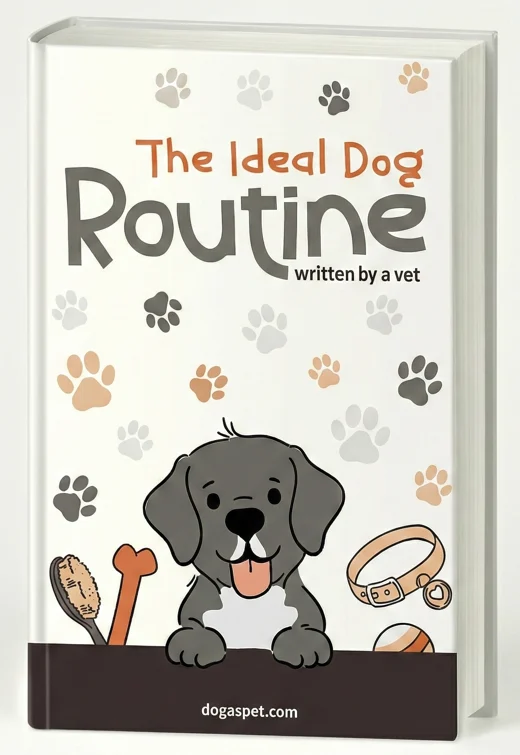
Get The Ideal Dog Routine, free
A 10-page guide written by a vet: a sample daily routine, exercise and alone time, and grooming and vet check schedules.
We'll email you the download link. Unsubscribe anytime.
Frequently asked questions
How many times a day should I take my dog out?
Penn Vet's behavior service suggests giving adult dogs a chance to go out about every four hours when possible. Over a 16-hour day that is four or five trips, counting walks. Older dogs and dogs with some medical conditions need to go more often.
What time should I feed my dog?
Most adult dogs do well on two meals a day, at roughly the same times each day. Fit them around walks: right after the morning walk works for most dogs, but large, deep-chested breeds prone to bloat should have no exercise for an hour before and after eating.
What should my dog do while I'm at work?
Mostly rest. Exercise and a potty break before you go help your dog settle. The RSPCA suggests a stuffed food toy, treat ball or chew that only appears when you leave, and no more than four hours alone at a stretch, so plan a visit for longer days.
Do I need to walk my dog first thing in the morning?
Your dog needs a potty break as soon as you get up. The walk itself can come before or after breakfast, depending on your schedule and whether your dog is a bloat-risk breed. A morning walk before work also helps your dog settle while you are out.
How do I change my dog's routine?
Shift times gradually over a week or two rather than all at once, and keep the order of the day the same. Watch for accidents or restlessness, which suggest the gaps are too long for your dog.
Sources
Related tools
- Puppy sleep scheduleEnter your puppy's age, wake-up time and bedtime to get a daily nap schedule, total sleep and night potty alarm times.
- Puppy potty scheduleEnter your puppy's age, wake-up time, bedtime and meals to get a daily potty timetable, how long they can hold it and night alarm times.
- Crate training scheduleEnter your puppy's age (or choose adult dog) and a start date to get a dated week-by-week crate plan with the longest safe crate time each week.
- Puppy socialization checklistEnter your puppy's birth date to see how long the socialization window stays open, then tick off people, places, sounds and handling as you go.
- How long can a dog be left alone?Enter your dog's age, how used to being alone they are and your hours away to get the longest safe stretch alone and a day plan with visits.
- Dog exercise calculatorChoose a breed or energy level, age and health to get daily exercise minutes, how to split them into walks, and a puppy guide.