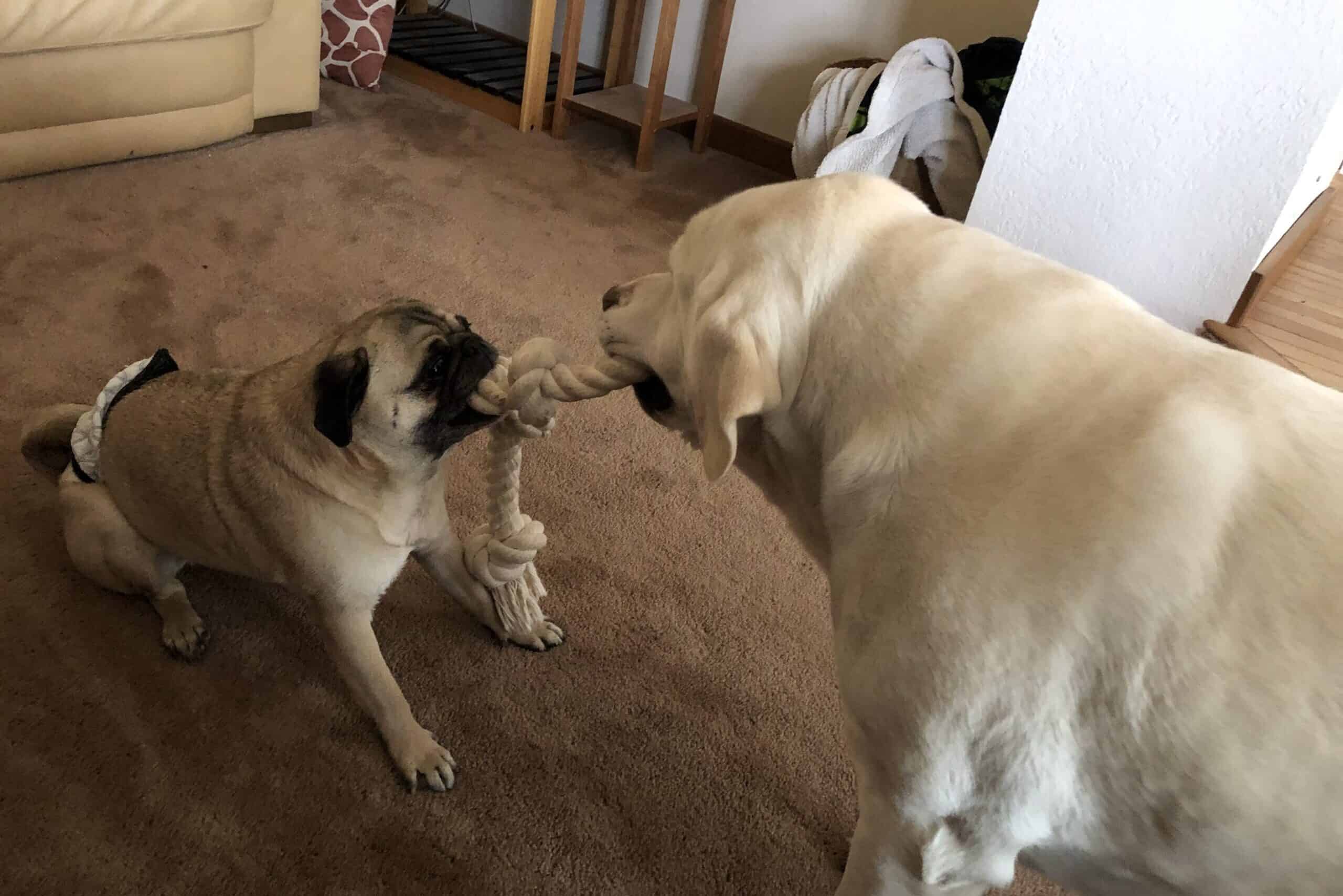
Many big dogs do learn to be gentle with small dogs: well-socialized dogs often “self-handicap” in play by lying down, using softer mouthing, and letting the smaller dog win. But it isn’t automatic. It depends on the individual dog’s temperament, socialization, and play style, and because of the size difference even a friendly big dog can hurt a small one by accident, so supervision always matters.
Below, we walk you through the problems large dogs can have with small dogs, why some big dogs get aggressive, and how to help them get along.
Should You Be Worried About Your Large Dog Around Smaller Dogs?
As a general rule, a friendly, well-socialized large dog is usually gentle with smaller dogs and avoids hurting them. That said, you should still keep an eye on them, especially with new dogs.
There are some important exceptions. If your large dog has a history of aggression or violence towards other dogs, then you should take extra precautions when introducing them to a small dog. The same goes for if your large dog is particularly rough when playing with other dogs.
Why Should You Want Your Large Dog to Get Along With Small Dogs?
There are a few reasons you might want your large dog to get along with small dogs. The most common reason is that it simply makes life easier.

If you’re a dog owner, chances are you’ve had to miss out on activities or events because you couldn’t find someone to watch your dog. If your dog doesn’t get along with other dogs, then it can be hard to find a dog sitter or take them to doggy daycare.
Another reason is safety. Small dogs are everywhere, on walks, at the vet, and in your neighbors’ yards, and a large dog who stays calm around them is far less likely to end up in a scary or dangerous situation. Positive experiences with other dogs also help many dogs feel more relaxed and confident in everyday life.
What Problems Do Large Dogs Often Have With Small Dogs?
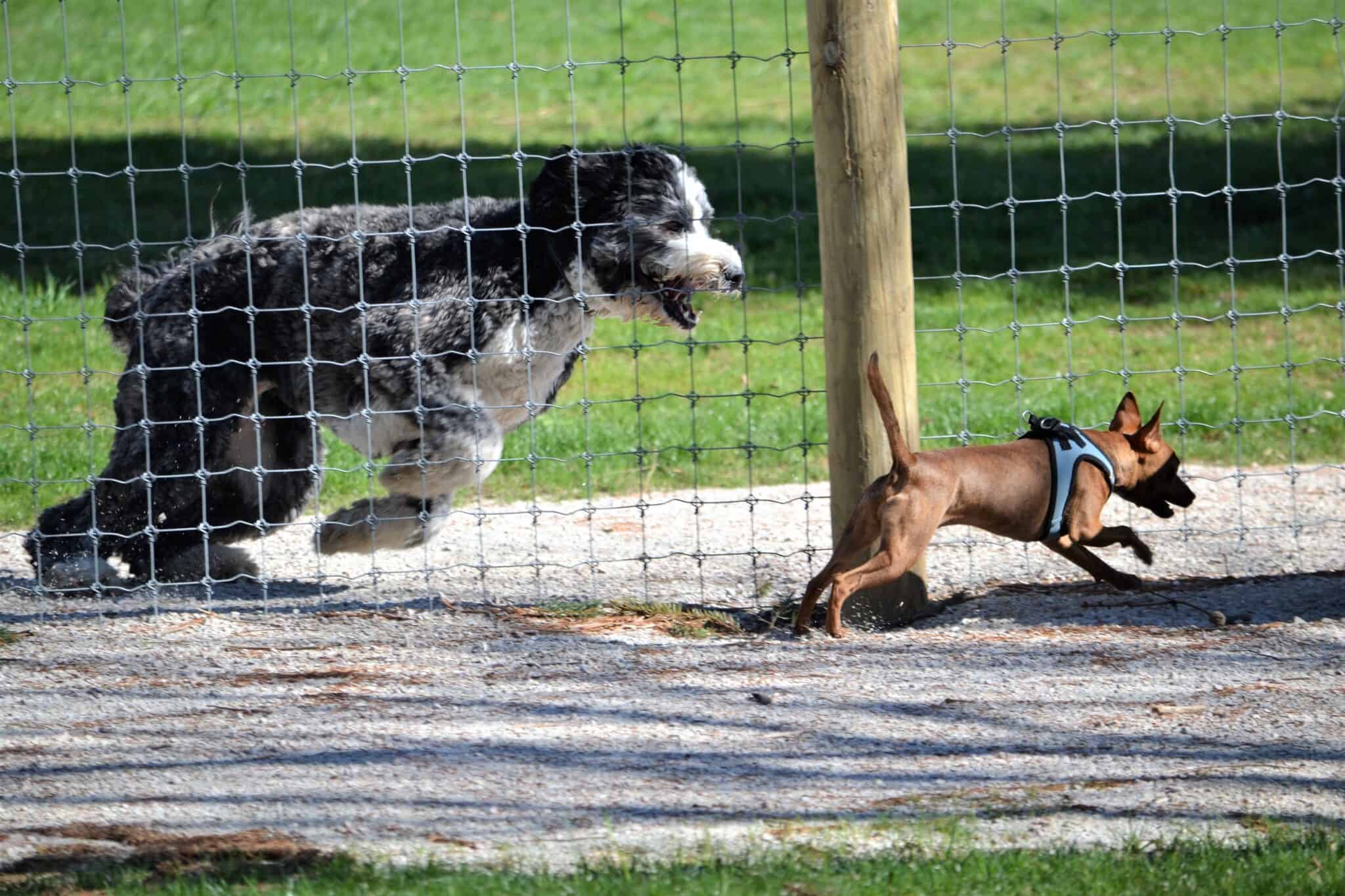
One of the biggest problems that large dogs have with small dogs is that they tend to be too rough when playing. This is often due to the fact that they simply don’t know their own strength.
As a result, it’s important to supervise playtime between your large dog and any small dogs. If you see that your large dog is getting too rough, then intervene and stop the play.

Another problem that large dogs often have with small dogs is that they may try to herd them. This is a natural instinct for many dogs, especially those who were bred for herding livestock.
If your dog tries to herd a small dog, calmly interrupt and redirect them. Nipping, body-blocking, and bowling a small dog over can easily injure it, and constant herding is stressful for the smaller dog.
Predatory drift
The most serious risk is what behaviorists call predatory drift. A small dog that runs fast, squeals, or yelps can trigger a big dog’s prey drive, and play can suddenly turn into chasing and grabbing, even in a dog that has never been aggressive. It’s most likely when several large dogs chase one small dog together. If you see your dog fixating, stalking, or chasing silently with intense focus, stop the play right away.
Reasons Large Dogs Get Aggressive With Small Dogs
There are a variety of reasons that your large dog might be acting this way around small dogs. Digging into this psychology is very important as it will help you find the right solution to the problem that you’re having.
1Uncertainty
One of the most common reasons that large dogs get aggressive with small dogs is that they’re feeling uncertain or anxious. This is often due to a lack of socialization or experience.
2Territorial
Another common reason that large dogs act aggressively towards small dogs is that they’re feeling territorial. This is most likely to happen if the large dog perceives the small dog as a threat to their home or family.
3Possessiveness
Another possible reason for aggression is that the large dog is feeling possessive. This is most likely to happen if the large dog is guarding a resource, such as a toy, food, a resting spot, or even you, from the smaller dog. We look at this kind of competition between dogs in why your dog always wants what the other dog has.
4Lack of Socialization
One of the main reasons that large dogs act aggressively towards small dogs is that they simply haven’t been properly socialized. Socialization is incredibly important for all dogs, but it’s especially important for large dogs.
This is because they need to learn how to interact with other dogs in a safe and appropriate way. Without socialization, they may not know how to properly interact with other dogs, which can lead to aggression. Dog body language can be confusing too; for example, we explain why a dog pushes his bum into other dogs.
How Can You Help Your Large Dog Get Along With Small Dogs?
Now that you know why your dog might be acting like this, it’s time to get to work solving the problem! Here are some guidelines for you to follow.

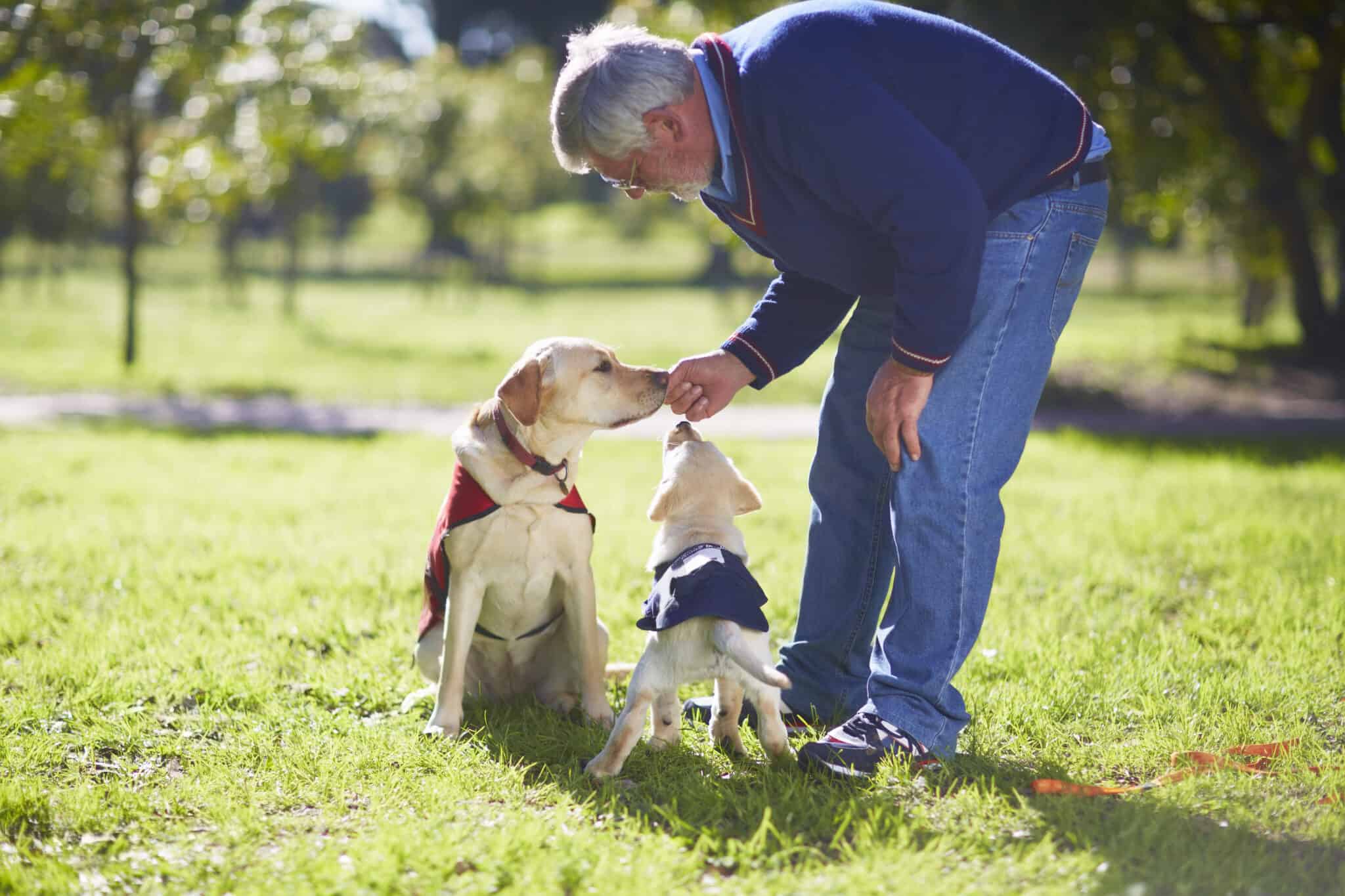
First, make sure that you socialize your large dog from an early age. This means giving them positive, well-supervised experiences with many different types of calm, friendly dogs, including small ones. This will help them learn how to interact with all different types of dogs, and should help prevent problems from arising.
Another thing you can do is to make sure that you supervise all interactions between your large dog and any small dogs. This way, you can intervene if things start to get too rough. At dog parks, use the separate small-dog area if your dog is small, or keep your big dog out of it.
Signs that play is healthy:
- Both dogs take turns chasing and being chased, or being on top
- Loose, wiggly bodies and play bows
- Frequent short pauses, after which both dogs choose to keep playing
Signs it’s time to step in: the small dog is hiding, trying to get away, or yelping; the big dog is pinning, standing over, or repeatedly body-slamming; or the play gets faster and more intense without breaks. Calmly separate the dogs and let them settle before trying again.
Finally, make sure that you train your large dog not to herd or chase other dogs. This is an important safety measure, as it could prevent them from accidentally hurting a small dog.
How to Socialize Your Large Dog With Small Dogs
The best way to socialize your large dog with small dogs is to gradually introduce them to each other. This means starting with short, supervised meetings, ideally on neutral ground with both dogs on loose leashes, and gradually increasing how long the meetings last.
It’s also important to make sure that the meetings are positive experiences for both dogs. This means using treats and positive reinforcement to help them associate each other with good things.
If your large dog has already shown aggression toward small dogs, don’t try to fix it with more exposure on your own. Work with a qualified, reward-based trainer or a veterinary behaviorist, and keep your dog leashed around small dogs in the meantime.
Let’s Recap
Big dogs aren’t born knowing how gentle to be, but with good socialization, supervision, and a watchful eye for rough or predatory play, most can share space safely with small dogs. As a dog owner, you’ll also be relieved by any progress made on this issue! If you are thinking about adding a second dog, read how much harder it is to have 2 dogs.