Best Anal Gland Supplements for Dogs: 6 Picks for Scooting (2026)
 Written by Tim de Jong
As an Amazon Associate we earn from qualifying purchases, at no extra cost to you. Disclosure
Pick by your dog
Swipe ›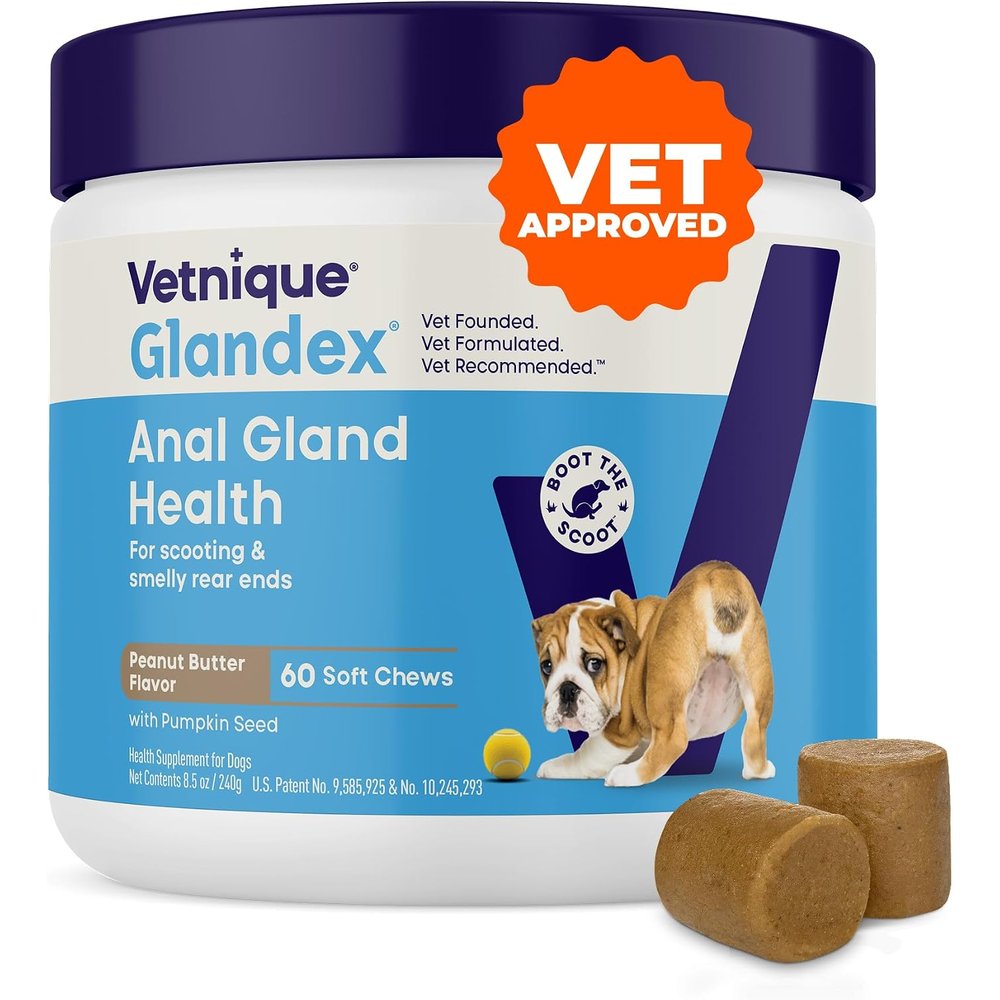
Our picks
| Pick | Best for | Buy |
|---|---|---|
| Top pickVetnique Glandex Anal Gland Soft Chews | Best Overall | Check price |
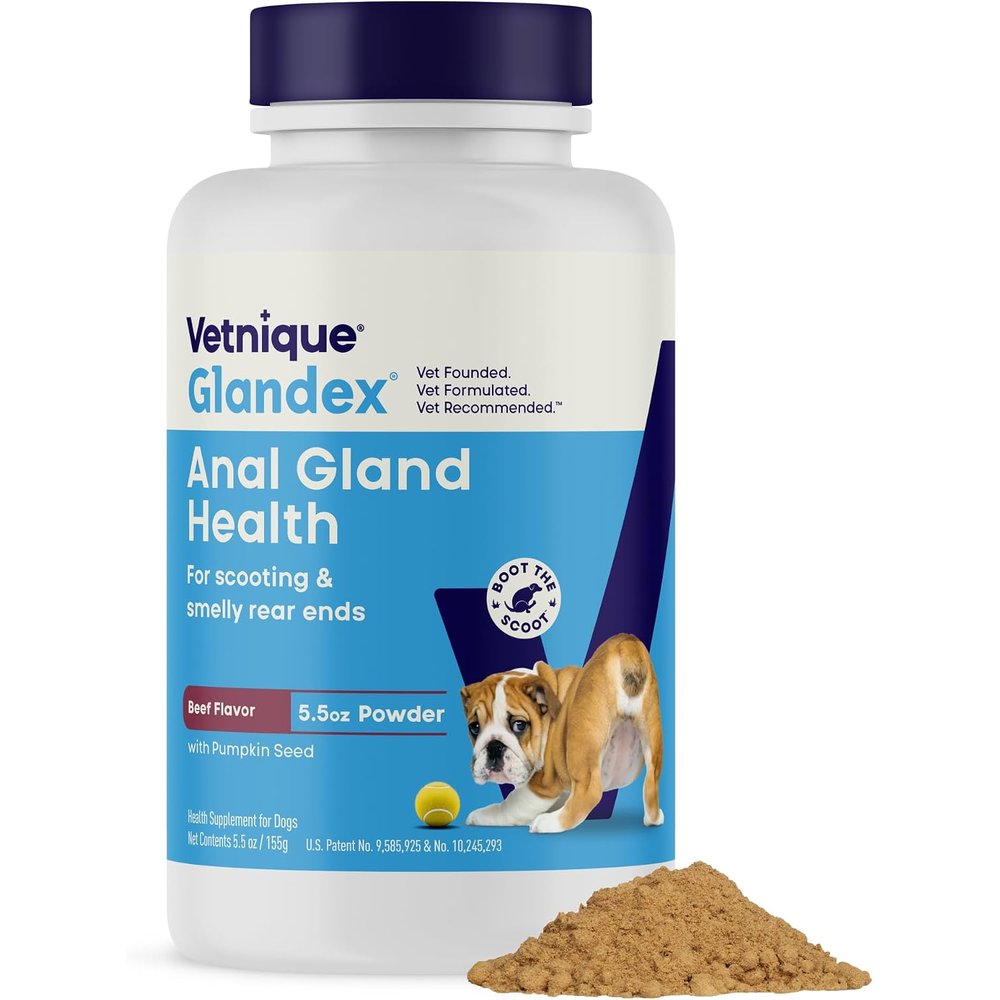
| Vetnique Glandex Anal Gland Powder | Best Powder for Picky Eaters | Check price |
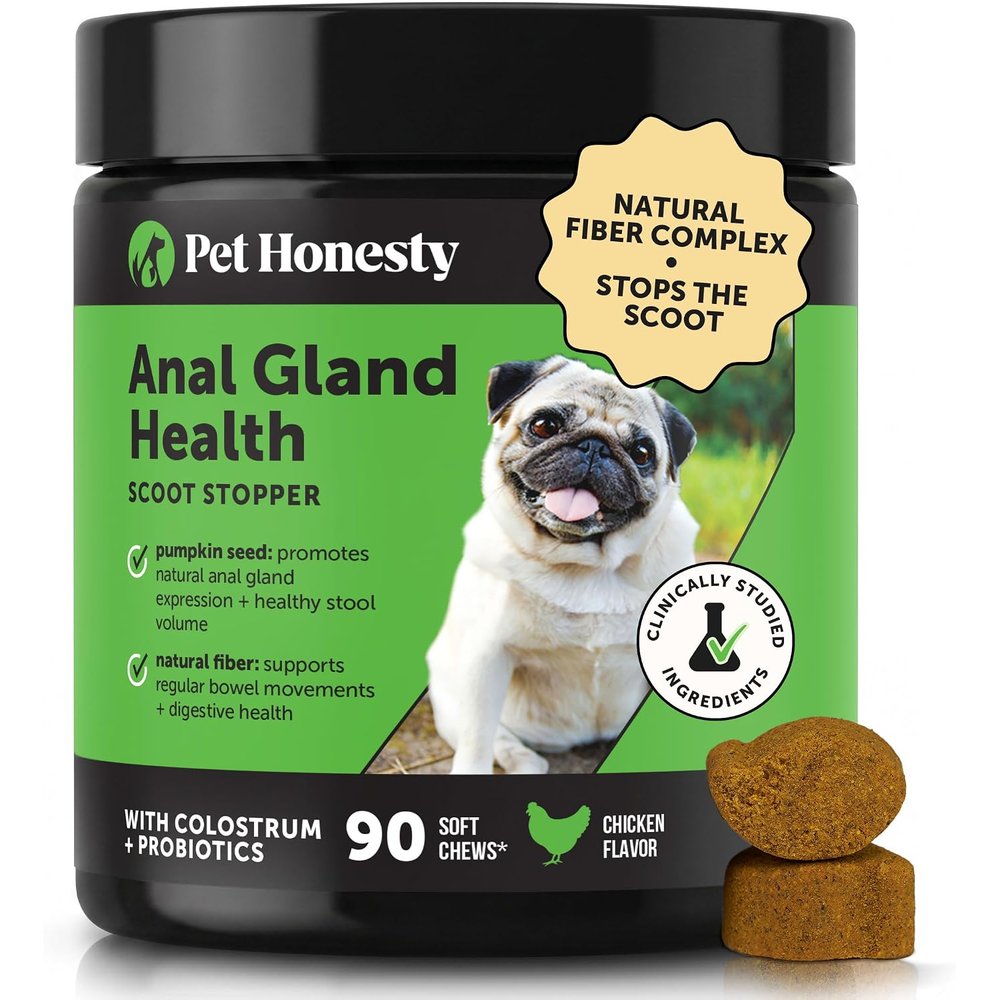
| PetHonesty Scoot Stopper Anal Gland Chews | Best Value Chew | Check price |
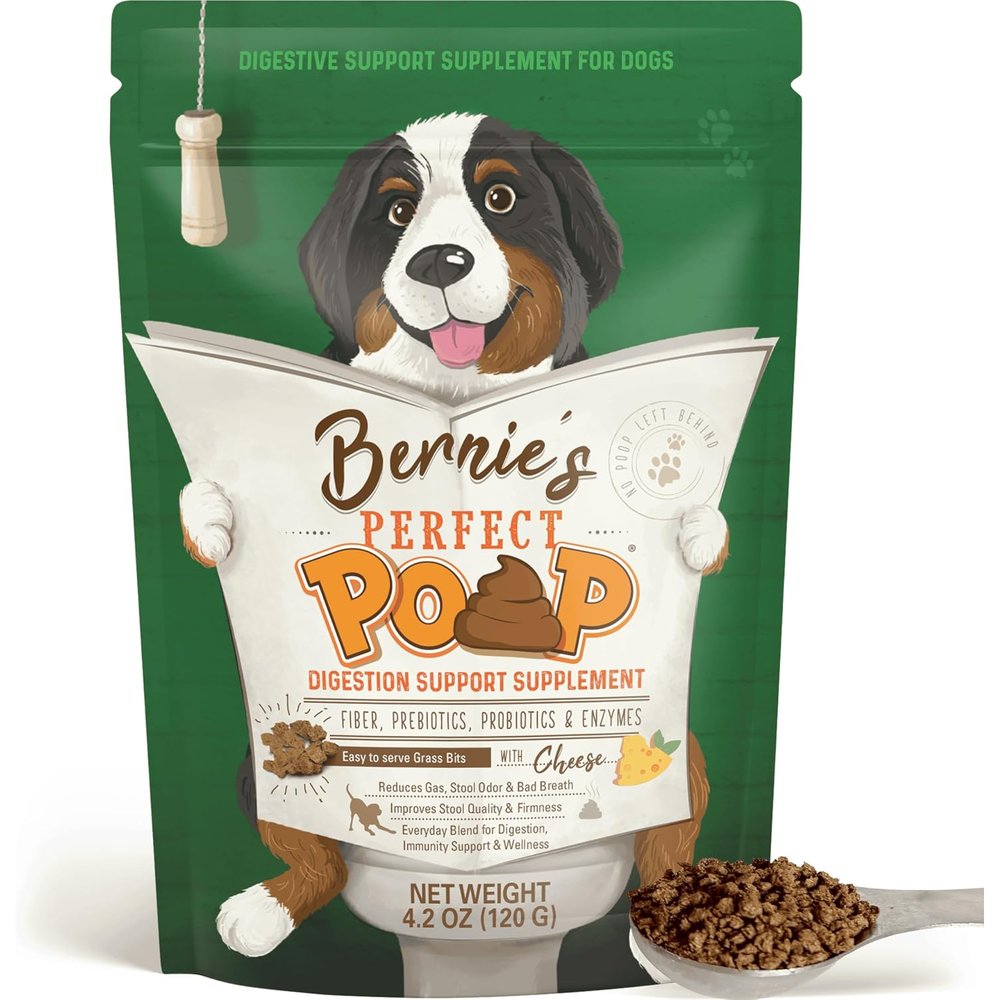
| Bernie's Perfect Poop 4-in-1 Digestion Supplement | Best All-in-One Digestion | Check price |
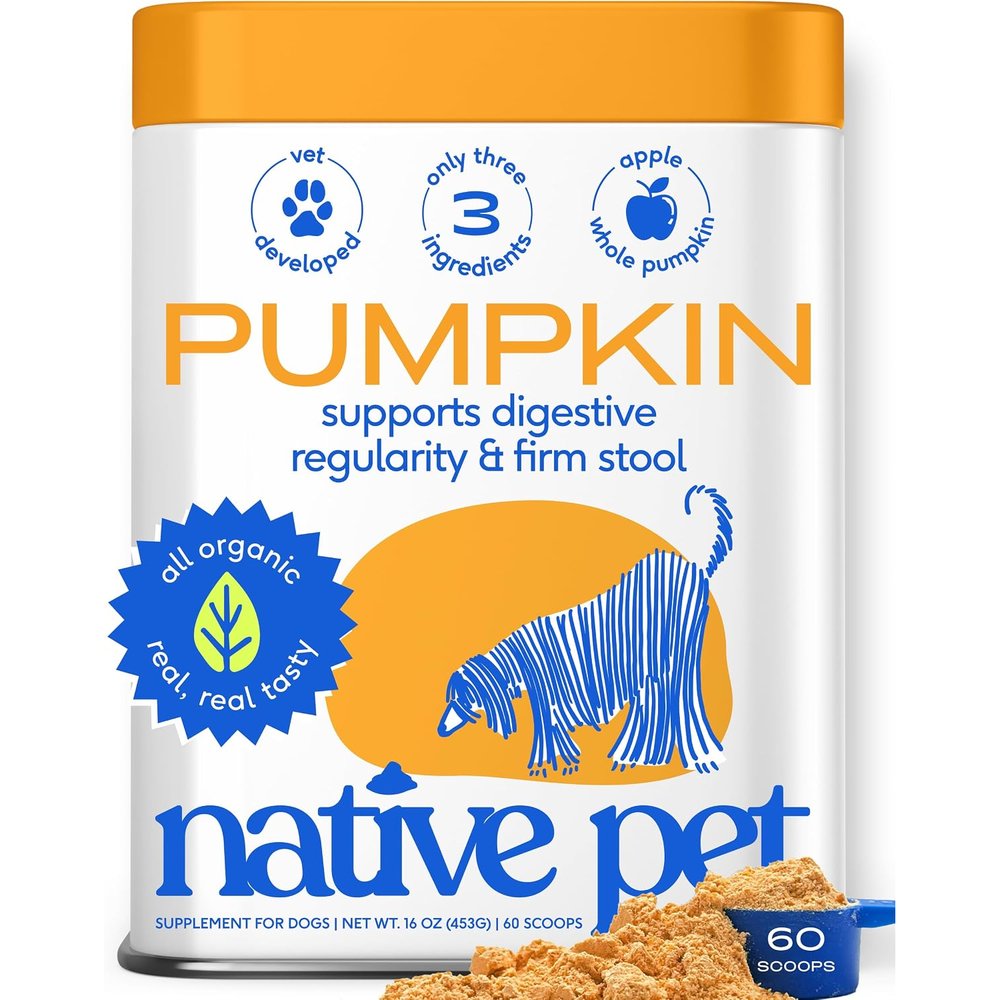
| Native Pet Organic Pumpkin Powder | Best Single-Ingredient Pumpkin | Check price |
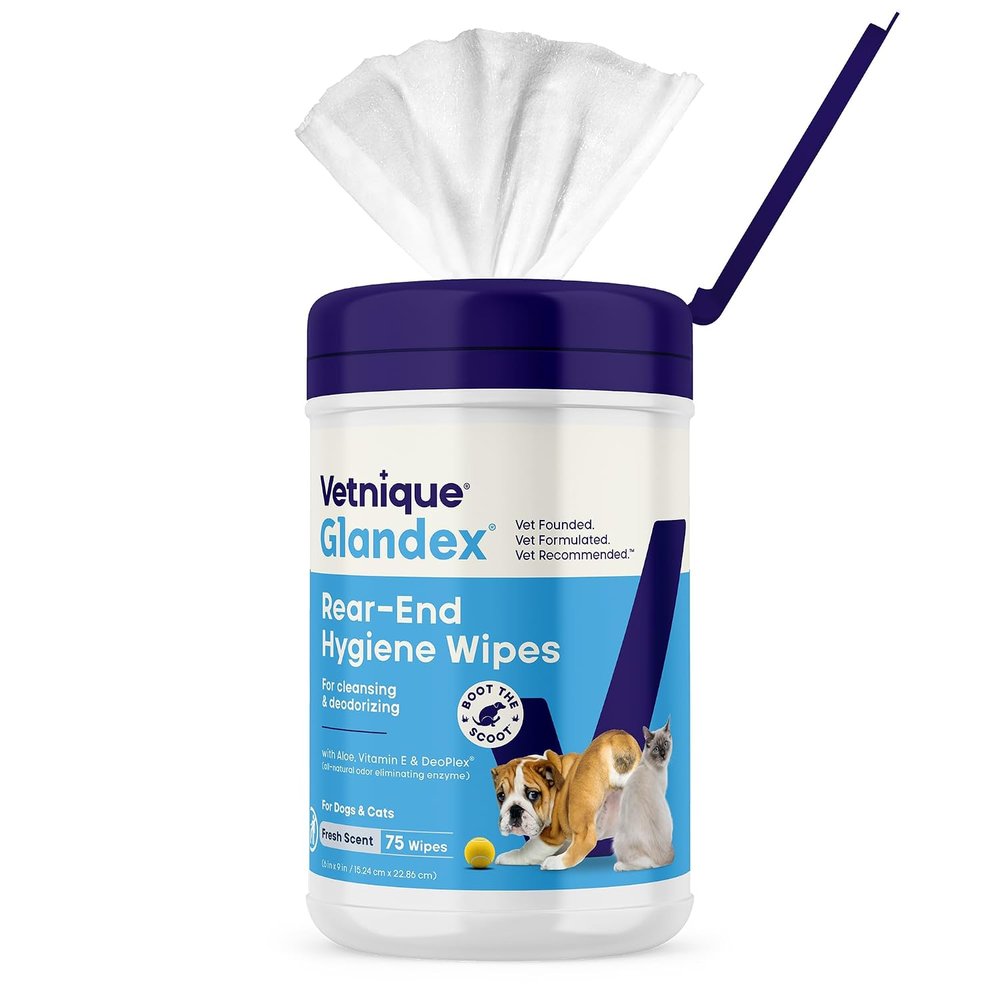
| Vetnique Glandex Rear End Wipes | Best Hygiene Add-on | Check price |
If your dog keeps dragging their bottom across the carpet and you're tired of paying for gland expressions, an anal gland supplement for dogs is worth a look. These products aren't medicine. They're mostly fiber, often with a probiotic and enzyme, and they make your dog's poop bulkier and firmer so the glands get squeezed empty naturally. For the right dog that helps; for a dog with an impacted or infected gland it won't.
The short answer: the best anal gland supplement for most dogs is Vetnique Glandex Anal Gland Soft Chews, a pumpkin-seed and apple-pectin fiber chew with a probiotic and digestive enzyme. If your dog won't eat chews, the Glandex powder does the same job on food, and PetHonesty Scoot Stopper is a good-value alternative. Start at half the dose, give it two to four weeks, and see a vet if your dog is in pain, swollen or bleeding.
How anal glands empty on their own (and why stool firmness matters)
Dogs have two small sacs just inside the anus, at roughly the 4 and 8 o'clock positions, filled with a strong-smelling, oily scent fluid. In most dogs they empty without help: a firm stool presses on both sacs on its way out and pushes a little fluid through each duct. We explain the anatomy in can a dog express their own glands.
Problems start when that pressure is missing. Soft stool or diarrhea slides past without squeezing the sacs, the fluid builds up and thickens, and your dog starts scooting, licking or turning to look at their tail. Left too long, a full gland can become impacted, infected or abscessed.
That's the logic of an anal gland supplement: bulk up the stool to restore that pressure. It's the same idea as the fiber-rich foods that help a dog express glands naturally, in a more convenient, measured form.
Which dogs benefit from an anal gland supplement?
A supplement is most worth trying if your dog is one of these:
- Small and toy breeds. Chihuahuas, Pomeranians, Shih Tzus, Bichons and Dachshunds are over-represented in gland trouble. See our list of dog breeds that need their glands expressed.
- Overweight dogs. Extra fat around the rear reduces pressure on the sacs. A supplement helps; weight loss helps more.
- Dogs with soft or inconsistent stool. If the poop is regularly too soft to pick up cleanly, fiber is the most direct fix.
- Dogs with recurring scooting once your vet has ruled out infection and other causes.
If your dog's stools are already firm and they've never had gland problems, there's no reason to add one.
When a supplement is not the answer
Fiber supports stool bulk and firmness. It does not treat impaction, infection or an abscess, and waiting a month to see if a chew works can let a simple problem become a painful one. See your vet first if you notice:
- Scooting that's frequent, persistent, or doesn't settle after the glands are emptied
- Swelling, redness or a lump beside the anus
- Blood or pus around the bottom or where your dog lies
- Pain when sitting, straining to poop, or a tail they won't let you touch
- An open wound near the anus (often a burst abscess)
Our vet-written guide to dog anal gland problems explains the treatment. Once the glands are healthy, a supplement can help prevent the next episode. Worms, allergies and fleas also cause scooting, and fiber won't fix those.
Fiber, probiotics and enzymes: what each ingredient does
Most anal gland supplements combine the same building blocks.
Fiber does the real work. Common sources:
- Pumpkin and pumpkin seed. The classic. Pumpkin flesh mixes soluble and insoluble fiber, and the seed adds bulk. If you use it from the kitchen, it must be plain canned pumpkin, not pie filling.
- Psyllium husk. A soluble fiber that absorbs water and forms a gel, very effective at firming loose stool and common in vet fiber products.
- Beet pulp. A moderately fermentable fiber found mostly in dog foods rather than supplements.
- Apple pectin, miscanthus grass, flaxseed, inulin. Other fibers you'll see on labels. Miscanthus grass is especially bulky.
Probiotics such as Lactobacillus acidophilus may help when soft stools come from a digestive imbalance. They don't add bulk, so treat them as a supporting ingredient.
Digestive enzymes like bromelain help break down food. A nice extra, but the least important part for the glands.
A word on evidence. Adding fiber to help the glands empty naturally is widely recommended by vets and makes mechanical sense, but formal studies on anal gland supplements are limited. Most of what we know comes from clinical experience and owner reports, so think of these as a low-risk thing worth trying, not a guaranteed fix.
What to look for in a dog anal gland supplement
- Fiber near the top of the ingredient list. Pumpkin, pumpkin seed or psyllium should come first or second.
- A format your dog will eat every day. Chews suit snack-lovers; powders suit picky eaters and tiny dogs.
- Weight-based dosing, so a Chihuahua doesn't get a Labrador's dose.
- Flavors that suit your dog. Many chews use chicken, beef liver or cheese, which matters for allergic dogs.
- An NASC seal signals good manufacturing standards, though not proof the product works.
The 6 best anal gland supplements for dogs
We picked these based on ingredient lists, label dosing, format and patterns in owner feedback. We haven't run our own trials.
1Vetnique Glandex Anal Gland Soft Chews
Get it if
You want the best-known gland supplement in an easy daily chew.
Skip if
Your dog won't eat soft chews or reacts to peanut butter flavoring.
Glandex is the best-known name in this category, and it's where we'd start. The fiber blend of pumpkin seed powder, granulated pumpkin seed and apple pectin leads the ingredient list, followed by quercetin, Lactobacillus acidophilus (480 million CFUs on the label), vitamin E, the enzyme bromelain and vitamin C.
The label is unusually sensible: give half the dose for the first five to seven days, provide plenty of fresh water, and allow three to five weeks of daily use before judging results. Dosing runs from half a chew under 15 lb to four chews over 75 lb, so the 60-count tub suits small and medium dogs best. Peanut butter or bacon flavor; labeled for dogs from 12 weeks.
Pros
- Fiber-first formula designed specifically for anal glands
- Clear weight-based dosing and a gradual-start instruction
- Probiotic and enzyme included
- Made in the USA
Cons
- Large dogs need up to four chews a day
- Costs more per dose than plain pumpkin
2Vetnique Glandex Anal Gland Powder
Get it if
Your dog refuses chews or needs a very small, precise dose.
Skip if
Your dog only eats dry kibble with nothing to mix it into.
The same Glandex approach as a food topper. Toy breeds get just an eighth of a teaspoon under 15 lb, which is easier to fine-tune than breaking up a chew, and dogs that spit out supplements rarely notice a powder stirred into wet food.
The label lists per teaspoon 890 mg pumpkin seed powder, 135 mg apple pectin, 100 mg quercetin, 96 mg L. acidophilus and 60 mg bromelain, in a beef liver base. Pork liver and salmon versions exist if beef doesn't suit your dog. Mix it into wet food or moistened kibble; on dry food it sinks.
Pros
- Easiest format to dose accurately for small dogs
- Ingredient amounts listed per teaspoon
- Three flavors to work around protein sensitivities
Cons
- Needs wet food or water to stick
- Runs out fast for large dogs
3PetHonesty Scoot Stopper Anal Gland Chews
Get it if
You want a chew with more servings per tub.
Skip if
Your dog has a chicken allergy or does best on short ingredient lists.
Scoot Stopper is the main alternative to Glandex chews and usually works out cheaper per month, thanks to a 90-count tub and simple dosing of one chew per 25 lb. Pumpkin seed and sweet potato lead the ingredient list, followed by colostrum, miscanthus grass, coconut oil, inulin and apple fiber.
It casts a wider net than Glandex, with a five-enzyme blend, an eight-strain probiotic blend and herbs like dandelion and nettle root. That means more for a sensitive dog to react to, and the flavor is chicken. The company is an NASC member, and the label says to check with your vet before giving it to puppies under six months.
Pros
- Good value with simple one-per-25-lb dosing
- Pumpkin seed and sweet potato lead the ingredients
- Probiotic and enzyme blends included
Cons
- Long ingredient list for dogs with food sensitivities
- Chicken flavor rules out chicken-allergic dogs
4Bernie's Perfect Poop 4-in-1 Digestion Supplement
Get it if
Your dog's scooting comes with loose stools, gas or a sensitive stomach.
Skip if
You want a product dosed specifically for anal glands.
Bernie's isn't sold as an anal gland supplement, but it works the same way with a broader digestive focus. The fiber comes from sun-cured miscanthus grass, dried pumpkin and flaxseed, with inulin and xylooligosaccharides as prebiotics, plus Bacillus subtilis and Bacillus coagulans (1 billion CFU per serving) and a seven-enzyme blend.
Miscanthus is a bulky insoluble fiber, exactly what the glands need, and the crunchy "grass bits" mix into dry kibble without sinking. Note the cheese flavor and chicken fat if your dog has allergies.
Pros
- Bulky miscanthus fiber plus pumpkin and flax
- Prebiotic, probiotic and enzymes in one
- Mixes well into dry kibble
Cons
- Not labeled specifically for anal glands
- Contains chicken fat and cheese flavoring
5Native Pet Organic Pumpkin Powder
Get it if
You want pumpkin fiber without opening a can every few days.
Skip if
You want a probiotic in the same product.
If you like pumpkin but not half-used cans in the fridge, this is the cleanest option. There are only three ingredients: organic pumpkin, organic pumpkin seed and organic apple. The dose is one tablespoon scoop per 25 lb, sprinkled on food or mixed with water, and the label recommends half the dose for the first week.
With no meat flavoring, it's also the best choice for allergy-prone dogs, and the most direct answer when your vet says "try more fiber".
Pros
- Three organic ingredients, no meat flavors
- Shelf-stable, unlike canned pumpkin
- Best pick for allergy-prone dogs
Cons
- Fiber only, no probiotic or enzyme
- Large dogs need several scoops a day
6Vetnique Glandex Rear End Wipes
Get it if
You need to clean up after scooting, leaking or an expression.
Skip if
You hope wipes will empty full glands; they can't.
Wipes don't fix anything inside the glands, but gland trouble comes with mess and smell, and these handle that better than baby wipes. An enzymatic deodorizer breaks down the odor of gland fluid instead of perfuming over it, with aloe and vitamin E for the skin. They're alcohol-free and safe for dogs and cats.
Use one after scooting, an expression or overnight leaking. For sofas and bedding, see how to get rid of dog anal gland smell.
Pros
- Enzymatic deodorizer tackles the fishy smell itself
- Gentle, alcohol-free formula
Cons
- Cleanup and odor control only, not a treatment
- Fresh scent may be strong for some noses
How to Use an Anal Gland Supplement (and How Long It Takes)
How you start matters almost as much as what you buy. Too much fiber too fast causes gas and loose stool.
- Start at half the label dose for five to seven days, then step up if stools look good.
- Keep fresh water available. Fiber pulls water into the gut; without enough, stool can turn hard.
- Give it every day. Fiber only works while it's in the diet.
- Change one thing at a time. Don't switch food and start a supplement in the same week.
- Watch the poop. Aim for firm stools that hold their shape. If your dog strains, reduce the dose.
- Give it two to four weeks before judging whether scooting and expressions are less frequent.
If the glands are already full, have them emptied first (groomers usually express externally, which doesn't always empty them fully; see do groomers express glands). A supplement also works best alongside a diet with enough fiber (see the best dog food to prevent scooting), a healthy weight and regular walks.
FAQ
Is Glandex worth it for dogs?
Glandex is worth trying if your dog has soft or inconsistent stools and recurring scooting, and your vet has ruled out infection or impaction. It's a well-designed, fiber-first supplement with sensible dosing advice. It isn't magic: it works by firming stool, like pumpkin or psyllium, and can't clear an impacted or infected gland. Formal studies on gland supplements are limited, so expect a helpful nudge, not a cure. If your dog's stools are already firm, expect little change.
Is pumpkin as good as an anal gland supplement?
Plain canned pumpkin (not pie filling) adds fiber and is a reasonable first step. Supplements are more convenient: shelf-stable, dosed by weight, and often with a probiotic added. If pumpkin alone keeps your dog's stools firm and the scooting stops, you don't need anything more.
How long does an anal gland supplement take to work?
Stools often firm up within a week of reaching the full dose. Fewer scooting episodes usually take two to four weeks of daily use, and Glandex's label says three to five. If nothing has changed after a month, or things get worse, talk to your vet.
Can fiber supplements cause side effects in dogs?
Too much fiber too quickly can cause gas, bloating and loose stool, and lots of fiber with too little water can make stools hard. Start with half the dose, increase gradually and always leave water out. Ask your vet first if your dog has a medical condition or takes medication.
Should I still get my dog's glands expressed?
Only if they need it. Many dogs never need manual expression, and squeezing healthy glands routinely can irritate them. A supplement may mean fewer visits, but it's no reason to skip the vet when your dog shows discomfort.
Final thoughts on the best anal gland supplements for dogs
For most scooting dogs, Glandex Soft Chews are the one to try first. Pick the Glandex powder for picky eaters and tiny dogs, PetHonesty Scoot Stopper for value, Bernie's Perfect Poop when loose stools are the real issue, and Native Pet pumpkin for plain fiber. Add Glandex wipes for cleanup. Start slowly, keep the water bowl full, give it a few weeks, and call your vet at the first sign of swelling, blood or pain.
Get The Ideal Dog Routine, free
A 10-page guide written by a vet: a sample daily routine, exercise and alone time, and grooming and vet check schedules.
We'll email you the download link. Unsubscribe anytime.