
Which dogs have short tails? There are two different answers. Some dogs are born with a short or missing tail. Others are born with a long tail that is cut short when they are a few days old, which is called docking.
This list covers the first group only. In our breed data, 10 breeds have a natural tail that is a bob, a stub or a screw tail. Breeds that are docked but born with full-length tails are not included.
For each breed you will find size, temperament and lifespan from our data, plus one tip for owners. If you want tails that go the other way, see dog breeds with curly tails.
Natural bobtail or docked tail?
The AKC glossary defines a bobtail as "a dog born without a tail, or a dog with a tail docked very short," and a screw tail as "a naturally short tail twisted in more or less spiral formation." Docking simply means "to shorten the tail." So a short tail on a dog is not always a natural one.
That matters for two reasons. First, a natural bob is inherited, and it is not guaranteed. 7 of the breeds below are described as "naturally bobbed or docked," so some puppies are born with a short tail and some are not. Second, if you meet a dog of one of these breeds with a long tail, that is normal too.
Another 41 breeds in our data have a standard that calls for or allows docking, but they are born with full-length tails (examples: Affenpinscher, Airedale Terrier, Boerboel, Bouvier des Flandres). They are left off this page for that reason.
Australian Shepherd
The Australian Shepherd's natural tail is bobbed or docked, so some Aussies are born with a short tail and some with a long one. This is a large herding dog at 40 to 65 pounds, 18 to 23 inches tall. The lifespan is 12 to 15 years, and the AKC temperament words are smart, work-oriented and exuberant.
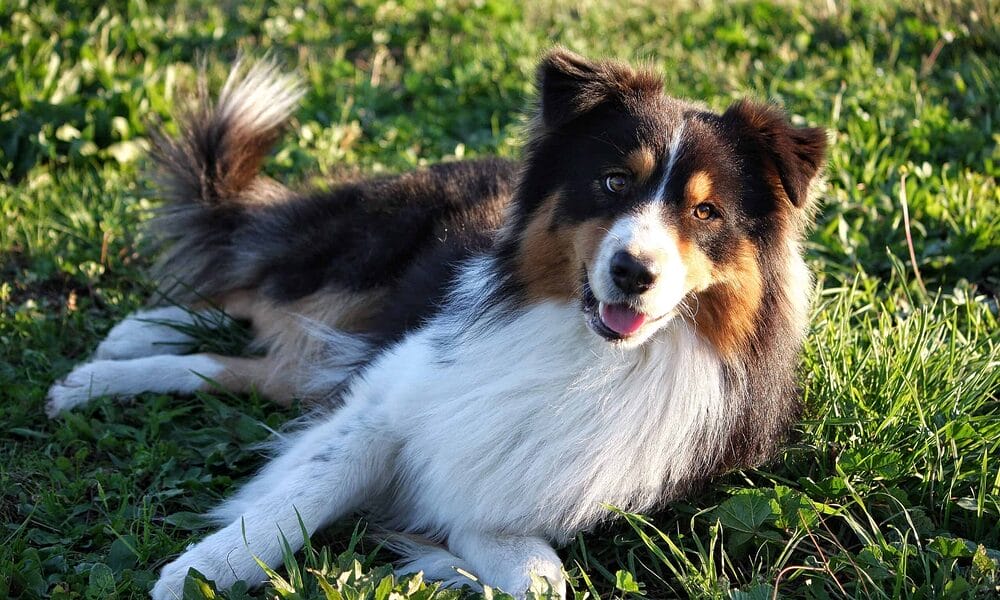
Practical note: Aussies need a job and daily exercise. A short tail does not mean a calm dog.
Boston Terrier
The Boston Terrier has a short, straight or corkscrew tail. Our data lists it as a small, short-coated dog at 12 to 25 pounds, 10 to 12 inches tall. The lifespan is 11 to 13 years, and the AKC temperament words are friendly, bright and amusing.
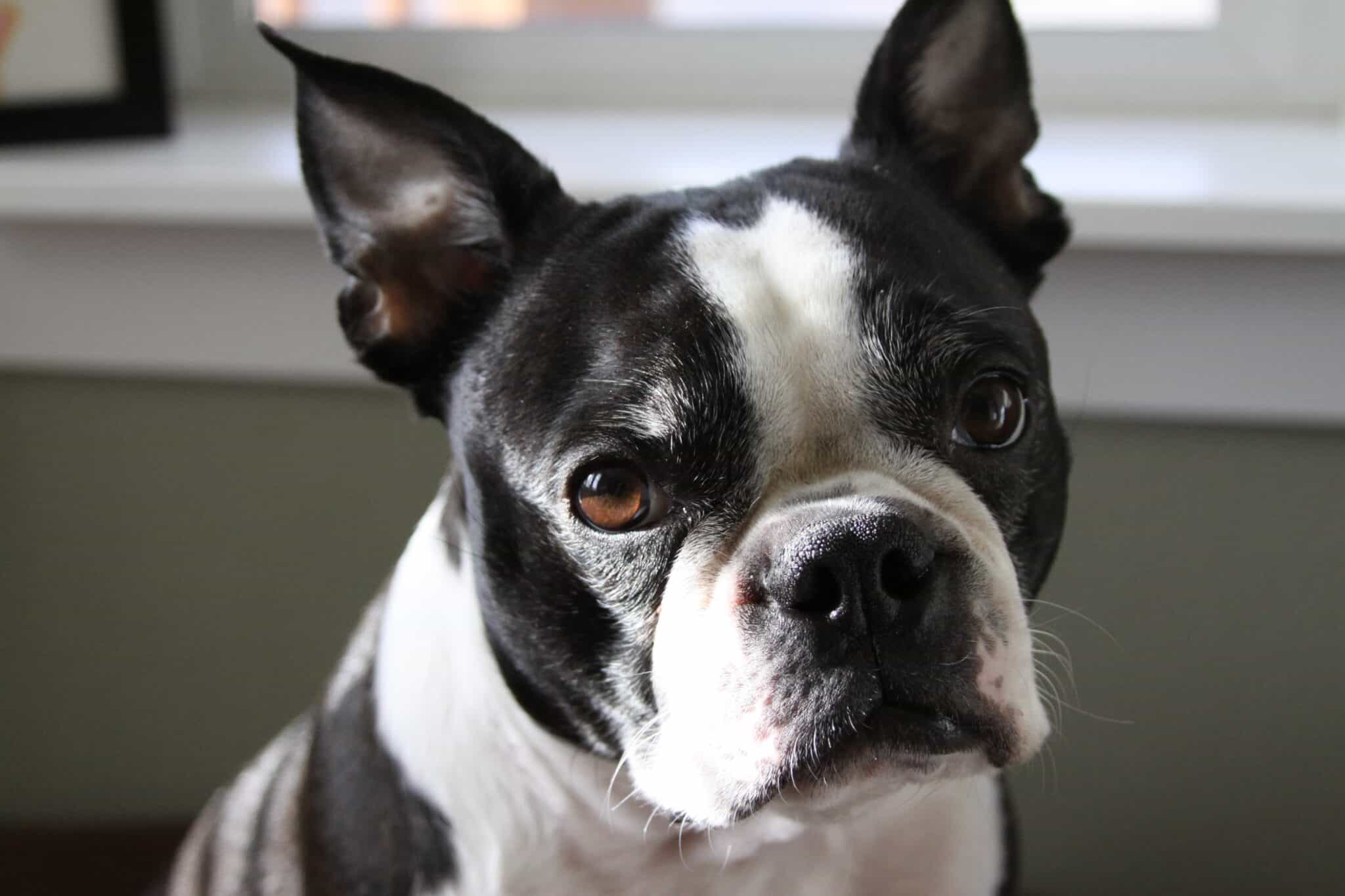
Practical note: flat-faced breeds overheat easily. Keep exercise gentle in hot weather.
Brittany
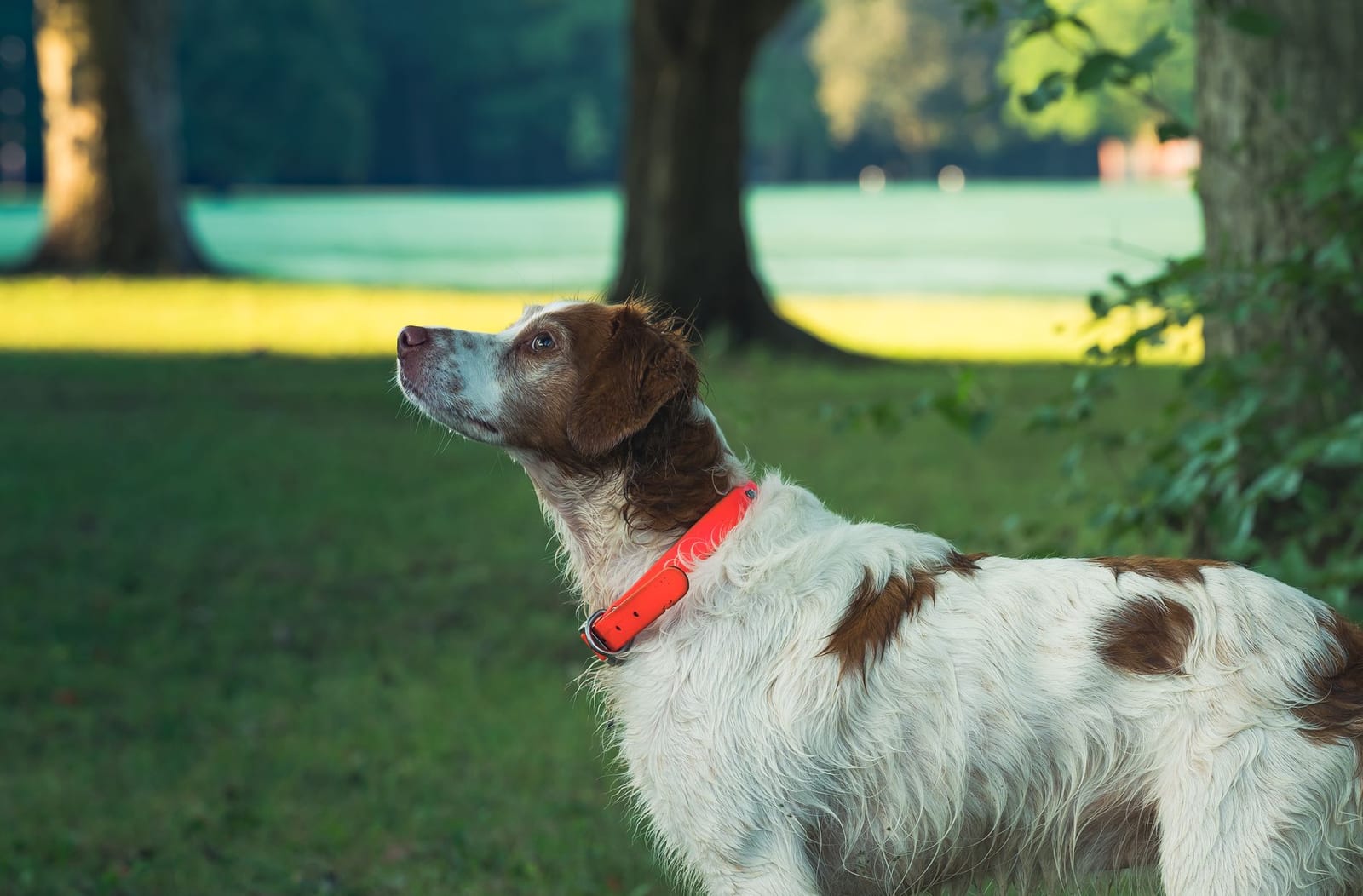
The Brittany is a sporting dog whose natural tail is bobbed or docked, so some puppies are born with a short tail and some are not. It is a medium dog at 30 to 40 pounds, 17.5 to 20.5 inches tall. The lifespan is 12 to 14 years, and the AKC temperament words are bright, fun-loving and upbeat.
Practical note: Brittanys are active bird dogs and need a lot of exercise.
Bulldog
The Bulldog has a short tail, either straight or a screw tail that lies close to the body. It is a medium, heavy-set dog at 35 to 55 pounds, 14 to 15 inches tall. The lifespan is 8 to 10 years, the shortest on this list, and the AKC temperament words are friendly, courageous and calm.
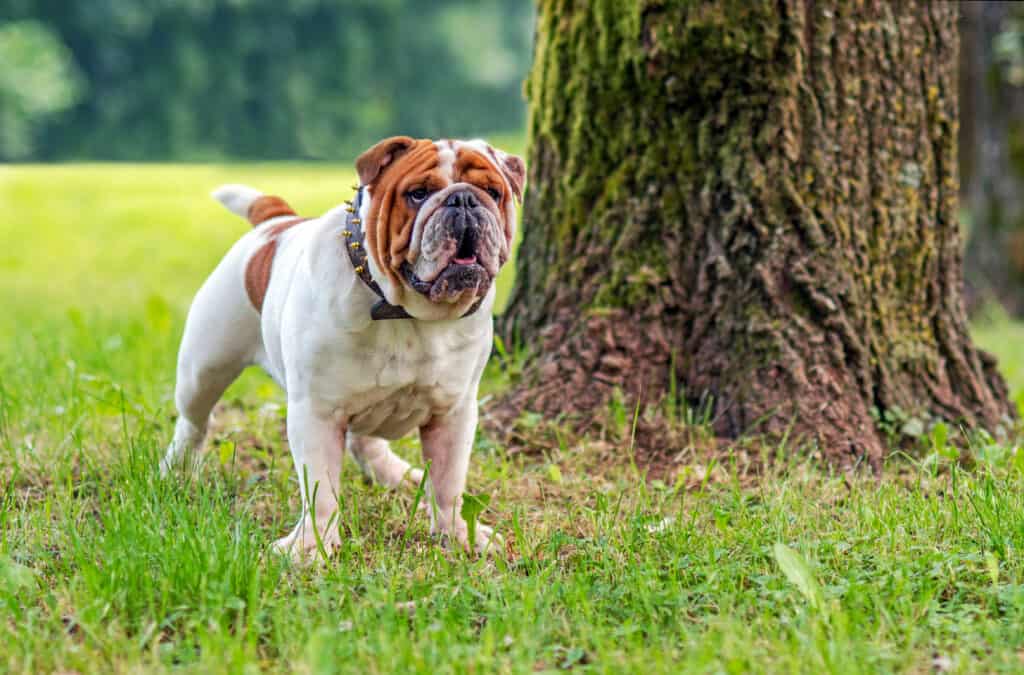
Practical note: skin folds around a tight tail can trap moisture. Keep the area clean and dry, and ask your vet if you see redness.
French Bulldog
The French Bulldog has a short, straight or screw tail. It is a medium dog by weight at 16 to 28 pounds, 11 to 13 inches tall. The lifespan is 10 to 12 years, and the AKC temperament words are playful, smart and adaptable.
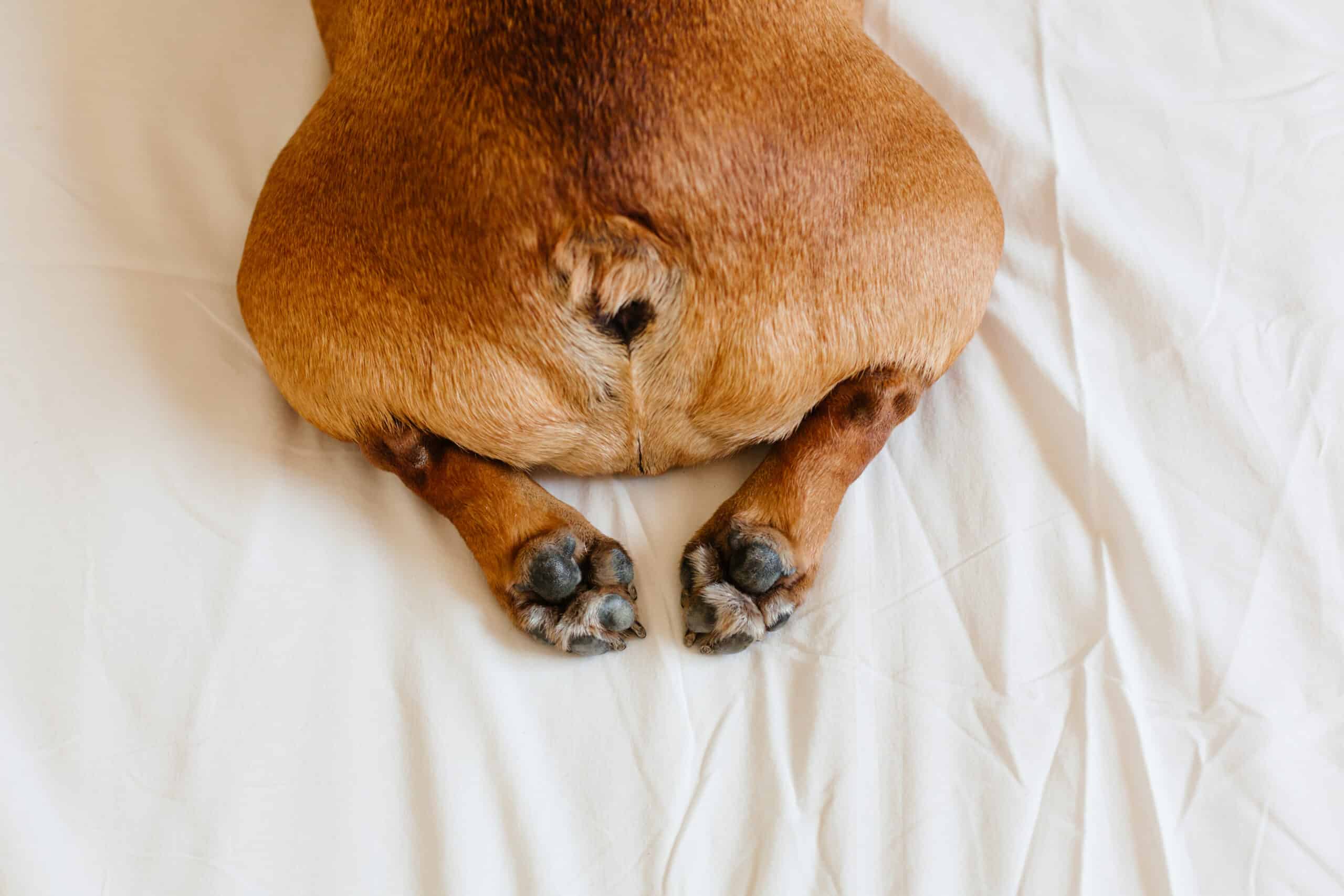
Practical note: like the Boston Terrier and the Bulldog, Frenchies have flat faces and overheat easily. Wipe the tail pocket if there is one.
Miniature American Shepherd
The Miniature American Shepherd has a natural tail that is bobbed or docked. It is a medium dog at 20 to 40 pounds, 13 to 18 inches tall. The lifespan is 12 to 13 years, and the AKC calls it intelligent, good-natured and devoted.
Practical note: it is a smaller dog with the same working drive as the Australian Shepherd.
Old English Sheepdog
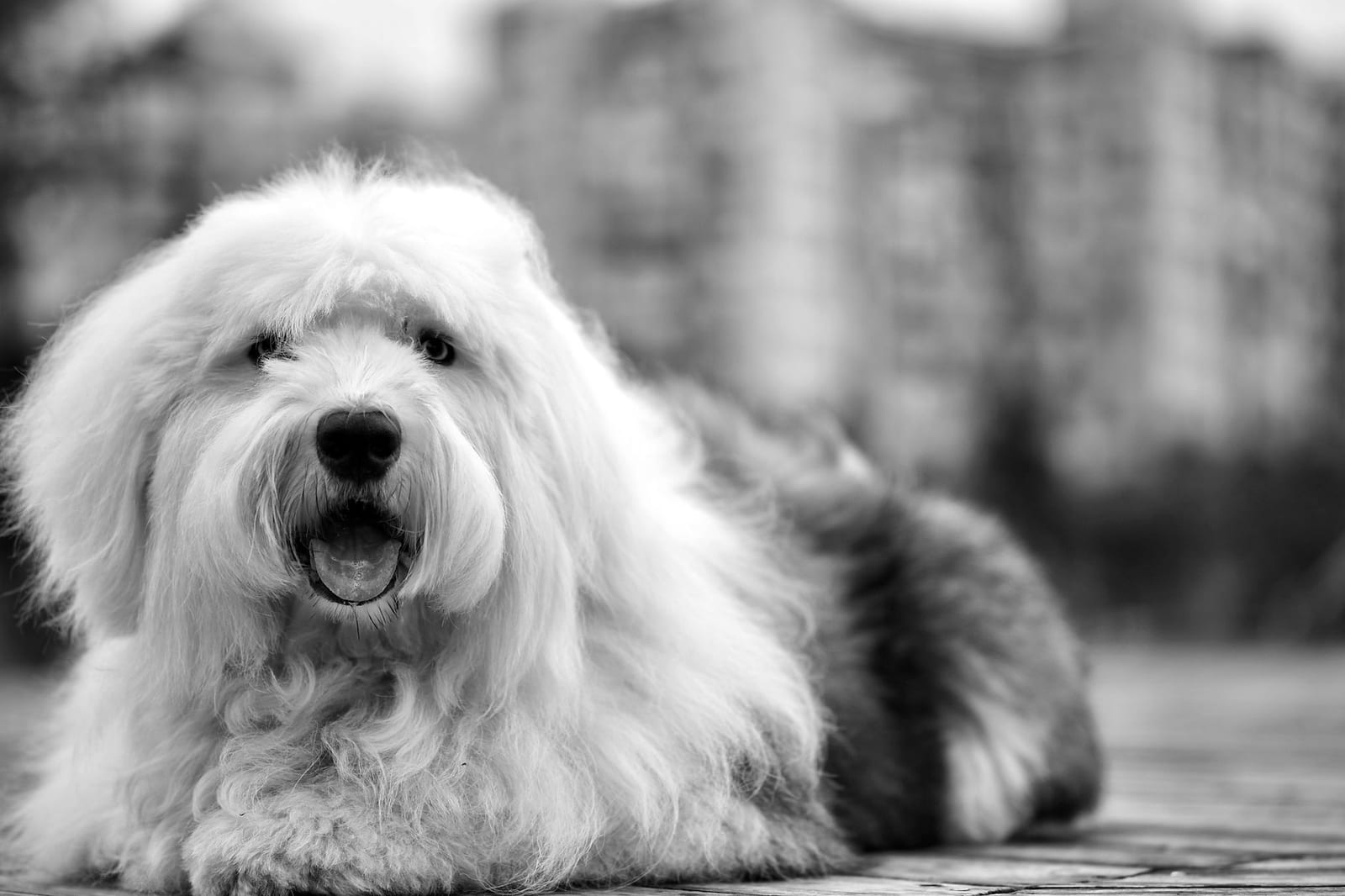
The Old English Sheepdog's natural tail is bobbed or docked, hidden under its shaggy coat. It is a large dog at 60 to 100 pounds, 21 to 25 inches tall. The lifespan is 10 to 12 years, and the AKC temperament words are smart, gentle and adaptable.
Practical note: that long coat needs a lot of grooming. Many owners keep it clipped short.
Pembroke Welsh Corgi
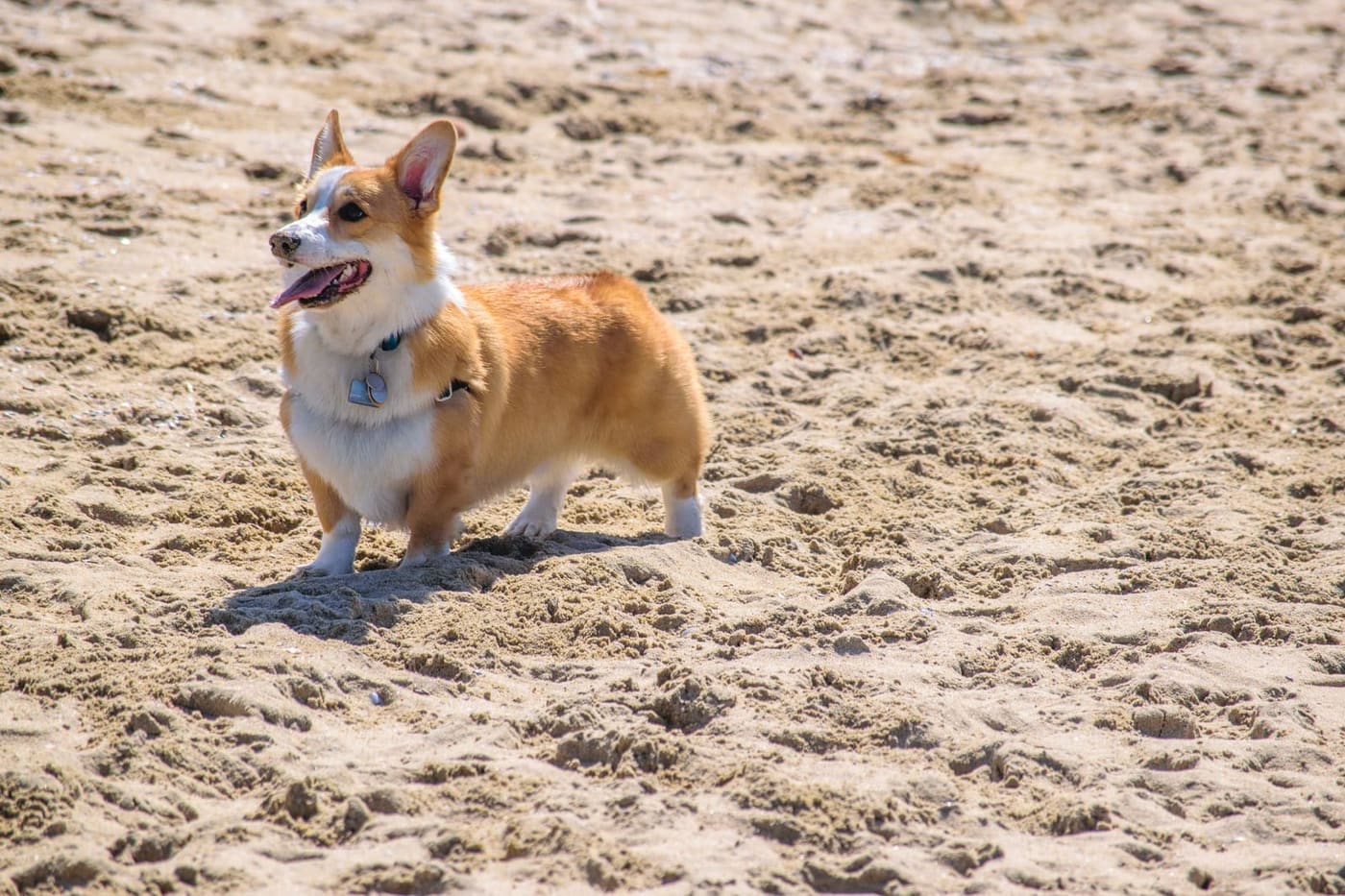
The Pembroke Welsh Corgi is the bobtail most people picture. Our data lists its natural tail as bobbed or docked, so many Pembrokes are born with a stub or no tail. It is a medium dog on short legs at 22 to 30 pounds, 10 to 12 inches tall. The lifespan is 12 to 13 years, and the AKC temperament words are alert, affectionate and smart.
Practical note: keep a Corgi lean to protect its back, and expect shedding (our data rates the double coat 4 out of 5 for shedding).
Rat Terrier
The Rat Terrier is a small terrier whose natural tail is bobbed or docked. It is 10 to 25 pounds, 10 to 18 inches tall, with one of the longest lifespans on this list at 12 to 18 years. The AKC temperament words are friendly, inquisitive and lovable.
Practical note: Rat Terriers are quick and energetic. They need a securely fenced yard.
Schipperke
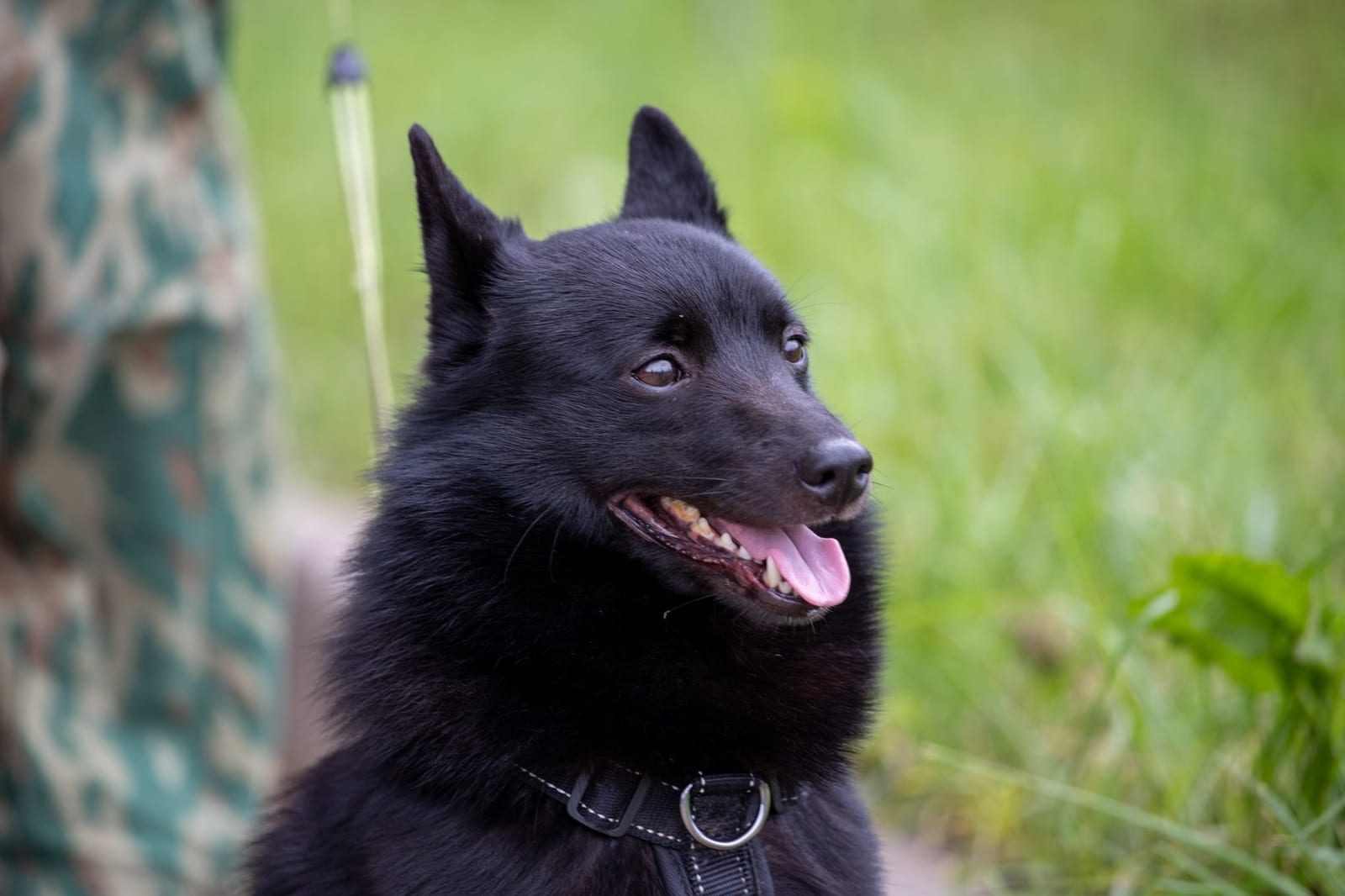
The Schipperke is a small Belgian dog whose natural tail is bobbed or docked. It weighs 10 to 16 pounds and stands 10 to 13 inches tall. The lifespan is 12 to 16 years, and the AKC temperament words are alert, curious and confident.
Practical note: it is a watchful dog that tends to bark at anything new. The tips in our guide on how to stop a Patterdale Terrier from barking work for other alert little dogs too.
Why do some dogs have short tails?
A short tail can come from two sources. The first is the dog's genes, which give it a bobbed tail from birth. The second is a screw tail, a naturally short tail twisted in a spiral, which is typical of Bulldogs, French Bulldogs and Boston Terriers. The AKC glossary quoted above separates these from a docked tail, which a person has shortened.
The 10 breeds above are the ones whose tail is naturally short or bobbed in our data, and a bob is possible but not guaranteed in the "bobbed or docked" breeds. Check each breed on the AKC dog breeds directory, and look up unfamiliar tail terms in the AKC glossary of breed standard terms.
If you are adopting an adult dog, ask whether the tail is natural or docked. It is not always obvious. For the opposite trait, see dog breeds with curly tails.
What to ask a breeder about a short tail
If a short tail matters to you, ask the breeder three things before you reserve a puppy.
First, ask whether the parents have natural short tails or were docked. A docked parent can still pass on a full-length tail, and a natural bob does not always pass on at all.
Second, ask whether the puppies' tails are natural or were docked. Both are common in the "bobbed or docked" breeds, and the answer tells you what the standard in that kennel looks like.
Third, for the screw-tail breeds (the Bulldog, French Bulldog and Boston Terrier), ask about spine health. A tightly twisted tail can go with irregular bones elsewhere in the back, so a breeder who health tests and shares results is worth the wait.
None of this is a reason to avoid these breeds. It just means you should treat the tail like any other trait that breeders select for: look at the evidence, not the promise.
All 10 breeds with short tails at a glance
| Breed | Size | Weight | Tail | Lifespan |
|---|---|---|---|---|
| Australian Shepherd | Large | 40–65 lb | naturally bobbed or docked | 12–15 years |
| Boston Terrier | Small | 12–25 lb | short, straight or corkscrew | 11–13 years |
| Brittany | Medium | 30–40 lb | naturally bobbed or docked | 12–14 years |
| Bulldog | Medium | 35–55 lb | short, straight or corkscrew | 8–10 years |
| French Bulldog | Medium | 16–28 lb | short, straight or corkscrew | 10–12 years |
| Miniature American Shepherd | Medium | 20–40 lb | naturally bobbed or docked | 12–13 years |
| Old English Sheepdog | Large | 60–100 lb | naturally bobbed or docked | 10–12 years |
| Pembroke Welsh Corgi | Medium | 22–30 lb | naturally bobbed or docked | 12–13 years |
| Rat Terrier | Small | 10–25 lb | naturally bobbed or docked | 12–18 years |
| Schipperke | Small | 10–16 lb | naturally bobbed or docked | 12–16 years |
Choosing a dog with a short tail
A short tail does not change how a dog behaves, but it can change how it communicates. Dogs use their tails to signal mood to other dogs, so a dog with a stub may be harder for other dogs to read. Introduce new dogs slowly, and pay attention to ears and body language.
If you are still deciding between breeds, our dog breed comparison tool, the dog breed selector and the dog breeds by trait tool can narrow the list. Another distinctive tail trait is a white tip.
Get The Ideal Dog Routine, free
A 10-page guide written by a vet: a sample daily routine, exercise and alone time, and grooming and vet check schedules.
We'll email you the download link. Unsubscribe anytime.