What To Put In Dog Crate For Chewers (And What Not)
 Written by Tim de Jong
As an Amazon Associate we earn from qualifying purchases, at no extra cost to you. Disclosure
Pick by your dog
Swipe ›Our picks
| Pick | Best for | Buy |
|---|---|---|
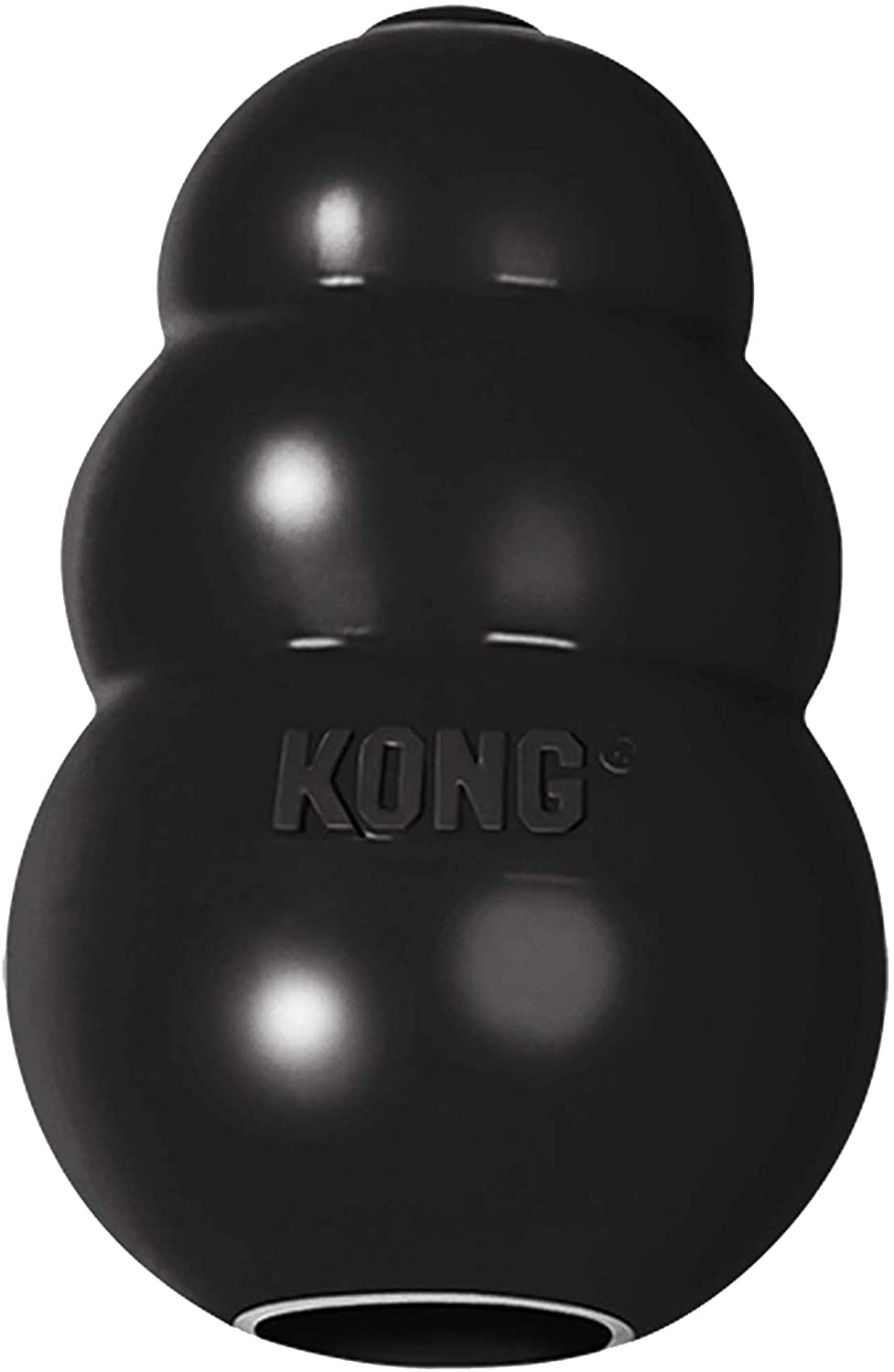 Top pickThe famous Kong toy | Best overall | Check price |
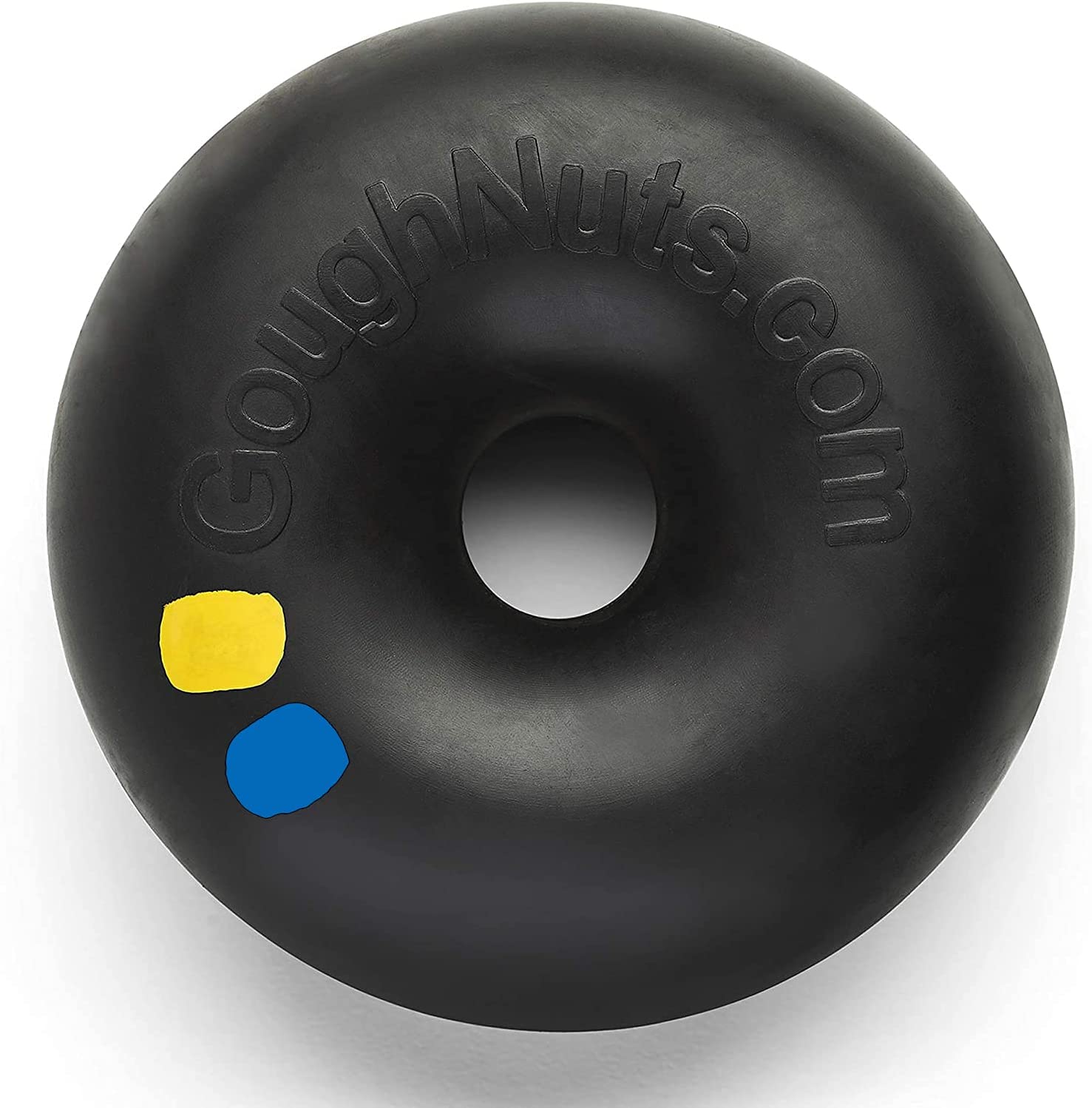 Goughnuts Extra Large Dog Chew Toys | Best for large dogs | Check price |
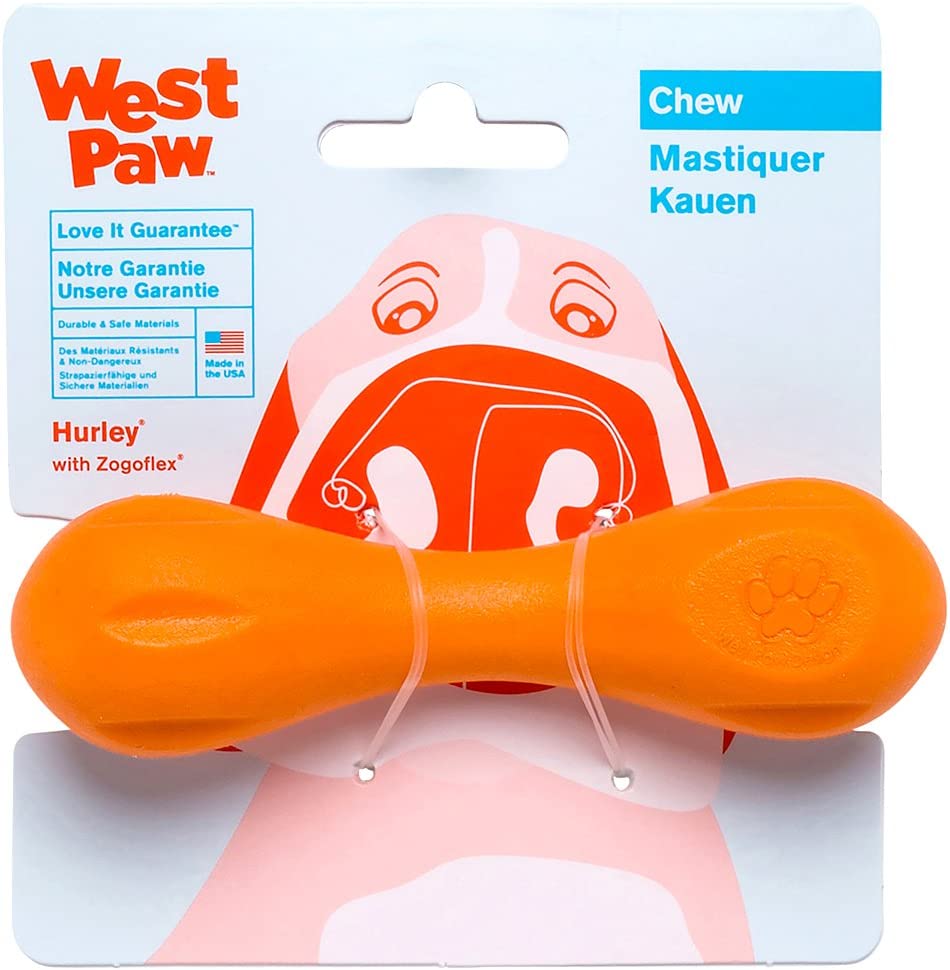 West Paw Zogoflex Hurley Dog Bone | Best for small dogs | Check price |
For a dog that chews, the safest things to put in the crate are a correctly sized, durable rubber toy (such as a Kong, Goughnuts or West Paw Zogoflex), a chew-resistant mat or no bedding at all, and access to water. Leave out stuffed toys, rawhide and other edible chews you can’t supervise, and anything not made for dogs.
Below we look at our three favorite crate-safe chew toys, what to avoid, and a few other ways to keep your chewer safe and calm in the crate.
What safe options can you put in a dog crate for chewers?
When looking at what to put in a dog crate for chewers, there are a few things to keep in mind. The most important thing is that the item is safe for your dog to chew on. This means that it should be made of durable materials that won’t splinter or break off into pieces that your dog could choke on. It also shouldn’t be sharp or pointy, as this could injure your dog’s mouth or gums.
On the other hand, the toys shouldn’t be too hard either, this could damage your dog’s teeth. With that in mind, here are 3 safe options for what to put in a dog crate for chewers:
1The famous Kong toy
One way to stop your dog from chewing his crate or things he should not chew is to give him a distraction. A Kong toy is a great option for this, as it can be filled with treats or peanut butter, giving your dog something to focus on other than chewing on his crate.
Additionally, the Kong is made of durable rubber that can withstand a lot of chewing. It’s also bouncy and fun for your dog to play with, making it a great toy for crate time or any time. A Kong toy also has some give, which makes it gentler on your dog’s teeth than hard bones or antlers.
It is very important you get the right size for your dog as well. Kongs come in several sizes, from extra small to extra-extra large, and there’s a tougher black “Extreme” version for power chewers. You’ll want to make sure you get a Kong that is big enough that your dog can’t fit the whole toy in his mouth or swallow it.
What we like the most: Not only is it a great chew toy, but it can also be filled with treats to keep your dog entertained.
Pros
- Safe for your dog to chew on
- Made of durable rubber
- Bouncy and fun for your dog to play with
Cons
- Difficult to get the right size for your dog
2Goughnuts Extra Large Dog Chew Toys
If you’re looking for a safe chew toy to leave in your dog’s crate for when you’re not home, the Goughnut is a great option. It’s made of durable rubber that can withstand even the strongest chewers, and it has a red inner layer that will let you know when it’s time to replace the toy. Because it’s rubber it still is soft enough so that your dog’s teeth don’t get damaged.
What’s more, the Goughnut provides a lifetime money-back guarantee and warranty, so you can feel confident that your dog will be safe and entertained.
What we like the most: It’s made of durable rubber that can withstand even the strongest chewers, and it has a red inner layer that will let you know when it’s time to replace the toy.
Pros
- Made of durable rubber
- Red inner layer lets you know when to replace the toy
- Lifetime money-back guarantee and warranty
Cons
- A bit expensive
3West Paw Zogoflex Hurley Dog Bone
The Goughnut may be too big for your small dog, but the West Paw Zogoflex is perfect for smaller breeds. It’s made of durable rubber that can withstand a lot of chewing, so it’s safer to leave in your dog’s crate than a bone or other toy. Additionally, it’s very affordable, making it a great option for pet parents on a budget.
What we like the most: It’s made of durable rubber that can withstand a lot of chewing, so it’s safer to leave in your dog’s crate than a bone or other toy.
Pros
- Made of durable rubber
- Can withstand a lot of chewing
- Affordable
Cons
- May not be as durable as the Goughnut
What should you avoid putting in a dog crate for chewers?
There are a few things you should avoid putting in your dog’s crate if he’s a chewer. These include:
1Soft toys
Soft toys are often marketed as being safe for dogs who like to chew. However, these toys are not a good choice for dogs who are known to be heavy chewers. Not only will the toy be destroyed quickly, but there is also a danger of your dog choking on the stuffing or small pieces of fabric. So, while soft toys may be appealing, they are not the best option for all dogs.
2Edible chews
Edible chews, such as rawhide bones, are another popular option for dogs. However, these chews can be dangerous for dogs who are known to be heavy chewers. The reason is that large chunks can break off and be swallowed, which can cause choking or a blockage in the stomach or intestines. Save edible chews for times when you can supervise, and don’t leave them in the crate when your dog is alone.
3Anything not specifically designed for dogs
This includes items such as sticks, rocks, and small balls (golf balls, for example). These objects can be dangerous for dogs who like to chew because they can break into small pieces that your dog could choke on. Small household items are risky too; see what happens if a dog eats a magnet.
Additionally, these objects are not designed for dogs and can cause damage to their teeth. Objects can also develop sharp edges that can cut your dog’s gums. So, it’s best to avoid these objects and stick with toys that are specifically designed for dogs.
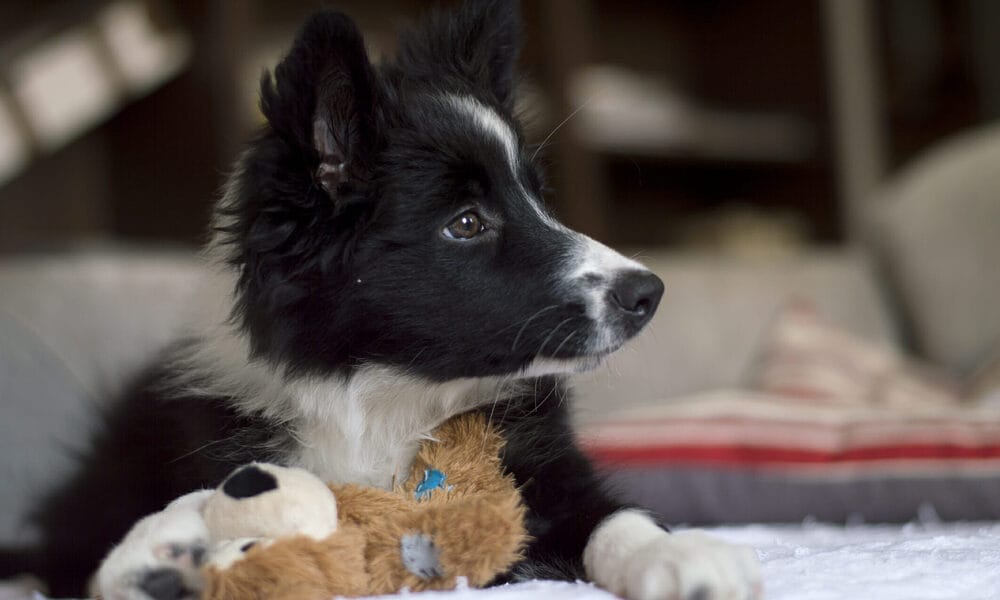
What is the best way to keep my dog safe while he’s in his crate?
In addition to providing your dog with safe things to chew on, there are a few other things you can do to help him.
1Collar off, water in
Take your dog’s collar (and any tags) off before crating him. Collars and tags can get caught on the crate wire, which can lead to choking or strangulation. For bedding, a heavy chew-resistant mat is fine, but if your dog shreds and swallows fabric, it’s safer to leave the crate floor bare until he stops. If he’ll be in the crate for more than an hour or two, give him water in a bowl that clips to the crate door so it can’t be tipped over or chewed.
2Exercise
Though all dogs need some form of exercise, this is especially true for puppies. A tired puppy is less likely to want to chew on things and will be calmer overall. Walking your dog a few times a day is a great way to tire them out.
If you have a yard, letting them run around in it for a bit is also a good option. Playing fetch or catch are other ways to get your dog moving and tucker them out. Whatever you do, make sure that you give your dog plenty of exercise so that they’re less likely to act out and cause destruction.
3Background noise
When your dog is left alone in his crate, a silent house can be unsettling. This is especially true for puppies who are still getting used to being away from their littermates.
To help your dog feel more comfortable, consider leaving on some background noise. This could be a television, radio, or even a white noise machine. The sound of something playing in the background will help to soothe your dog and make him feel less alone.
4Crate training
Gradually introducing your dog to his crate is the best way to get him used to it. Start by feeding your dog his meals in his crate. Once he’s comfortable with that, you can start closing the door while he’s eating.
Eventually, you’ll be able to leave him in his crate for short periods of time. If you do this gradually, your dog will be less likely to feel anxious about being in his crate.
As with anything else, make sure that you take things slowly and let your dog get used to the crate at his own pace. Forcing him into it will only make him more resistant to the idea of being in there.
If your dog frantically chews or bites the crate bars, drools heavily, or hurts his mouth or paws trying to get out, that’s more likely panic than boredom. This can be a sign of separation anxiety, so talk to your vet or a qualified behaviorist rather than just adding more toys.
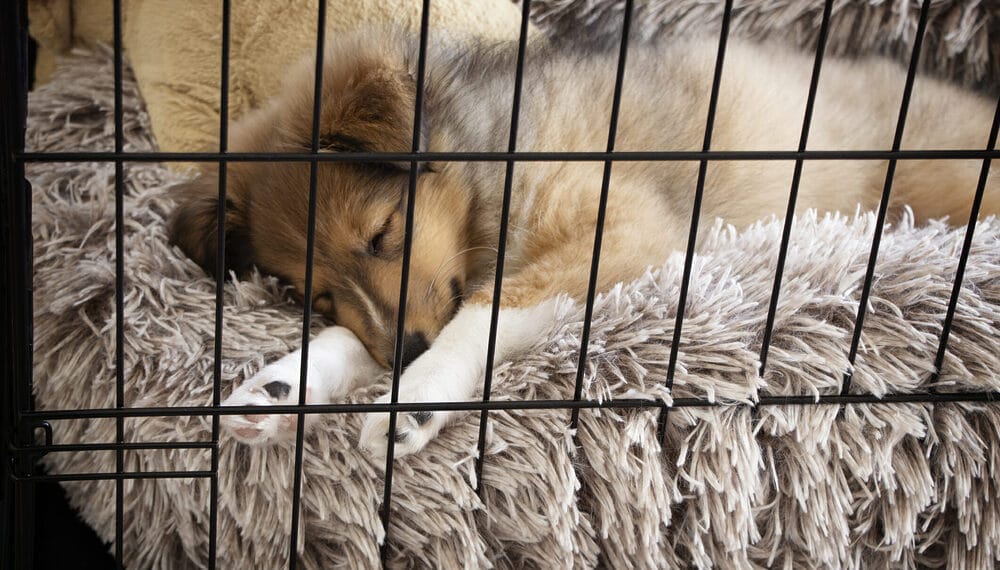
The bottom line – What to put in dog crate for chewers
What to put in dog crate for chewers is an important question for any pet owner to ask. Most options can be a choking hazard, and some can cause damage to your dog’s teeth. The best way to keep your dog safe is to provide him with chew toys that are specifically designed for excessive chewers.
We recommend the Kong Classic Dog Toy, Goughnut, and the Zogoflex. These toys are less likely to cause choking hazards and are made of durable materials that will withstand heavy chewing.
In addition to providing your dog with safe things to chew on, you should also exercise him regularly and leave on some background noise. Introduce the crate gradually, and don’t leave your dog in it for longer than he can comfortably manage – especially puppies, who need frequent potty breaks. Taking these precautions will help to keep your dog safe and happy while he’s in his crate. If your dog destroys his bedding, a chew-proof dog bed cover can help, and a bitter apple spray on the crate bars discourages chewing. Looking for an upgrade? See our picks for a dog crate with a sliding door.
Get The Ideal Dog Routine, free
A 10-page guide written by a vet: a sample daily routine, exercise and alone time, and grooming and vet check schedules.
We'll email you the download link. Unsubscribe anytime.