How to stop dog from drinking pool water? (Tips and Risks)
 Written by Tim de Jong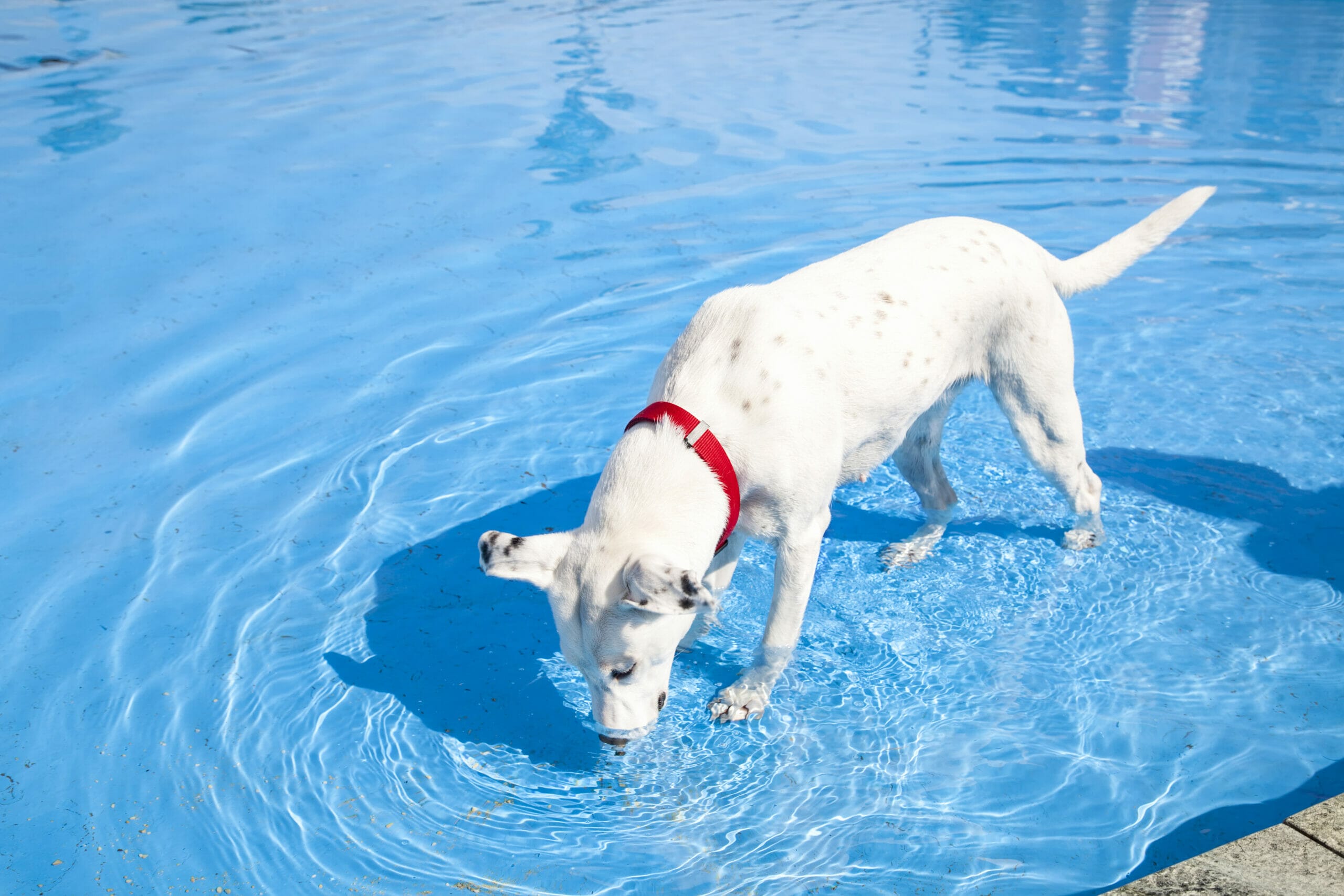
To stop your dog from drinking pool water, always keep a bowl or fountain of fresh, cool water near the pool, supervise pool time, teach a “leave it” cue, and keep the pool covered or fenced off when you’re not using it. A few laps’ worth of sips is usually harmless, but gulping lots of pool water can cause stomach upset, and in large amounts salt or water poisoning.
Dogs and pools go together like summer and fun. Below are five tips to stop the drinking, plus the risks to know about.
5 tips to stop your dog from drinking pool water
So, you’re at the pool with your pup and you notice they’re taking a sip or two of the water. How can you stop them from drinking pool water? Here are five tips:
- Always give your dog fresh water to drink
- Add a dog fountain to your pool area
- Use a pet-safe swimming pool cover
- Train your dog not to drink out of the pool
- Keep an eye on your dog when they’re near the pool
1Always give your dog fresh water to drink
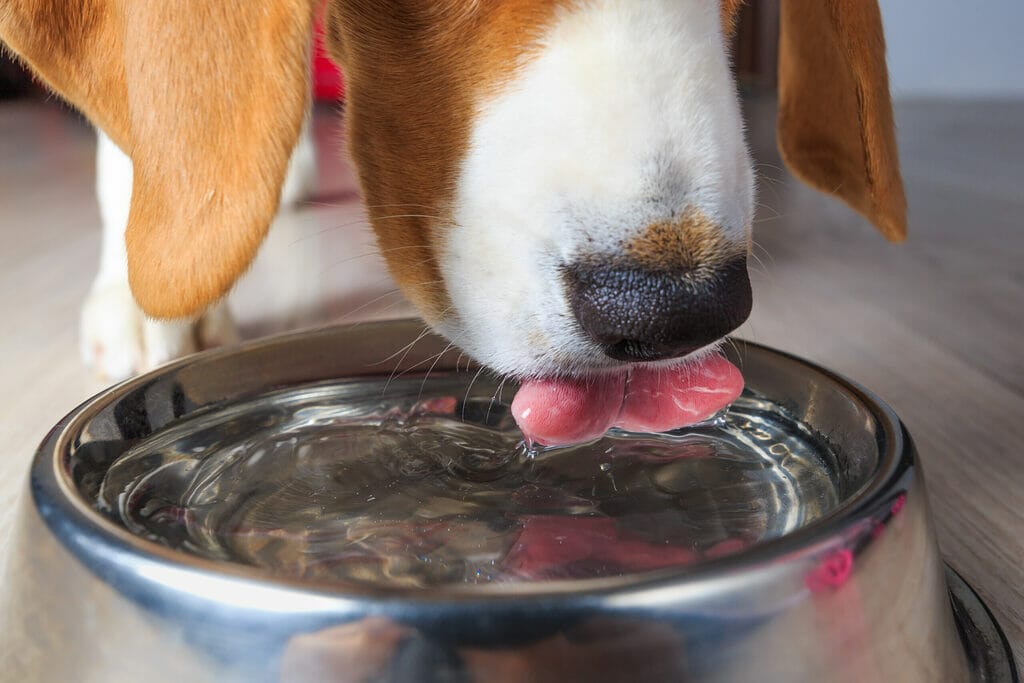
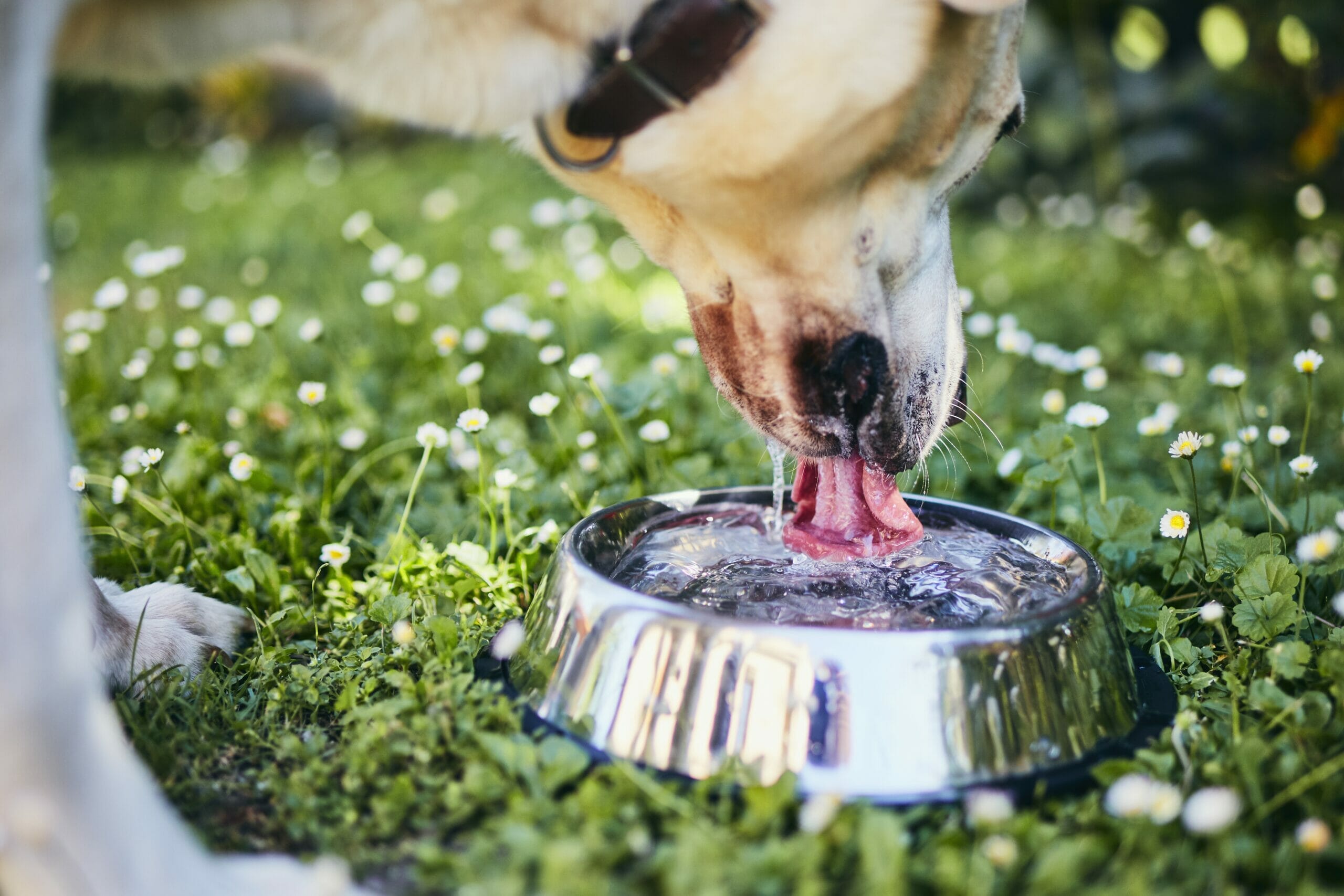
The best way to stop your dog from drinking pool water is to make sure they always have fresh water to drink. Keep their water bowl full and clean and accessible, and offer them water regularly throughout the day.
If you’re going for a swim with your pup, bring along a portable water bowl so they can have a drink after playing in the pool. When your dog is hydrated, chances are they won’t be as interested in drinking pool water. And don’t forget to clean their ears after swimming.
2Add a dog fountain to your pool area
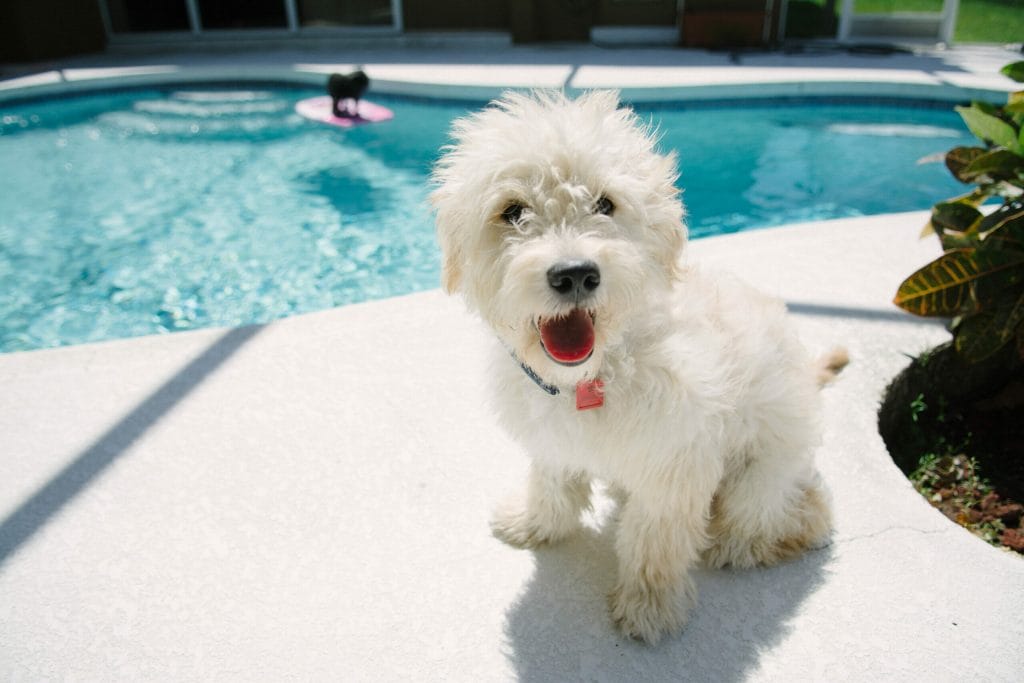
If you have a backyard pool, consider adding a dog fountain near the pool. This way, your dog can have easy access to fresh water without having to go into the pool. There are many different types of dog fountains on the market, so you’re sure to find one that fits your needs.
When your dog learns to drink from the fountain, they’ll be less likely to drink from the pool.
3Use a pet-safe swimming pool cover
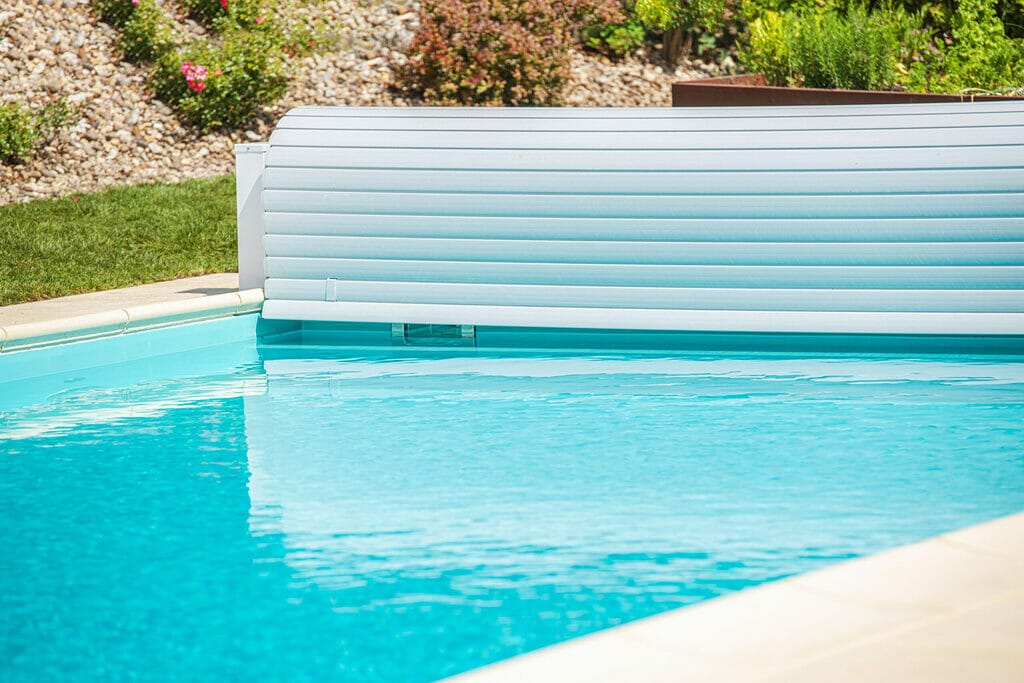
Pool covers are an easy way to stop your dog from getting into the pool and consuming the water. Pet-safe covers are frequently made of tightly anchored mesh or solid fabric, and they fit over the edge of the pool snugly.
Be careful about the type of cover, though. Floating solar covers and loose winter covers are not safe for dogs: a dog that walks onto one can sink, get tangled, or end up trapped underneath. Choose a safety cover that is designed to hold the weight of a person or pet, and make sure no water pools on top of it. Pool covers can also help to keep your pool clean by preventing dirt and debris from getting in.
So if you’re looking for a way to keep your dog safe and your pool clean, a proper safety cover (or a pool fence with a self-closing gate) is the way to go. It will prevent your dog from getting into the pool and drinking the water when you’re not around.
4Train your dog not to drink out of the pool
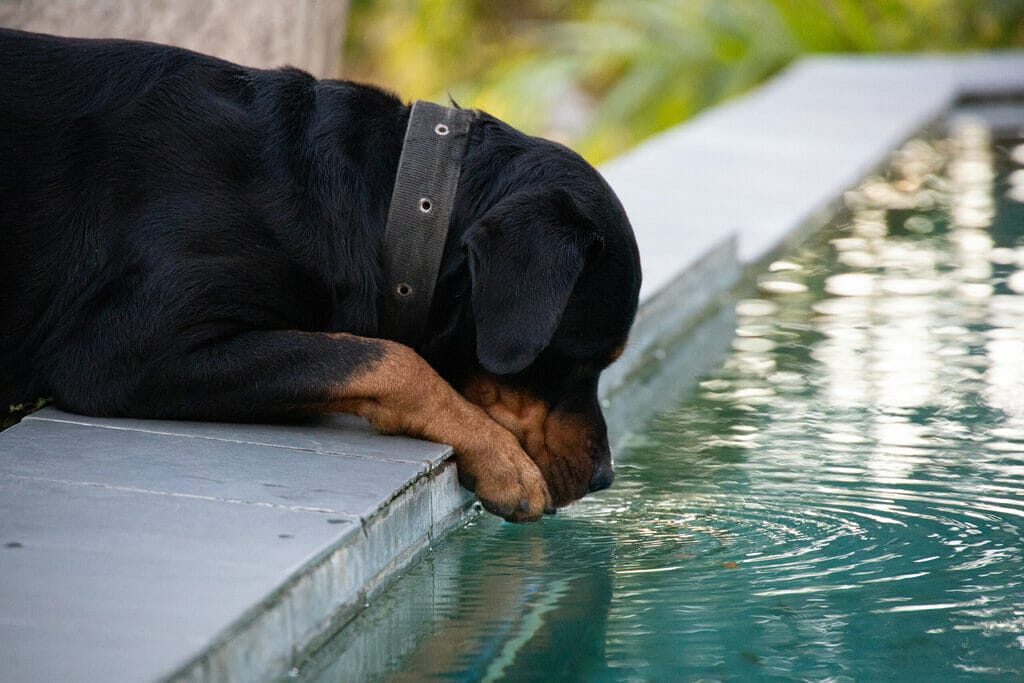
If you catch your dog drinking out of the pool, it’s important to train them not to do it. The best way to do this is with positive reinforcement.
Whenever your dog starts to drink from the pool, give them a verbal cue such as “leave it.” If they listen to you and walk away from the pool, give them a treat, and lead them to their fresh water bowl instead. With enough practice, your dog will learn that they shouldn’t drink out of the pool.
5Keep an eye on your dog
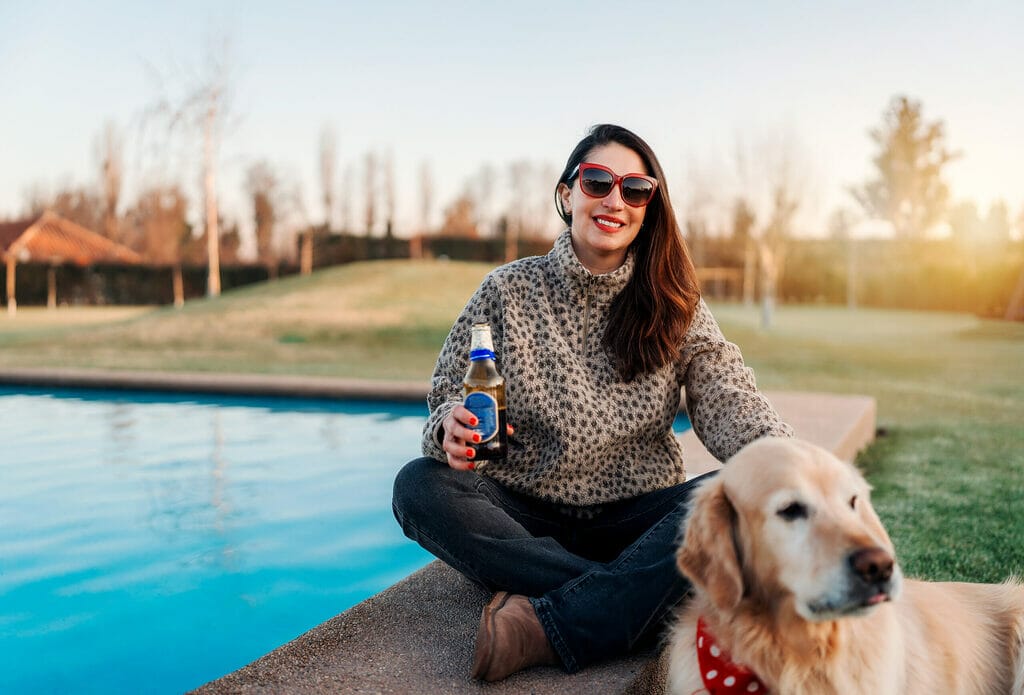
Whenever your dog is near the pool, keep an eye on them, offer fresh water during breaks, and call them away if they start gulping. Supervision matters for more than drinking: not all dogs are strong swimmers, and many don’t know how to get out of a pool. Teach your dog where the steps are, and never leave it alone around an open pool.
If your dog loves to fetch toys in the pool, keep sessions short and take breaks. Dogs that keep grabbing toys from the water can swallow a surprising amount of it.
The risks of dogs drinking pool water
Your dog should be fine if they only drank a small amount of pool water. However, there are some risks associated with dogs drinking pool water. Swimming pools contain chlorine and other chemicals which can be harmful to dogs if consumed in large quantities.
You may think a pool without chlorine is safe but that’s not necessarily the case. Algae and bacteria can grow in pools without chlorine, and these can be harmful to dogs if ingested. We look at the human side of shared water in can you get sick from sharing water with a dog.
Saltwater pools have their own risk: drinking a lot of salt water can lead to salt poisoning (hypernatremia). And swallowing large amounts of any water in a short time, which can happen during long fetch sessions in the pool, can cause water intoxication, where sodium levels in the blood drop dangerously low. Both are rare but can be life-threatening.
If your dog drinks a lot of pool water, they may experience vomiting, diarrhea, or abdominal pain. In severe cases, signs can include restlessness, weakness, a bloated belly, loss of coordination, pale gums, seizures or collapse. If you think your dog has consumed too much pool water, or shows any of these signs, contact your veterinarian immediately.
Finally, keep pool chemicals like chlorine tablets and shock powder locked away. Undiluted, they’re far more dangerous than pool water and can cause serious burns to the mouth and stomach if your dog chews or licks them.
The bottom line – How to stop dog from drinking pool water?
Dogs should always have access to fresh water, and they shouldn’t drink pool water on a regular basis. If you’re concerned about your dog’s safety, take some precautions like adding a pet-safe swimming pool cover or training them not to drink out of the pool.
Most importantly, keep an eye on your dog when they’re near the pool, and offer them fresh water to drink afterward. With some simple precautions, you can keep your dog safe and healthy.